I get asked about table scraps more than almost any other nutrition question on this site, usually some version of “can I give my dachshund a bite of this?” And I understand the impulse – those big pleading eyes at dinner are hard to ignore, especially on a dog built as low to the ground as ours. But dachshunds are a breed where the answer to “can I share this?” matters more than it does for most dogs, because their small size means a toxic dose arrives faster, and their tendency to gain weight easily means even safe foods can quietly turn into a back problem down the road.
So I put together the list I wish every new dachshund owner had on their fridge: what’s genuinely safe to share, what needs to stay far away from your dog’s bowl, and how to think about portion size so a few extra bites don’t undo your feeding plan. If you haven’t read my posts on dachshund nutrition basics or building a complete dachshund diet plan, this post is meant to sit alongside those – this one is specifically about the extras, not the main meals.
Why Dachshunds Need Extra Caution With Table Food
Two things make this breed different from, say, a Labrador snapping up a dropped grape. The first is size. A dachshund typically weighs somewhere between 16 and 32 pounds, which means the same amount of a toxic food does far more damage per pound of body weight than it would in a larger dog. A few grapes or a square of dark chocolate that a big dog might shrug off can be a genuine emergency for a dachshund.
The second is the back. Dachshunds are genetically prone to intervertebral disc disease (IVDD), and extra body weight is one of the clearest risk factors for a disc injury in this breed. Table scraps are calorie-dense and easy to overdo without realizing it – a few bites of cheese here, a taste of chicken skin there, and you’ve added a meaningful percentage of your dog’s daily calories without touching their actual food bowl. Keeping treats and shared food genuinely occasional, and genuinely small, is part of protecting their spine, not just their waistline.
Human Foods That Are Safe for Dachshunds (In Moderation)
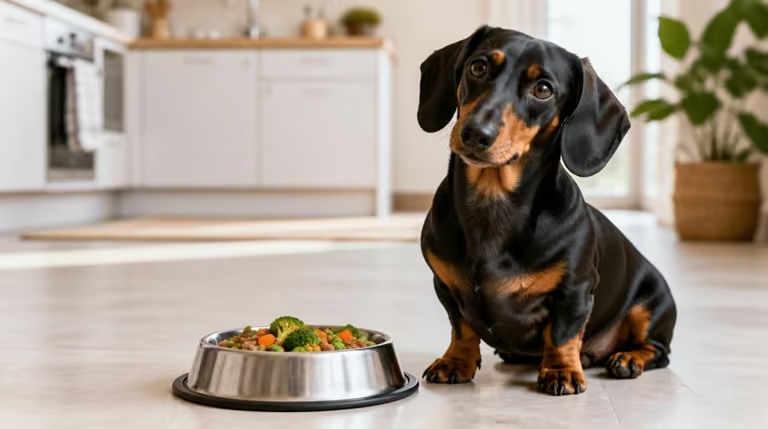
These foods are generally fine for a healthy adult dachshund to enjoy occasionally, plain and unseasoned, in small amounts:
- Cooked, boneless chicken or turkey – plain, unseasoned, with no skin. A great high-protein treat or food topper.
- Plain cooked eggs – scrambled or hard-boiled with no butter, salt, or seasoning.
- Carrots – raw or cooked, a low-calorie crunchy treat that also helps with dental chewing.
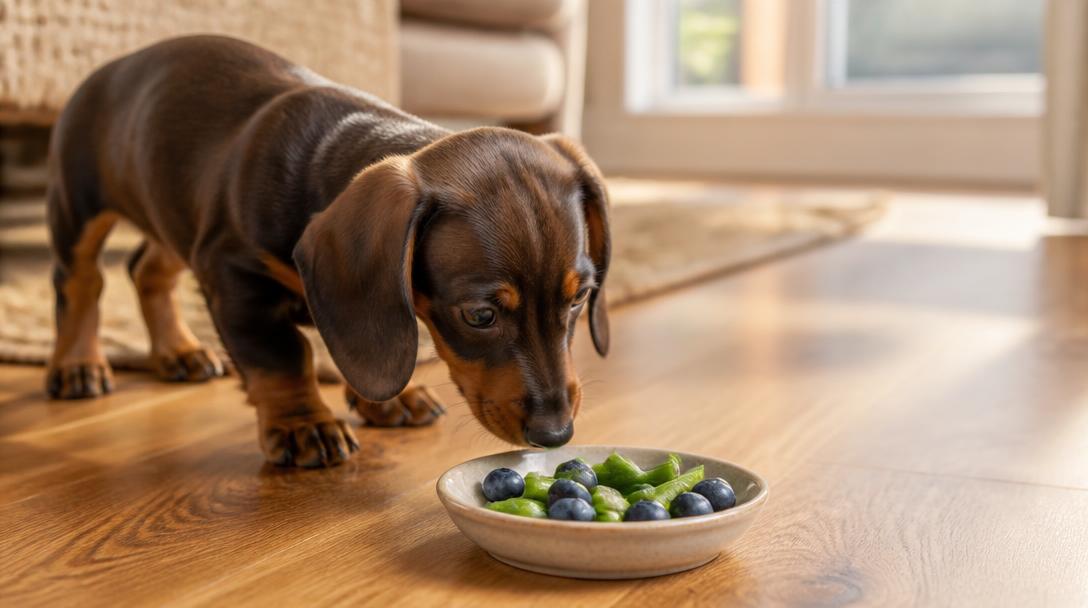
- Green beans – plain, cooked or raw, a favorite low-calorie filler for weight-conscious dachshunds.
- Blueberries – a small, antioxidant-rich treat that most dachshunds love.
- Apple slices – with the core and seeds removed, since apple seeds contain trace cyanide compounds.
- Plain cooked pumpkin – unsweetened, no spices; useful for digestion in small spoonfuls.
- Plain rice or sweet potato – cooked and unseasoned, a gentle carbohydrate option, especially for dogs with a sensitive stomach.
- Plain peanut butter – only if it’s confirmed xylitol-free. Always check the label; some “natural” peanut butters now use xylitol as a sweetener, and it’s one of the most dangerous items on this entire list.
- Watermelon – seedless flesh only, a hydrating warm-weather treat in small pieces.
Even on this list, “safe” means small amounts, occasionally, not a daily side dish. And any new food should be introduced one at a time, in a small quantity, so you can watch for an upset stomach or an allergic reaction before making it a habit.
Human Foods That Are Dangerous or Toxic for Dachshunds
This is the list that matters most. Some of these cause an upset stomach; several of them are genuine emergencies that call for a vet immediately, not “let’s watch and see.”
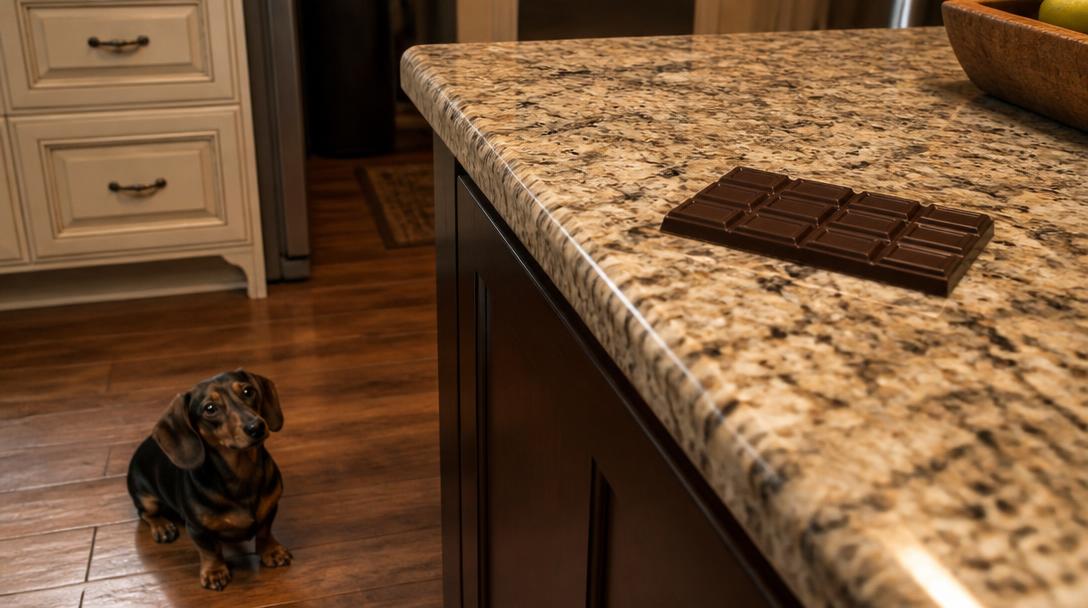
- Chocolate – contains theobromine, which dogs metabolize far more slowly than humans. Dark and baking chocolate are the most dangerous; even a small amount can be serious for a dog of a dachshund’s size.
- Grapes and raisins – can cause sudden kidney failure in dogs, and the toxic dose isn’t well understood, which is why vets treat any exposure as an emergency.
- Onions, garlic, chives, and leeks – damage red blood cells and can cause anemia, whether raw, cooked, or powdered (including onion powder hidden in sauces and seasoning blends).
- Xylitol – an artificial sweetener found in sugar-free gum, some peanut butters, baked goods, and toothpaste. It causes a rapid, dangerous drop in blood sugar and can lead to liver failure. This is one of the fastest-acting toxins on this list.
- Avocado – contains persin, which can cause vomiting and diarrhea in dogs; the pit is also a choking and blockage hazard.
- Macadamia nuts – can cause weakness, tremors, and elevated temperature, even in small quantities.
- Alcohol – affects a small dog’s system quickly and can cause dangerous drops in blood sugar, blood pressure, and body temperature.
- Caffeine – found in coffee, tea, and energy drinks; affects the heart and nervous system and is genuinely dangerous in small dogs.
- Cooked bones – splinter easily and can cause choking, or tear the throat, esophagus, or intestines.
- Fatty or fried foods – can trigger pancreatitis, which is painful and sometimes life-threatening, and dachshunds seem to be more prone to it than some breeds.
- Salty snacks – chips, pretzels, and similar foods can lead to excessive thirst, urination, and in extreme cases, sodium ion poisoning.
- Raw yeast dough – continues to rise in a warm stomach, which can cause painful bloating, and produces alcohol as a byproduct as it ferments.
If you keep only one rule in your head from this entire post, make it this: when in doubt, don’t share it. It costs nothing to skip a bite of something questionable, and it can cost a great deal – financially and otherwise – to find out the hard way.
The 10% Rule: How Much Table Food Is Too Much
Most vets recommend that treats and extras, including safe table food, make up no more than about 10% of a dog’s total daily calorie intake. The other 90% should come from a complete, balanced dog food that’s actually formulated to meet your dachshund’s nutritional needs. It’s an easy rule to break without noticing – a spoonful of peanut butter here, some chicken at dinner there – so I’d encourage you to actually think in terms of that 10% rather than just “a little bit.”
For a dachshund specifically, that discipline matters more than it would for a bigger dog, because the margin between a healthy weight and an overweight one is so much smaller on a body this size. A couple of extra pounds on a dachshund is a much bigger relative weight gain – and a much bigger load on that long spine – than the same couple of pounds would be on a Labrador.
Safer Ways to Share Food With Your Dachshund
You don’t have to cut out sharing entirely to keep your dachshund safe and lean. A few habits make it much easier to do responsibly:
- Use small pieces as training rewards instead of a full serving on a plate – a pea-sized bit of chicken or a single blueberry goes a long way as positive reinforcement.
- Freeze safe foods into treats – frozen watermelon cubes or a frozen spoonful of plain pumpkin puree make a slow, satisfying warm-weather treat.
- Use vegetables as food toppers rather than separate snacks – a few chopped green beans mixed into their regular food adds volume and nutrients without many extra calories.
- Keep a running mental tally of what your dog has had that day, especially if more than one person in the house is feeding treats – this is one of the most common ways dogs end up quietly overweight.
- Check labels before sharing anything packaged – peanut butter, baked goods, and “sugar-free” snacks are the most common places xylitol shows up unexpectedly.
What to Do If Your Dachshund Eats Something Toxic
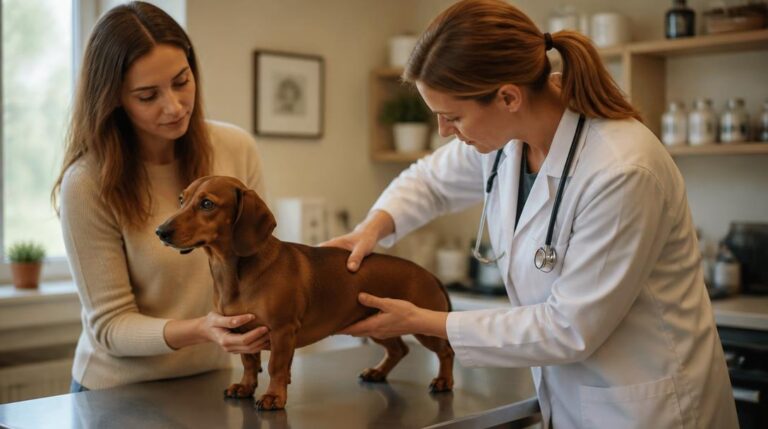
If you know or suspect your dachshund has eaten something on the dangerous list, don’t wait to see if symptoms show up. Call your veterinarian or an emergency animal hospital immediately, or contact the ASPCA Animal Poison Control Center at (888) 426-4435 (a consultation fee may apply). Try to have the following ready when you call: what your dog ate, roughly how much, and how long ago – this genuinely speeds up how quickly they can advise you.
Don’t induce vomiting unless a vet or poison control specifically tells you to; for some substances, bringing it back up can cause more harm than leaving it. And don’t wait for symptoms to appear before calling – with several of the foods on this list, by the time symptoms show up, treatment is already more urgent.
Frequently Asked Questions
Can dachshunds eat cheese?
In small amounts, plain cheese is generally safe, but it’s high in fat and calories for a dog this size, and some dachshunds are lactose sensitive. A small cube occasionally is fine; it shouldn’t become a regular treat.
Are dachshunds more sensitive to toxic foods than other breeds?
Not biologically more sensitive, but their small body size means the same amount of a toxic substance is a proportionally larger dose than it would be for a bigger dog, so problems can develop faster and from a smaller amount.
Is peanut butter safe for dachshunds?
Yes, as long as it’s confirmed free of xylitol. Always read the ingredient label, since more brands have started using xylitol as a sweetener in recent years, and it’s genuinely dangerous.
How much human food can I give my dachshund in a day?
As a general guideline, treats and extras together shouldn’t exceed about 10% of your dog’s total daily calories, with the rest coming from a complete, balanced dog food.
What’s the most common food-related emergency you see with dachshunds?
Grapes, raisins, and unlabeled xylitol exposure (often from peanut butter or sugar-free baked goods) tend to be the ones that send owners to the emergency vet with the least warning, since the toxic amounts are so small.
The Bottom Line
Sharing food with your dachshund isn’t something you need to avoid entirely – it’s one of the small ways we bond with our dogs, and plenty of foods are genuinely fine in moderation. The goal is just to know which foods belong on which list, keep portions small and occasional, and treat anything on the dangerous list as a hard no rather than a judgment call in the moment. Print this list, stick it on the fridge, and you’ll never have to guess at 6 p.m. on a Tuesday whether that dropped grape is actually a problem.