I get asked some version of this in the comments almost every week: “Am I bathing my dachshund too much, or not enough?” It’s one of those questions that sounds simple but has a real answer that depends on your dog’s coat type, skin, and lifestyle — and getting it wrong in either direction can actually cause problems. As our Healthcare Specialist here at Simply Dachshund, I see the downstream effects of both over-bathing and under-bathing more often than you’d think: dry, flaky skin on one end, and skin-fold irritation or a musty coat on the other.
This guide covers exactly how often to bathe your dachshund based on their coat type, what products are actually safe for their skin, and — just as important — how to bathe and dry a low-slung, long-backed dog safely without straining their spine in the process.
How Often Should You Bathe a Dachshund?
For most dachshunds, once every 4 to 6 weeks is the right baseline — not weekly, and not just “when they start to smell.” Dachshunds have skin that produces natural oils to keep their coat healthy and their skin barrier intact, and bathing too frequently strips those oils faster than the skin can replace them. That leads to the dry, flaky, sometimes itchy skin I see reported constantly in messages from owners who are bathing weekly because their dog “seems to get dirty fast.”
That said, “4 to 6 weeks” is a starting point, not a rule carved in stone. A few things that should shift the schedule:
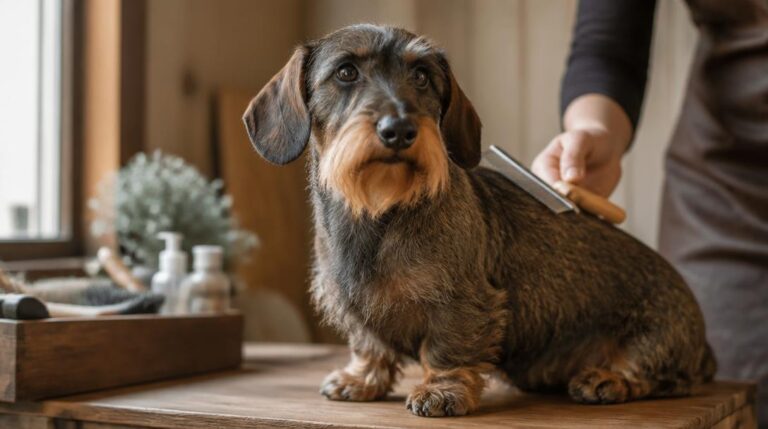
- Coat type — smooth-coat dachshunds generally need baths less often than wire-haired or long-haired dachshunds, whose coats trap more debris and can start to smell sooner
- Activity level — a dachshund who’s out sniffing through mud, leaf litter, or long grass daily will need more frequent baths than a mostly-indoor dog
- Skin conditions — a dog with diagnosed allergies or a skin condition may need a specific medicated bathing schedule from your vet, which overrides general guidance like this
- Odor between baths — a healthy dachshund shouldn’t develop a strong odor within a couple of weeks of a bath; if that’s happening consistently, it’s worth a vet check rather than just bathing more
If you’re unsure where your dog falls, err on the side of less frequent bathing and use spot-cleaning (a damp cloth on paws, belly, and skin folds) between full baths instead of reaching for a full wash every time they get a little dirty.
Bathing by Coat Type: Smooth, Wire-Haired, and Long-Haired
Dachshunds come in three coat types, and each one has slightly different bathing and drying needs. I covered long-haired grooming in detail in our complete guide to grooming a long-haired dachshund, so I’ll keep this section focused on how bath frequency and technique differ across all three.
Smooth-Coat Dachshunds
The lowest-maintenance of the three. A smooth coat sheds dirt easily and dries quickly, so these dogs can often stretch to every 6 weeks between baths, sometimes longer if they’re not particularly active outdoors. Because there’s no undercoat or feathering to trap moisture, drying is fast and straightforward — a towel dry followed by a few minutes of air-drying in a warm room is usually enough.
Wire-Haired Dachshunds
Wire coats trap more dirt and debris in the wiry outer layer, and many wire-haired dachshunds also carry a soft undercoat that holds moisture longer than a smooth coat does. Plan on the 4-week end of the range, and make sure they’re completely dry — including down at the skin, not just the surface hair — before letting them curl up on furniture or bedding, since trapped damp undercoat is a common cause of skin irritation in this coat type.
Long-Haired Dachshunds
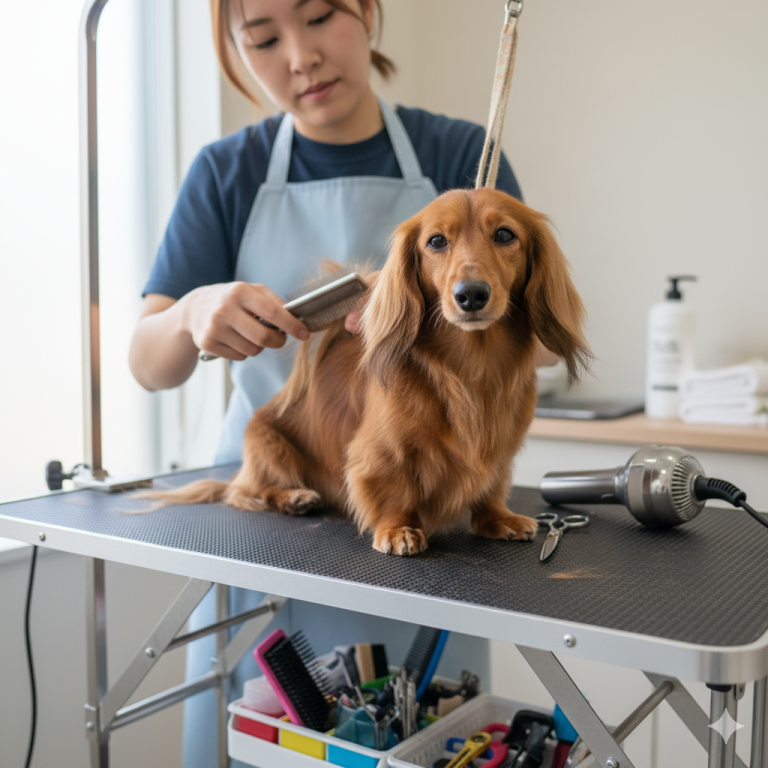
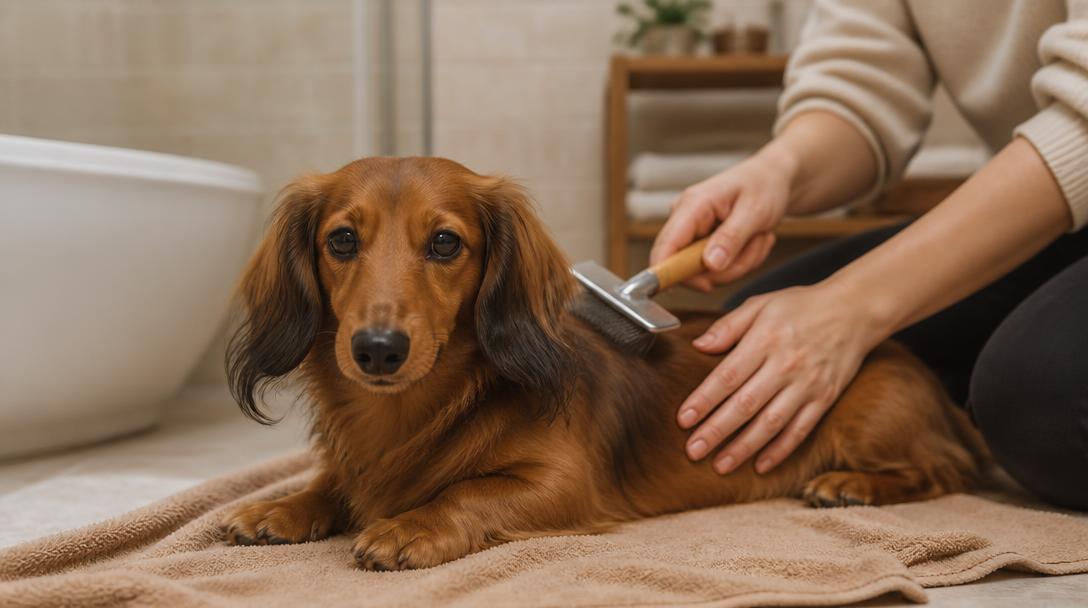
Long coats need the most attention: they collect burrs, mud, and tangles most easily, and matting can trap moisture against the skin if baths and brushing aren’t kept up. A full detangling brush-out before the bath (never after — wet mats tighten rather than loosen) makes a huge difference in how manageable the bath itself is.
What Products Are Actually Safe for a Dachshund’s Skin
This is where I see the most well-intentioned mistakes. Dachshund skin sits at a different pH than human skin, and products made for us — even “gentle” or “baby” formulas — can disrupt that balance and lead to dryness or irritation over time. A few product rules I’d stick to:
- Use a dog-specific shampoo, ideally one formulated for sensitive skin. Look for oatmeal-based or hypoallergenic formulas if your dachshund has any history of skin sensitivity
- Skip human shampoo entirely, including “gentle” or “no-tears” baby formulas — the pH mismatch can dry out a dog’s skin even when it’s mild by human standards
- Avoid heavily fragranced products if your dachshund has allergies or sensitive skin (see our guide to dachshund allergies if you’re noticing recurring skin issues) — fragrance is one of the more common irritant culprits
- Use lukewarm water, never hot — hot water strips natural oils faster and can be uncomfortable enough that your dog starts dreading bath time
- Rinse thoroughly — leftover shampoo residue is one of the most common causes of post-bath itching, and it takes longer to fully rinse out than most owners expect
How to Bathe a Dachshund Without Straining Their Back
This is the part that’s specific to our breed, and it’s the section I most want owners to actually read. A dachshund’s long spine and short legs make certain everyday movements — including bath time — higher-risk for back injury than they’d be for a typical dog, and IVDD (intervertebral disc disease) is a real concern across the breed.
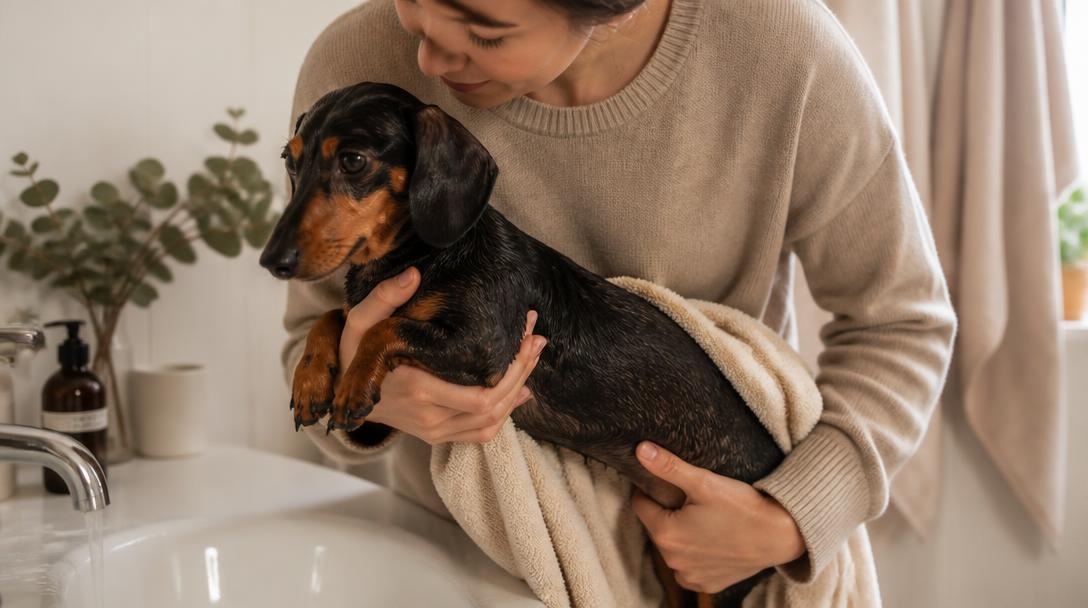
- Never let your dachshund jump in or out of a tub. Lift them in and out directly, supporting both the chest and the hindquarters at the same time — never scoop them up under just the front legs or belly, which puts strain on the spine
- Use a non-slip mat in the bottom of the tub or sink. A dachshund scrambling for footing on a slick surface is exactly the kind of sudden, twisting movement that can trigger a back injury
- Bathe in a sink or shallow basin for smaller dachshunds rather than a deep tub — it puts less strain on you to support them and keeps the whole process shorter and calmer
- Keep the whole process calm and unhurried. A stressed, wriggling dog is more likely to make the kind of sudden jump or twist that causes injury than a dog who’s used to a slow, predictable bath routine
If your dachshund has a known back issue or has had a previous IVDD episode, it’s worth asking your vet about bathing technique specifically — some dogs recovering from back injuries need to avoid certain positions or movements even during something as routine as a bath.
Drying Your Dachshund Properly
Drying matters just as much as the bath itself, especially for wire and long coats. A few things I always tell owners:
- Towel-dry first to remove as much water as possible before any further drying
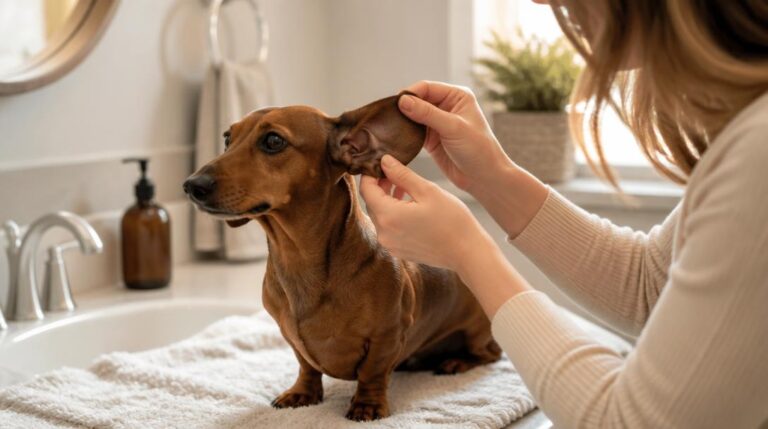
- Pay extra attention to skin folds, ears, and the belly — these areas trap moisture and are common spots for irritation or, in the case of ears, infection if left damp
- If using a hair dryer, use the coolest setting and keep it moving constantly — a dachshund’s skin is close to the surface and can be irritated or even burned by a dryer held too close or too hot in one spot
- Check ears after every bath. Dachshund ears are floppy and don’t get much airflow, which makes them prone to trapping moisture. A quick wipe with a vet-approved ear cleaner after bath time helps prevent the warm, damp environment that yeast and bacterial ear infections thrive in
Signs You May Be Bathing Too Often (or Not Enough)
A few practical signs to watch for either direction:
Bathing too often usually looks like: dry, flaky skin; a dull coat; increased scratching; or skin that feels tight or rough to the touch shortly after a bath.
Not bathing often enough usually looks like: a noticeable odor well before your next scheduled bath; visibly dirty or oily-feeling coat; or debris buildup in a long or wire coat that brushing alone isn’t resolving.
If you’re seeing signs of over-bathing, stretch the interval out and consider whether the shampoo itself might be too harsh. If you’re seeing signs of under-bathing, it’s fine to shift toward the 4-week end of the range, particularly for wire and long coats.
Frequently Asked Questions
Can I bathe my dachshund too often?
Yes. Bathing more than about once every 2 weeks, outside of a medical reason directed by your vet, typically strips natural oils faster than the skin can replenish them, leading to dryness, flakiness, and irritation.
What’s the best shampoo for a dachshund with sensitive skin?
Look for a dog-specific, hypoallergenic or oatmeal-based shampoo free of heavy fragrance and dyes. If your dachshund has diagnosed allergies, ask your vet about a medicated or prescription shampoo formulated for their specific skin issue.
Do dachshund puppies need a different bathing schedule?
Puppies generally need baths even less often than adults — their skin is more sensitive and still developing its natural oil balance. Stick to spot-cleaning where possible and save full baths for when they’re genuinely dirty, using a gentle puppy-specific shampoo.
Is it safe to use a hair dryer on a dachshund?
Yes, as long as it’s on the coolest setting and kept moving constantly a few inches from the skin. Never leave it pointed at one spot, and stop immediately if your dog seems uncomfortable or the skin feels warm to the touch.
How do I keep my dachshund’s ears healthy during bath time?
Avoid getting water directly into the ear canal during the bath, and follow up with a vet-approved ear cleaner wipe afterward. Floppy ears trap moisture easily, and that trapped moisture is one of the most common causes of ear infections in the breed.
The Bottom Line
Getting bath frequency right isn’t about a single universal number — it’s about matching the schedule to your dachshund’s coat type, activity level, and skin needs, using safe products, and handling the actual bathing and drying process in a way that protects their back. Get those pieces right, and bath time becomes a genuinely low-risk, low-stress part of your routine rather than something either your dog or their skin dreads.
If you’re also managing shedding alongside regular bathing, our guide to dachshund shedding and coat management pairs well with everything here. And if you ever notice skin issues that don’t resolve with a gentler bathing routine, don’t hesitate to loop in your vet — some skin problems need more than a shampoo change to fix.