As the healthcare specialist here at Simply Dachshund, I get more grooming questions than you’d expect about our short-haired dogs. People assume that because a smooth coat dachshund doesn’t need haircuts or hand-stripping, there’s nothing much to manage. In my experience, that’s backwards. A smooth coat has no fur to hide problems behind, which means skin issues, nail overgrowth, and ear trouble show up faster and matter more. This guide walks through what a proper smooth coat care routine actually looks like, and why a few of these habits are really about protecting your dog’s back and joints, not just keeping their coat shiny.
What Makes the Smooth Coat Different
Smooth coat dachshunds have a single, short layer of fur with no insulating undercoat underneath. That’s very different from the longhaired and wirehaired varieties, who carry extra layers that trap loose hair, hide skin flaking, and provide a buffer against scrapes and cold. A smooth coat dog’s skin is essentially one thin layer away from the outside world. That’s not a flaw, it’s just a different set of maintenance priorities than what most grooming advice assumes.
Because there’s no undercoat to manage, you’ll never need clippers, stripping knives, or detangling sprays. But you will need to pay closer attention to the skin itself, the nails, the ears, and how your dog handles temperature extremes.
Shedding: What’s Normal for a Smooth-Coated Dachshund
Smooth coat dachshunds shed year-round in a low, steady way rather than blowing their coat seasonally the way a longhaired dog might. You’ll notice fine, short hairs on furniture and clothing pretty consistently, with a mild uptick in spring and fall as the coat cycles. This is normal and not a sign of a health problem on its own.
What isn’t normal is sudden patchy hair loss, bald spots, or a noticeably thinning coat over a few weeks. That pattern points toward something underneath the surface, like a thyroid issue, a flea allergy, or a skin infection, rather than ordinary shedding. If you see patches rather than general light shedding, that’s worth a veterinary visit rather than a grooming fix.
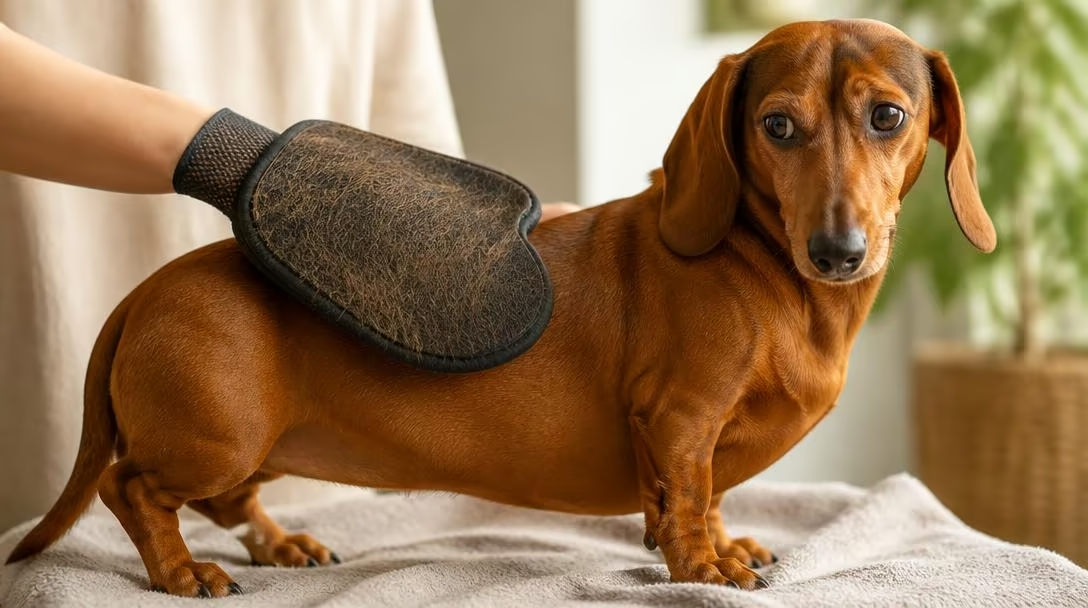
A weekly once-over with a rubber curry brush or grooming mitt is usually all a smooth coat needs to stay ahead of loose hair. It takes two or three minutes and also doubles as a hands-on skin check, which is the real value of the habit.
Brushing and Bathing Your Smooth Coat Dachshund
How Often to Bathe
This is where I correct the most assumptions. A lot of owners bathe their smooth coat dachshund as often as they would a longhaired dog, assuming more coat means more washing. It’s actually the opposite concern: smooth coats have less fur to buffer the skin, so frequent bathing strips natural oils faster and can leave the skin dry, flaky, or itchy. For most smooth coat dachshunds, a bath every four to six weeks is plenty, with spot-cleaning in between for muddy feet or a particularly messy outing. Dogs with skin allergies or certain medical conditions may need a different schedule your vet sets specifically for them.
Use a gentle, dog-formulated shampoo and rinse thoroughly. Leftover residue is one of the more common causes of post-bath itching in short-coated breeds, since there’s no fur to dilute it against the skin.
Brushing Tools That Actually Work
You don’t need a grooming kit for a smooth coat. A rubber curry brush, a grooming mitt, or even a slightly damp microfiber cloth wiped along the coat will pick up loose hair and distribute natural skin oils evenly. Brushing toward the direction of hair growth, in short, light strokes, is more comfortable for your dog than vigorous back-and-forth scrubbing.
Nail Care Matters More Than You’d Think
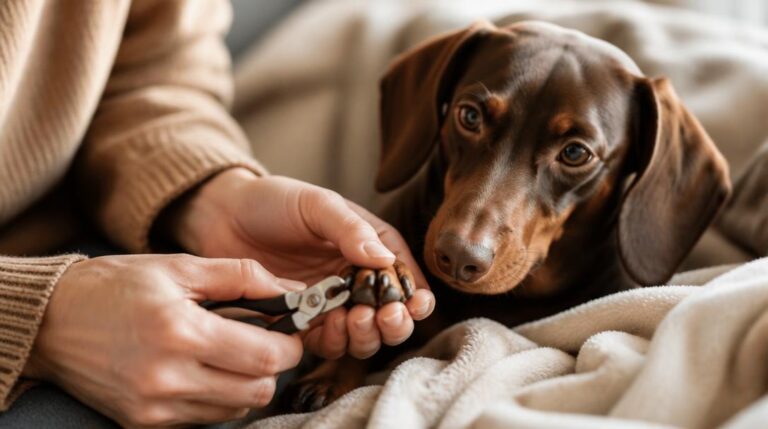
Here’s where coat type and back health actually connect. Dachshunds carry their long spine low and close to the ground, and overly long nails change how their feet strike the floor, forcing the toes to splay and shifting weight distribution up through the legs and into the back. On a smooth coat dog, overgrown nails are easy to see since there’s no fur hiding them, which is actually an advantage if you check regularly. If you hear nails clicking on hard floors, they’re already too long.
Aim to trim every three to four weeks, or whenever you hear that click. If you’re not confident with clippers, a grinder tool is more forgiving for first-timers, and a steady, patient approach matters more than speed. For a full walkthrough of technique, see our guide on how to trim a dachshund’s nails safely, and for more on how posture and movement affect spinal health, our joint care guide covers the bigger picture.
Ear Care for the Smooth Coat
Coat type doesn’t change ear shape, and dachshunds of every coat variety have the same long, floppy ears that trap moisture and warmth, creating a cozy environment for yeast and bacteria. Smooth coat dogs don’t have extra ear fur to deal with, which makes ear checks faster, but the underlying infection risk is exactly the same as it is for their longhaired and wirehaired relatives.
A quick weekly peek, with a gentle wipe using a vet-approved ear cleaner when needed, is enough for most dogs. Watch for redness, a strong odor, head shaking, or scratching at the ears, all of which warrant a vet visit rather than a home remedy. Our full ear care and infection prevention guide covers cleaning technique and warning signs in more detail.
Protecting Bare Skin: Sun, Cold, and Allergens
This is the trade-off of a smooth coat that owners most often overlook. Without an undercoat for insulation, these dogs feel cold faster than their longhaired and wirehaired littermates, especially dogs with fawn, cream, or thin coats where less pigment means less natural protection. A dachshund shivering on a walk in cool weather isn’t being dramatic, they’re genuinely under-insulated for the temperature.
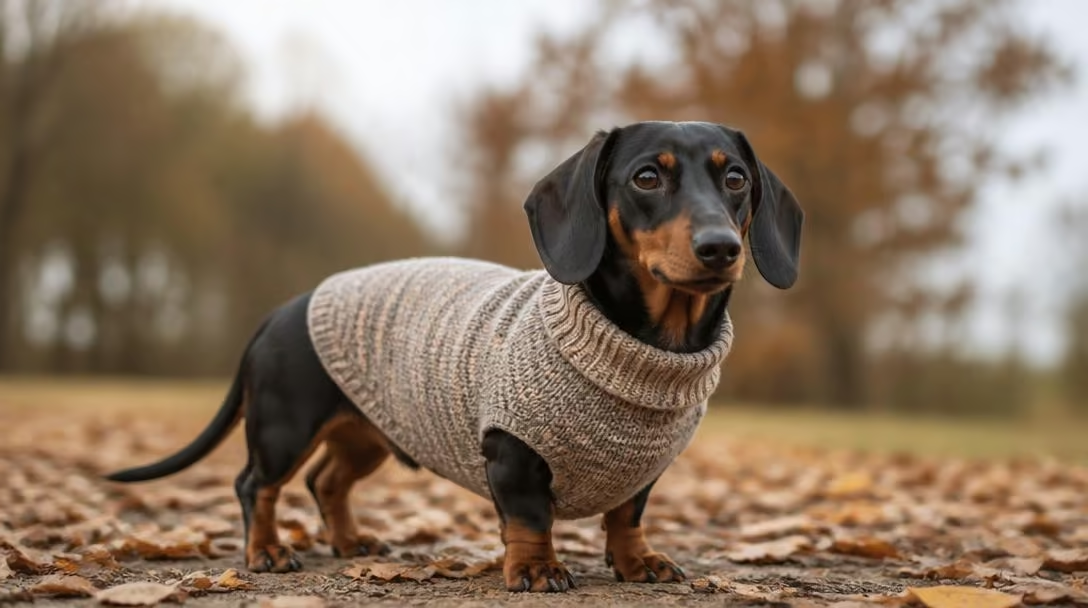
A properly fitted sweater or coat for anything below about 45°F makes a real difference, particularly for seniors, puppies, and dogs with less body fat. If you’re shopping for one, our buying guide to dachshund coats and sweaters covers fit and fabric considerations specific to this breed’s proportions.
The same exposed-skin issue cuts the other way in summer. Thin coats, especially on lighter-colored dogs, offer little sun protection, and sunburn on the back and belly is a real risk during long periods outdoors. Limiting midday sun exposure and asking your vet about a dog-safe sunscreen for extended outdoor time is worth considering for fair-skinned dachshunds.
Common Skin Issues to Watch For
Because there’s no fur buffer, skin problems on a smooth coat dachshund tend to be visible early, which is actually a diagnostic advantage if you know what to look for. Keep an eye out for dry, flaky patches, redness or rash-like irritation (often from allergies, contact with new bedding or cleaning products, or flea bites), small bumps or scabs, and any areas where your dog is scratching, licking, or chewing more than usual. Acne-like bumps on the chin are also fairly common in smooth coat dogs and are usually harmless, though persistent or spreading irritation should be checked by a vet rather than assumed to be cosmetic.
A monthly hands-on check, run your palms gently over your dog’s whole body while they’re relaxed, catches most of these issues early, when they’re easiest to treat.
Frequently Asked Questions
Do smooth coat dachshunds ever need haircuts?
No. Their coat doesn’t grow long enough to need trimming or clipping. Routine brushing and nail and ear maintenance make up their entire grooming needs.
Why does my smooth coat dachshund smell between baths?
A mild, healthy coat smell is normal and often linked to natural skin oils. A strong, sudden, or yeasty odor usually points to a skin or ear issue rather than a normal grooming gap, and is worth a vet check rather than just another bath.
Are smooth coat dachshunds hypoallergenic?
No dog breed is truly hypoallergenic, and smooth coat dachshunds shed consistently, which means dander and allergens are released regularly. People with allergies sometimes find short coats easier to manage than heavy double coats, but it isn’t a guarantee.
How often should I bathe my smooth coat dachshund?
Roughly every four to six weeks for most healthy adult dogs, with spot cleaning as needed in between. Bathing more often than that tends to dry out the skin rather than keep it cleaner.