If you’ve found dachshund hair on your couch, your socks, and somehow inside a closed drawer, you’re not imagining things — and you’re not alone. Dachshund shedding is a normal part of owning one of these low-riding dogs, but how much they shed, when it spikes, and what actually helps depends a lot on which of the three dachshund coat types you’re dealing with. Here’s what’s normal, what’s worth watching, and the grooming routine that keeps loose hair under control without turning into a daily chore.
Do Dachshunds Shed? The Short Answer
Yes — all dachshunds shed. There’s no such thing as a truly “non-shedding” dog, and dachshunds are no exception. The good news is that dachshund shedding is generally moderate. They don’t lose hair at the rate of a Labrador, Golden Retriever, German Shepherd, or Husky, all of which carry heavy double coats built for seasonal blowouts. Most dachshunds shed lightly to moderately year-round, with a noticeable uptick in spring and again in fall as their coat adjusts to changing daylight and temperature.
How visible that shedding is — and how much grooming it takes to manage — comes down almost entirely to coat type.
Shedding by Coat Type
Dachshunds come in three coats: smooth, long-haired, and wire-haired. Each sheds differently, and each needs a different approach to stay on top of it.
Smooth-Haired Dachshunds
Smooth dachshunds have a short, dense, single-layer coat. They shed lightly to moderately and fairly consistently through the year, with only a mild increase during seasonal changes. The catch: because the hairs are so short and fine, they’re hard to spot on the dog but surprisingly good at working themselves into upholstery, carpet, and clothing. A weekly brush with a rubber curry or bristle brush is usually enough to keep it manageable.
Long-Haired Dachshunds
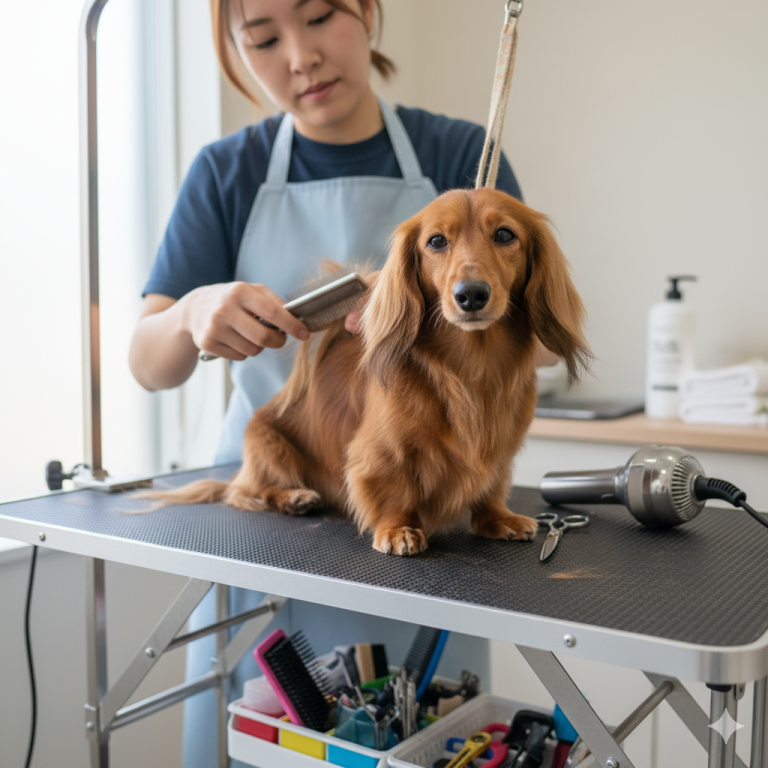
Long-haired dachshunds don’t necessarily shed more hair by volume than their smooth-coated relatives, but it looks like a lot more because the strands are longer and more visible. Their coat is also more prone to tangling and matting, particularly around the ears, chest, legs, and tail feathering, so consistent brushing matters more here than in any other coat type. For a full routine, see our complete guide to grooming a long-haired dachshund.
Wire-Haired Dachshunds
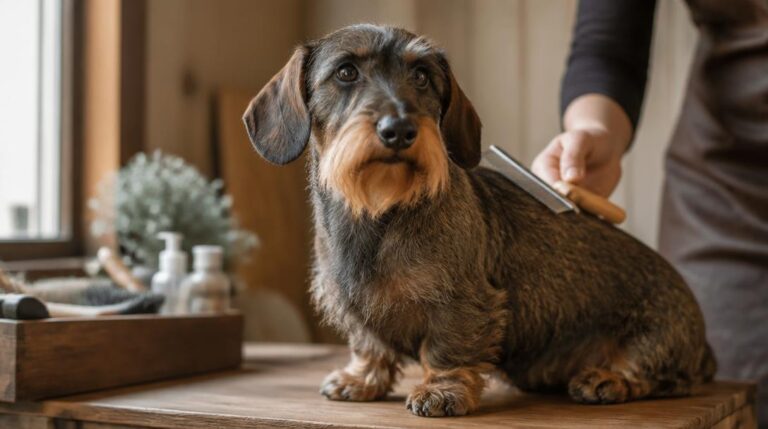
Wire-haired dachshunds carry a coarse, wiry topcoat over a softer undercoat, and that undercoat is where most of the shedding happens — especially during seasonal coat changes. Regular brushing plus an occasional hand-stripping session (rather than clipping, which can soften the wiry texture over time) keeps the coat healthy and reduces the amount of loose undercoat left behind on furniture.
Is It Normal Shedding, or Something Else?
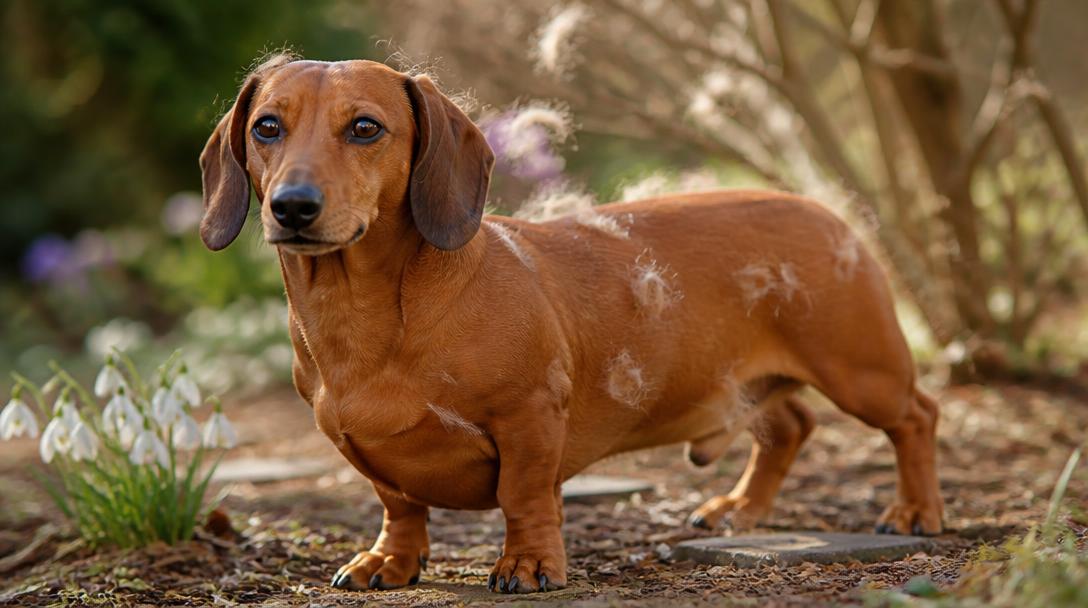
Normal shedding is diffuse — hair coming out gradually and evenly across the coat. What’s not normal is patchy hair loss, bald spots, excessive scratching, red or inflamed skin, or hair that comes out in clumps rather than single strands. Those signs point toward something other than routine shedding, such as a skin allergy, a flea or mite issue, a hormonal imbalance, or a nutritional gap. If you’re noticing any of those alongside the shedding, it’s worth reading our guide on dachshund allergies and, if symptoms persist, getting your dog checked out by a vet rather than assuming it’s just seasonal.
What Causes Shedding to Spike
A few things reliably ramp up dachshund shedding beyond the baseline:
Seasonal coat changes. Spring and fall are the two big transition points, as dogs shed the coat suited to the previous season and grow in one suited to the next.
Diet quality. A coat is a direct reflection of what’s going into the bowl. Diets low in quality protein or essential fatty acids tend to produce a duller coat and more noticeable shedding. Our dachshund nutrition guide covers what to look for in a food that supports healthy skin and coat.
Stress and environmental changes. Moving house, a new pet or baby in the home, boarding, or even a stressful vet visit can trigger a temporary shedding increase.
Bathing too often (or with the wrong products). Over-bathing strips natural oils from the skin, which can actually increase shedding and dryness rather than reduce it.
Underlying health issues. Thyroid problems, parasites, and certain skin conditions can all cause abnormal shedding patterns, which is another reason unusual hair loss deserves a vet’s attention rather than just a better brush.
Puppy Coat vs. Adult Coat: A Different Kind of Shedding
If your dachshund puppy suddenly seems to be shedding more around four to six months old, that’s not the same process described above — it’s the puppy coat being replaced by the adult coat. This transition can look dramatic, especially in long-haired puppies whose soft baby fuzz gives way to a coarser, longer adult coat over a period of several weeks. It resolves on its own and doesn’t require anything beyond your normal brushing routine, though a slightly more frequent brush during this window helps keep loose puppy fluff from matting into the incoming adult coat.
At the other end of life, senior dachshunds sometimes develop thinner, coarser coats and may shed a bit differently than they did as adults. This is usually a normal part of aging, but a sudden change in an older dog’s shedding pattern is still worth mentioning to your vet, since it can also be an early sign of a thyroid or metabolic issue.
Deshedding Tools Worth Having
You don’t need a drawer full of grooming gear, but a few well-chosen tools make a real difference:
Rubber curry brush or grooming glove — best for smooth coats; loosens dead hair while doubling as a light massage.
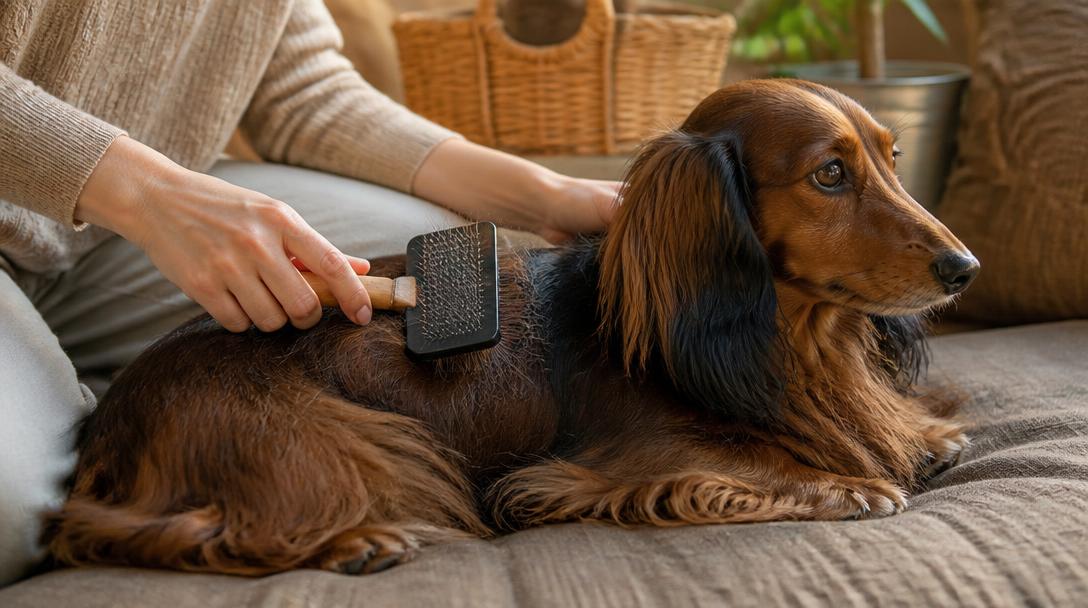
Slicker brush — the workhorse for long-haired dachshunds; gets through the feathering without pulling on skin.
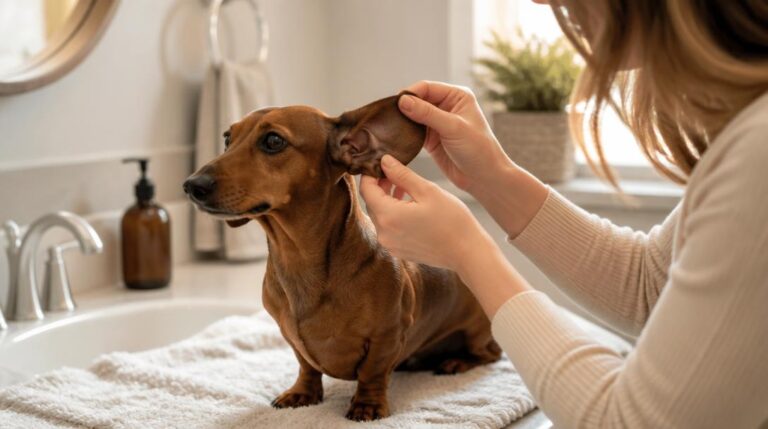
Wide-tooth comb — useful after slicker-brushing a long-haired coat to check for missed tangles, especially behind the ears.
Undercoat rake or stripping comb — reserved for wire-haired dachshunds during seasonal blowouts, when the soft undercoat sheds heaviest.
Deshedding tools with rotating blades (like a FURminator-style tool) can work on smooth coats but should be used sparingly and gently — overuse can irritate the skin or damage the topcoat if used too aggressively or too often.
How to Manage Dachshund Shedding
You won’t stop shedding entirely — it’s a normal biological process — but you can significantly cut down on the hair that ends up on your floors and furniture with a consistent routine.
Brush on a schedule, not just when you notice hair. Smooth coats do well with a weekly session; long-haired and wire-haired dachshunds benefit from brushing every two to three days, or daily during peak shedding season. Regular brushing pulls out loose hair before it ends up on your carpet instead of in the trash.
Use the right tool for the coat. A rubber curry brush or grooming mitt works well on smooth coats. A slicker brush or wide-tooth comb is better suited to long-haired dachshunds to prevent tangles. Wire-haired coats benefit from a stripping comb during seasonal blowouts.
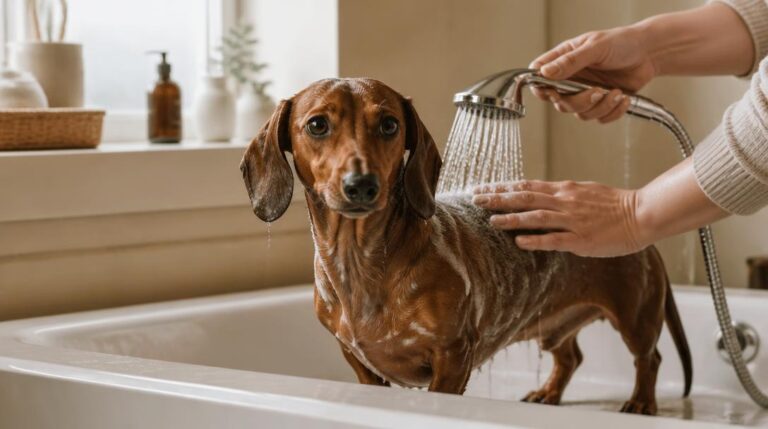
Bathe sparingly and with a gentle, dog-specific shampoo. Once every four to eight weeks is typically plenty unless your dog gets into something messy. Brushing before and after a bath — once the coat is fully dry — helps loosen and remove hair that’s already ready to fall out.
Feed for coat health. A diet with adequate high-quality protein and omega-3 and omega-6 fatty acids supports the coat from the inside out and can noticeably reduce excess shedding over a few weeks of consistent feeding.
Stay current on parasite prevention. Fleas and mites are a common, and often overlooked, cause of excessive shedding and skin irritation. Year-round prevention rules this out as a factor.
Manage the environment. A good vacuum with a pet-hair attachment, washable furniture covers, and regular laundering of dog bedding all help keep shed hair from accumulating between grooming sessions.
Frequently Asked Questions
Do dachshunds shed more than other small dog breeds?
Not particularly. Dachshunds shed a moderate amount compared to other small breeds. Breeds like Poodles and Bichon Frises shed far less due to their hair-like (rather than fur-like) coat structure, while breeds like Beagles and Corgis tend to shed more than dachshunds do.
Which dachshund coat sheds the least?
Smooth-haired dachshunds tend to be the easiest to manage day to day since their short coat requires the least brushing, though the fine hairs can still cling stubbornly to fabric.
Is there a time of year dachshunds shed the most?
Spring and fall are typically the heaviest shedding periods as dogs transition their coat for the coming season. Dogs kept primarily indoors under consistent artificial lighting may shed more evenly year-round with less dramatic seasonal spikes.
Can diet really make a difference in shedding?
Yes. A nutrient-poor diet is one of the most common — and most fixable — causes of excess shedding. Improving food quality often shows visible results in coat condition within four to six weeks.
When should I be worried about my dachshund’s shedding?
If you notice bald patches, red or flaky skin, excessive scratching, or hair falling out in clumps rather than gradually, it’s time for a vet visit rather than a heavier brushing schedule.
The Bottom Line
Some dachshund shedding is simply part of the deal, and coat type determines how much work it takes to manage. A consistent brushing routine matched to your dog’s coat, a quality diet, sensible bathing habits, and an eye out for anything that looks abnormal will keep shedding at a manageable, predictable level — and keep your dachshund’s coat looking its healthy, glossy best.