Every summer I get some version of the same message from a worried owner: “My dachshund was fine on the walk and now she’s flopped on the kitchen floor panting like she just ran a marathon.” Dachshunds don’t get talked about as a heatstroke-prone breed the way pugs or bulldogs do, and that’s exactly what makes it dangerous — owners don’t see it coming. But between a low-slung body that sits inches from radiant pavement heat, a chest built more for tunneling than for cooling, and a stubborn streak that keeps them digging or chasing squirrels well past the point they should stop, dachshunds are more vulnerable to overheating than most people realize. Here’s what I want every dachshund owner to know before the next heat wave rolls in.
Why Dachshunds Overheat Faster Than You’d Expect
Dogs don’t sweat the way we do — they cool themselves almost entirely through panting, with a small amount of heat loss through their paw pads. A few things stack the deck against dachshunds specifically:
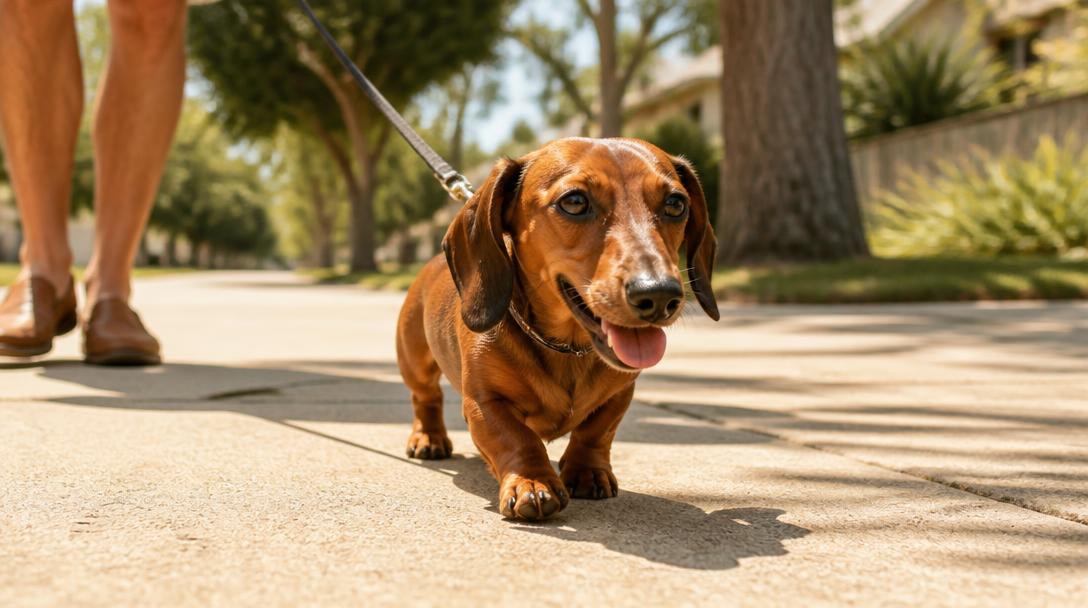
They’re close to the ground. Asphalt and concrete can run 40–60°F hotter than the air temperature on a sunny day, and a dachshund’s belly, chest, and face are riding right in that heat zone — much closer to it than a taller, longer-legged breed.
Their body shape works against them. That long torso means more surface area retaining heat relative to their ability to move air efficiently while panting, especially compared to a dog built with a deeper chest and longer legs.
Coat type matters. Wire-haired and long-haired dachshunds carry more insulation than the short, smooth coat most people picture, which can trap heat close to the skin during peak summer months.
They don’t know when to quit. This breed was bred to chase prey underground for as long as it took. That same drive means a dachshund will often keep playing, digging, or barking at the fence well past the point a more heat-sensible dog would have already found shade.
Add in that many dachshunds are prone to carrying extra weight (which insulates heat and adds strain on the heart and lungs), and you’ve got a breed that’s genuinely at higher risk than its reputation suggests — even though it isn’t a flat-faced breed like the ones usually flagged for heat sensitivity.
Warning Signs of Heatstroke in Dachshunds
Catching heatstroke early is the difference between a scary afternoon and a genuine emergency. Watch for this progression:
Early signs — heavy, rapid panting that doesn’t settle down after a few minutes of rest; bright red or darker-than-normal gums and tongue; restlessness or seeking out shade and water on their own; noticeably warm ears and paw pads.
Escalating signs — thick, ropey drool; glassy or unfocused eyes; wobbly or uncoordinated movement; rapid heart rate you can feel through the chest.
Emergency signs — vomiting or diarrhea, collapse, seizures, gums turning pale, blue, or gray, or a dog that stops responding normally to you. Any of these means you stop everything and get to a vet immediately — heatstroke at this stage can cause organ damage or be fatal within a short window.
If you’re ever unsure whether what you’re seeing is normal heavy breathing or something more serious, treat it as the emergency. It’s always the safer call.
The Pavement Test (and Other Simple Prevention Habits)
Most heatstroke cases I hear about come down to a handful of preventable situations. Here’s what actually moves the needle:
Do the hand test before every summer walk. Press the back of your hand to the pavement and hold it for seven seconds. If it’s too hot for your hand, it’s too hot for your dachshund’s paws — and hot pavement burns and overheating tend to happen on the exact same walks. Stick to grass, dirt trails, or early morning and evening walks instead.
Shift exercise to the coolest parts of the day. Early morning and after sunset are your windows in peak summer. If you’re rethinking your dog’s daily activity schedule for the season, our dachshund daily routine guide has a good framework for building exercise around the weather rather than the clock.
Never leave a dachshund in a parked car — not even for a minute, not even with the windows cracked. Car interiors can climb 20°F in ten minutes even on a mild day, and a dachshund’s low body mass means that heat overwhelms them faster than it would a larger dog. This is the single most common cause of preventable heatstroke deaths in dogs, and it’s completely avoidable.
Keep water available constantly, and make it easy to find. Multiple water stations around the house and yard, a portable bowl on walks, and ice cubes in the water dish on the hottest days all help keep a dachshund drinking enough.
Provide real shade, not just partial shade. A doghouse in direct sun can turn into an oven. Deep shade from trees, a shaded patio, or an air-conditioned room during the peak afternoon heat (roughly 11am–4pm) matters more than most owners assume.
Watch the humidity, not just the temperature. High humidity makes panting far less effective at cooling a dog down, so a muggy 82°F day can be riskier than a dry 90°F one. If the combined heat and humidity feel oppressive to you, it’s oppressive to your dachshund too — plan accordingly.
Consider a cooling mat or damp towel for extra-warm days. A cooling mat, a damp towel to lie on, or a light misting of cool (not cold) water can help a dachshund regulate temperature between outdoor trips.
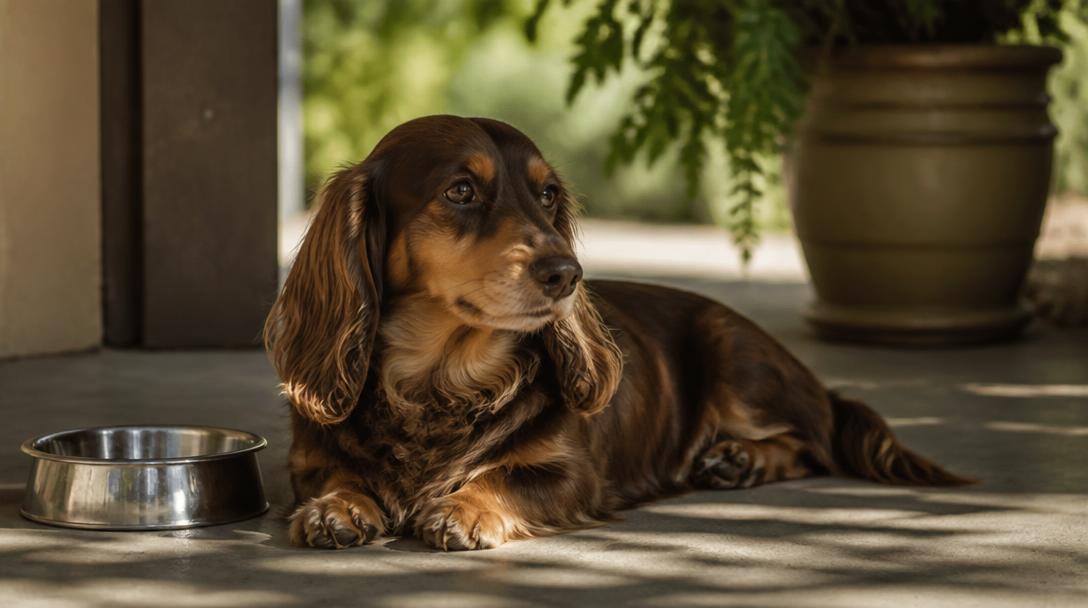
Dachshunds at Extra Risk
A few dachshunds need extra caution during hot weather: seniors, puppies, overweight dogs, and any dachshund with an existing heart or respiratory condition. Older dachshunds in particular don’t regulate body temperature as efficiently as they did as younger adults, so it’s worth shortening walks and watching more closely on hot days as your dog ages. It’s a similar logic to how we approach cold-weather care — our piece on whether dachshunds actually enjoy snow covers the same idea from the winter side: this breed’s body simply needs more temperature management than its confident personality would suggest.
What to Do If You Suspect Heatstroke
If your dachshund is showing early or escalating warning signs, act right away:
1. Move your dog out of the heat immediately — into shade or an air-conditioned space.
2. Offer small amounts of cool (not ice-cold) water. Don’t force your dog to drink, and never pour water directly down the throat of a dog who is disoriented, since this can cause choking.
3. Cool the body gradually. Apply cool, wet towels or lukewarm water to the neck, belly, armpits, and paw pads — the areas closest to major blood vessels. Avoid ice water or ice packs directly on the skin, which can cause blood vessels to constrict and actually slow the cooling process.
4. Use a fan if one’s available to help evaporate the moisture and speed cooling.
5. Call your vet or an emergency animal hospital immediately — even if your dog seems to be recovering. Heatstroke can cause internal damage that isn’t obvious right away, and a vet needs to evaluate your dog even after symptoms appear to ease up.
Heatstroke is one of those situations where “wait and see” is the wrong approach. A quick response in the first few minutes genuinely changes outcomes.
Frequently Asked Questions
At what temperature does heatstroke become a real risk for dachshunds?
Risk starts climbing once temperatures pass roughly 80°F, and it goes up sharply above 90°F — especially with high humidity, direct sun, or vigorous exercise. Asphalt and parked cars can be dangerous even on days that don’t feel extreme to a person.
Can a dachshund get heatstroke indoors?
Yes, if a home isn’t air-conditioned and airflow is poor, especially in a sunroom, garage, or a room that gets direct afternoon sun. Indoor heatstroke is less common than outdoor cases but absolutely possible during a heat wave.
Are long-haired dachshunds more at risk than smooth-coated ones?
Generally yes, since the extra coat adds insulation. Long-haired and wire-haired dachshunds may need shorter outdoor sessions and more frequent water breaks during peak summer heat compared to smooth-coated dogs.
Is it safe to shave my dachshund’s coat for summer?
Not recommended. A dachshund’s coat actually helps regulate temperature and protects skin from sunburn. Regular brushing to remove loose undercoat is a better approach than shaving — talk to a groomer or vet before making a drastic coat change for the heat.
How long does it take for a dog to recover from heatstroke?
Mild cases caught early often improve within an hour of cooling and rest, but any dog that showed moderate to severe symptoms should be seen by a vet the same day, since internal effects can take 24–48 hours to fully show up.
The Bottom Line
Dachshunds don’t make the “high risk for heatstroke” list as often as flat-faced breeds do, but their body shape, coat, and sheer stubbornness put them closer to that danger zone than most owners assume. A little planning — cooler walk times, constant access to water and shade, and never underestimating a hot car — prevents almost every case I hear about. Keep an eye on the early warning signs, trust your gut if something feels off, and your dachshund will get through the dog days of summer just fine.