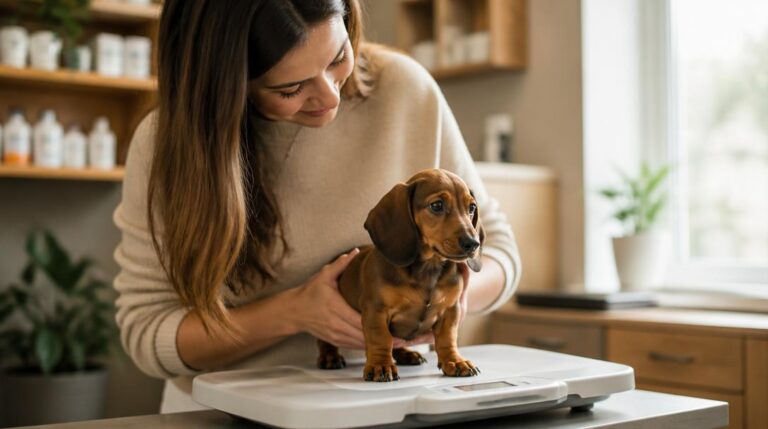
If your dachshund puppy has suddenly turned into a tiny, drooling chewing machine that’s gnawing on your shoelaces, the corner of the rug, and your fingers with equal enthusiasm, take a breath — this is normal, and it’s temporary. You’re in the middle of puppy teething, one of those developmental stages every dachshund goes through on the way to adulthood. I get a lot of questions about this in the clinic, usually from first-time owners who are convinced something is wrong because their puppy suddenly won’t stop chewing or seems a little off their food. In almost every case, it’s just teeth.
Because dachshunds are a small breed with a long jaw packed into a compact skull, teething can bring a couple of breed-specific wrinkles that owners of bigger dogs never have to think about. I want to walk you through the full timeline, what’s normal versus what’s worth a vet visit, and how to get your puppy (and your furniture) through this stage in one piece.
The Dachshund Puppy Teething Timeline
Teething isn’t a single event — it happens in stages, starting before you even bring your puppy home and continuing well past the point most people assume it’s over.
Weeks 2–6: Baby Teeth Arrive
Dachshund puppies are born without teeth. Starting around 2 to 4 weeks of age, the first set of baby teeth (also called deciduous or “milk” teeth) begins pushing through the gums. By 6 weeks, all 28 baby teeth are typically in, and this is also when breeders usually start the transition from nursing to soft puppy food, since those needle-sharp baby teeth make weaning a lot more practical.
Weeks 12–16: The Big Switch
This is the stage most new owners actually notice, because it usually starts right around the time a dachshund puppy settles into a new home. Somewhere between 12 and 16 weeks, those baby teeth start loosening and falling out to make room for permanent adult teeth. You may find small teeth on the floor or in a chew toy (they’re easy to miss — they’re genuinely tiny), or your puppy may simply swallow them without you ever noticing, which is completely harmless.
This is also the phase where the chewing really ramps up. Sore, itchy gums make puppies want to gnaw on anything they can get their mouth around, and unfortunately your hands, your shoes, and your baseboards are all fair game unless you redirect that energy somewhere better.
5–7 Months: Adult Teeth Settle In
By around 6 months old, most dachshunds have their full set of 42 adult teeth in place, and the most intense chewing phase starts to taper off. That said, full jaw and dental development can continue in a more subtle way until closer to 2 years old, so don’t be surprised if your dachshund still enjoys a good chew session well into adolescence — that part is more habit and enjoyment than active teething discomfort.
Signs Your Puppy Is Teething
The symptoms of teething are usually mild and easy to recognize once you know what to look for:
- Increased chewing on toys, furniture, hands, or anything within reach
- Excessive drooling
- Small blood spots on toys (a little pink-tinged drool is normal from irritated gums)
- Mild swelling or redness along the gum line
- Pawing at the mouth
- A short-lived dip in appetite, especially with harder kibble
- Slightly more irritability or restlessness than usual
- Missing teeth you find around the house, or notice are just gone
None of this should be dramatic. A teething puppy is uncomfortable, not in serious pain, and symptoms should come and go rather than steadily worsen. If your puppy seems genuinely lethargic, stops eating entirely, has significant swelling, or you notice a foul odor from the mouth, that’s outside the range of normal teething and worth a call to your vet.
Retained Baby Teeth: The Dachshund-Specific Issue to Watch For
Here’s the part I really want dachshund owners to know, because it’s more common in small breeds than large ones. Sometimes an adult tooth starts coming in before the baby tooth underneath it has fully let go, and the two end up sitting side by side instead of the baby tooth clearing out of the way. This is called a retained baby tooth, and small and toy breeds — dachshunds included — are more prone to it than larger dogs.
Retained baby teeth aren’t just a cosmetic issue. They can trap food and bacteria between the two teeth, crowd the adult tooth into growing at the wrong angle, and eventually lead to gum irritation or a painful abscess if left alone. The good news is that it’s easy to catch with a quick visual check.
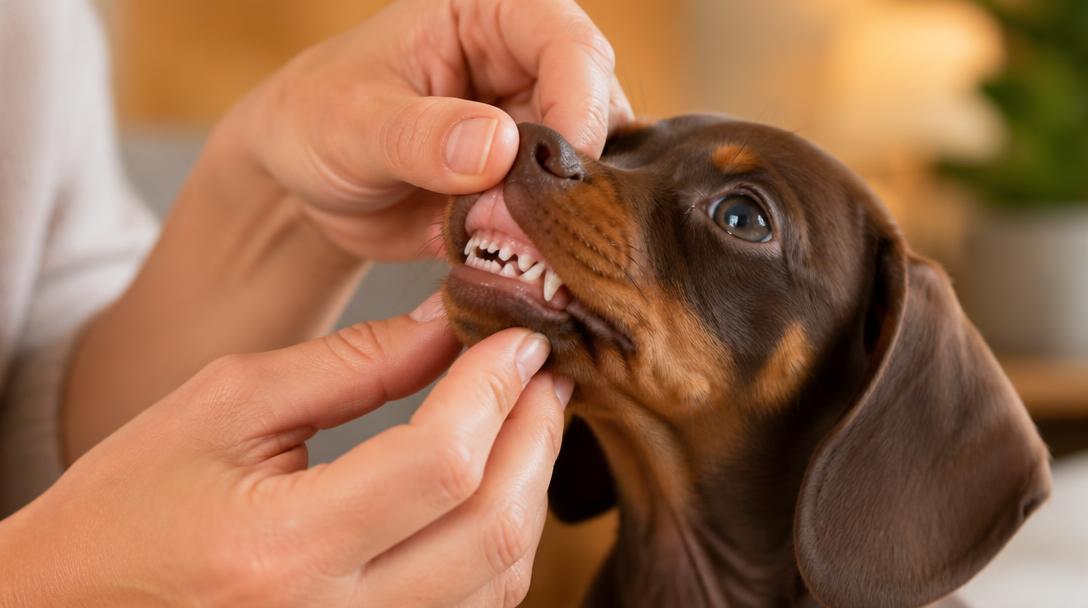
Starting around 4 months old, get in the habit of gently lifting your puppy’s lips a couple of times a week and looking at the gum line, especially around the canines (the long, pointed teeth) where retained teeth show up most often. If you ever see what looks like two teeth in the same spot — one adult-sized tooth and a smaller baby tooth right next to it — mention it at your puppy’s next vet visit. Retained teeth typically need to be extracted by a vet, and catching it early keeps it a simple, low-stress procedure rather than a bigger dental problem down the road.
How to Help a Teething Dachshund Puppy
Offer the Right Chew Toys
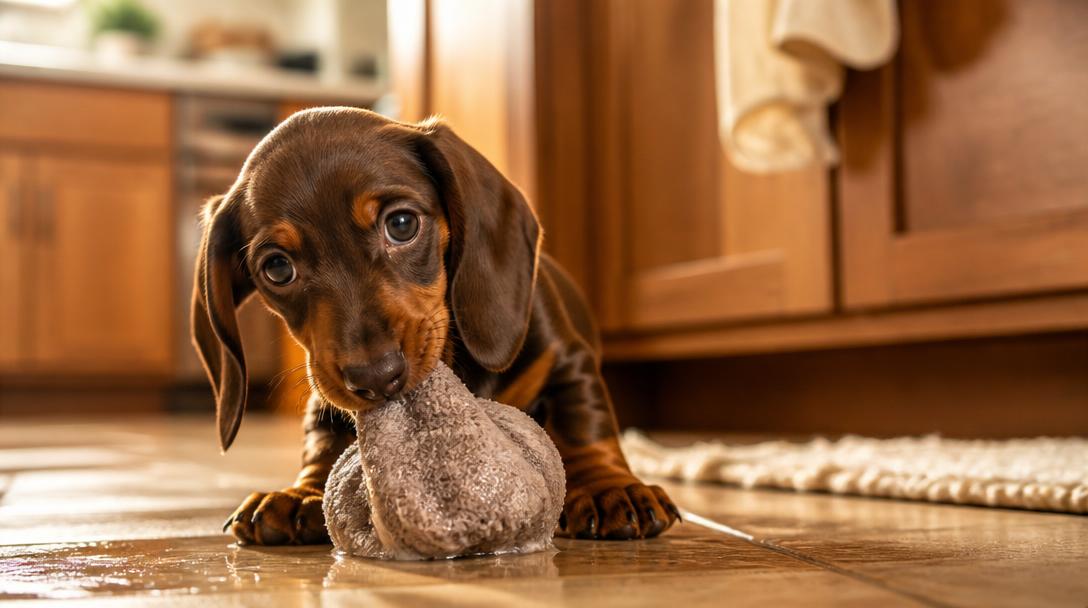
Give your puppy plenty of appropriate outlets for that chewing urge. Rubber chew toys designed for teething, knotted fleece rope toys, and puppy-safe nylon chews all work well. Rotate a few different textures so your puppy has options, and always size toys appropriately for a dachshund’s small mouth — nothing so large they can’t get a grip, and nothing with small parts that could break off and be swallowed.
Try Cold for Sore Gums
Cold is genuinely soothing for inflamed gums, the same way it would be for a teething human baby. A clean, damp washcloth tied in a knot and frozen for a couple of hours makes a great chew. Frozen carrots (supervised, and appropriately sized to avoid a choking risk) or a puppy-safe frozen treat can also help take the edge off.
Puppy-Proof Like You Mean It
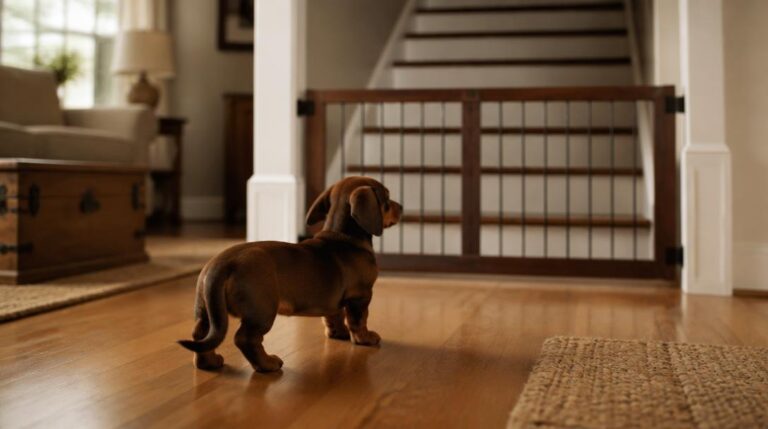
During the peak chewing weeks, treat your home the way you would for a new crawling baby. Move shoes, cords, and anything chewable out of reach, use baby gates or an exercise pen to limit access to rooms you can’t fully supervise, and keep a house line (a light leash) on your puppy indoors if redirecting away from furniture is a constant battle. This is also a great window to reinforce the “leave it” and “trade” cues — offering an appropriate chew in exchange for whatever inappropriate item they’ve picked up.
Soften Meals if Appetite Dips
If your puppy seems reluctant to crunch dry kibble during the height of teething, try softening it with a little warm water for a few days. Appetite should bounce back quickly once the sorest teeth have come through; if it doesn’t within a few days, or your puppy stops eating altogether, check in with your vet.
Start Gentle Dental Handling Early
Teething is actually a good window to start getting your puppy comfortable with having their mouth handled — gently lifting the lips, touching the gums, and eventually introducing a puppy toothbrush. It doubles as your retained-tooth check and sets the stage for easy dental care as an adult. If you want to go deeper on building that habit, I’ve written a full guide on dachshund dental care that covers brushing routines and long-term gum health once the adult teeth are settled in.
When to Call the Vet
Most teething resolves on its own with a little patience and the right chew toys, but a handful of situations are worth a vet check rather than waiting it out:
- A retained baby tooth still present alongside an adult tooth past 6–7 months
- Significant swelling, bleeding, or a foul smell from the mouth
- Refusal to eat for more than a day or two
- Visible pain when the mouth is touched, beyond mild sensitivity
- Broken or chipped teeth from overly aggressive chewing on hard objects
None of these are common, but they’re the reason regular mouth checks during this stage are worth the ten seconds they take.
Frequently Asked Questions
At what age do dachshund puppies start losing their baby teeth?
Most dachshund puppies start losing baby teeth around 12 weeks old, with the bulk of the switch happening between 12 and 16 weeks. Baby incisors are usually first, followed by the premolars and canines.
Is it normal for a teething puppy to have blood on their toys?
A small amount of pink-tinged saliva or a light spot of blood on a chew toy is normal and comes from irritated gums or a tooth working its way loose. Heavy bleeding, or blood that doesn’t stop, isn’t normal and warrants a vet visit.
What age is teething finished in dachshunds?
Most dachshunds have their full set of adult teeth by around 6 months old, though jaw and mouth development can continue in a subtler way until close to 2 years of age.
Can I give my teething dachshund puppy ice cubes?
Whole ice cubes can be hard enough to chip a puppy’s teeth and pose a choking risk for a small breed. A frozen wet washcloth or a puppy-safe frozen chew is a safer way to get the same cooling, soothing effect.
Do dachshunds need their baby teeth removed?
Usually not — baby teeth normally fall out on their own as adult teeth push through. The exception is a retained baby tooth that doesn’t fall out on its own, which does typically need a vet to remove it to prevent crowding or infection.
The Bottom Line
Teething is a short, manageable chapter in your dachshund puppy’s first year. Give them plenty of appropriate things to chew, keep an eye on those gums for anything that looks like a retained tooth, and know that the worst of the chewing will ease up once those adult teeth settle in around 6 months. If you’re still working through the rest of your new-puppy checklist, my complete puppy checklist covers everything else you’ll want to have sorted before — and during — this stage.