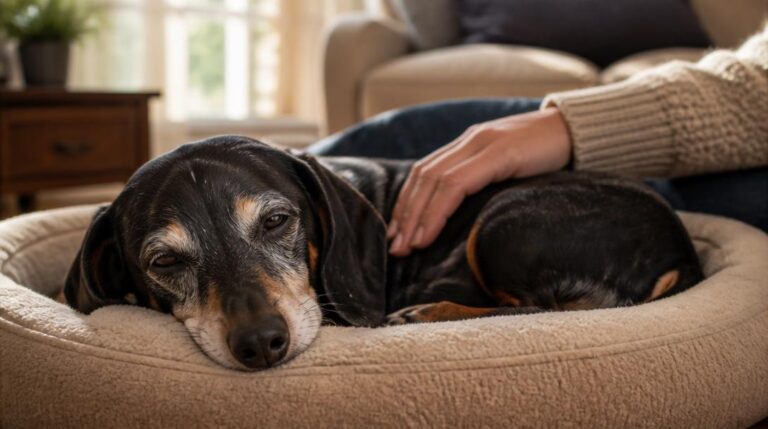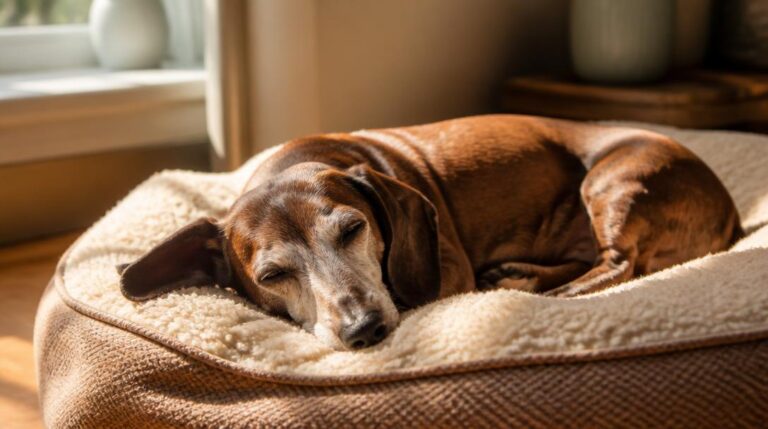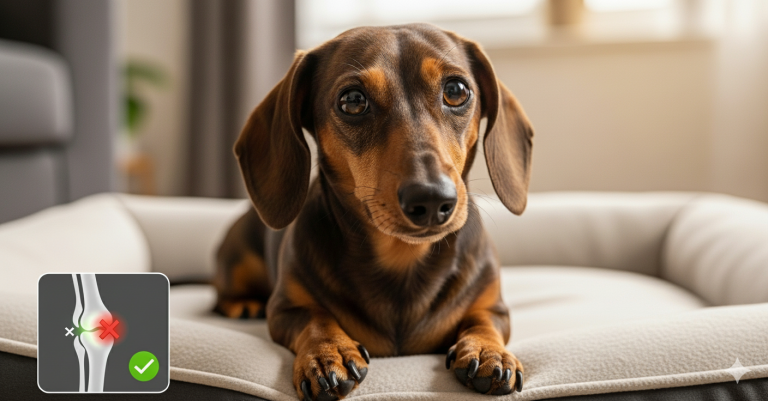
I get some version of the same question in my inbox every week: “How do I know when my dachshund is officially a senior, and what am I supposed to be doing differently?” It’s a fair question, and honestly, one I wish more owners asked before their dog hits the geriatric years rather than after. As our Healthcare Specialist here at Simply Dachshund, senior care is where I spend most of my time — and it’s also where a little bit of proactive knowledge makes the biggest difference in quality of life.
Dachshunds are a long-backed, short-legged breed with a few well-known vulnerabilities (their spine chief among them), but they’re also a remarkably long-lived breed — many live comfortably into their mid-to-late teens with good care. This guide walks through when your dachshund actually becomes a “senior,” what changes to expect, and exactly how to adjust their care so those later years are comfortable ones rather than a slow decline you’re constantly reacting to.
When Is a Dachshund Considered a Senior?
Most veterinarians classify dachshunds as seniors starting around 7 to 8 years old — earlier than many owners expect, since a healthy dachshund at 7 often still acts like a much younger dog. Small breeds generally age more slowly than large breeds, but dachshunds carry breed-specific risks (spinal disease chief among them) that make it worth adjusting your care approach a bit ahead of any visible slowdown, not after.
A rough age guide for dachshunds:
- 7–9 years: “Mature adult” — no major changes needed yet, but this is the window to start twice-yearly vet visits instead of annual ones
- 10–12 years: “Senior” — expect the first real signs of slowing down; diet, exercise, and home setup adjustments become worthwhile
- 13+ years: “Geriatric” — comfort and quality of life become the priority, alongside more frequent monitoring
These are guidelines, not hard cutoffs. A dachshund’s individual health history, weight, and any prior back issues matter more than the number on the calendar.
Signs of Aging to Watch For
The changes are usually gradual, which is exactly why they sneak up on owners. Here’s what I tell people to actually watch for, rather than just “seeming older”:
Mobility and Joints
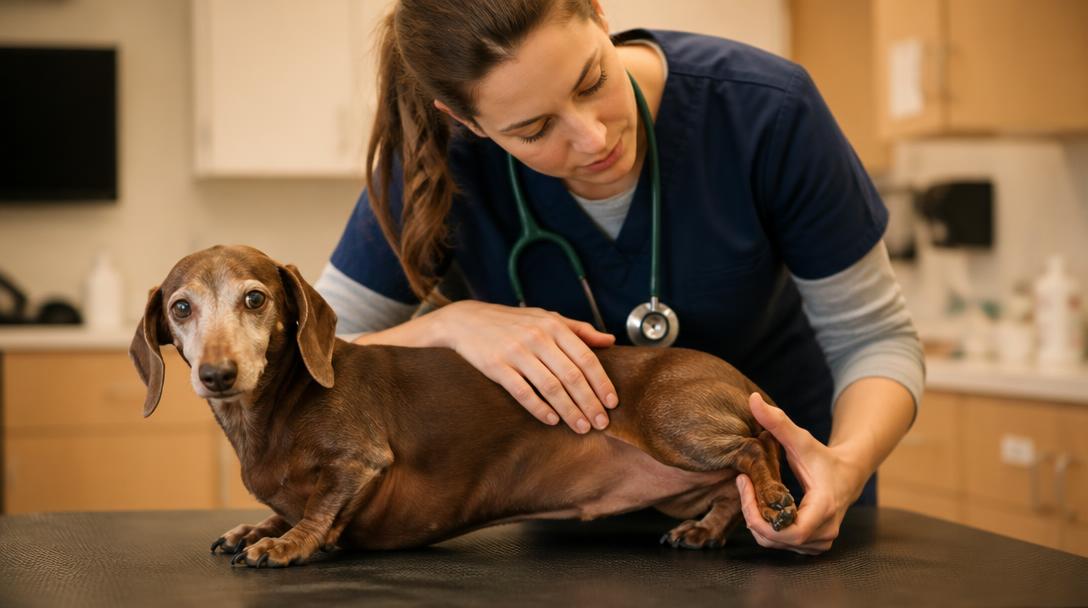
Slower to get up from lying down, hesitance on stairs, reluctance to jump onto furniture, or a stiff-legged gait after resting are the earliest physical signs. Because dachshunds are already prone to joint and spinal strain from their body shape, don’t write early stiffness off as “just getting old” — it’s worth a vet check to rule out arthritis or an early disc problem. I go into a lot more depth on keeping joints healthy through every life stage in our dachshund joint care guide, which is worth reading alongside this one.
Vision and Hearing
Cloudiness in the eyes (often a normal aging change called lenticular sclerosis, distinct from cataracts), bumping into furniture in dim light, or not responding to their name from another room are common by the senior years. Neither necessarily needs treatment, but both mean you should adjust how you interact — announce yourself before touching a sleeping senior dog, and keep furniture layout consistent if vision is fading.
Weight Changes
Senior dachshunds tend to go one of two directions: weight gain from a slower metabolism and reduced activity, or weight loss from dental pain, reduced appetite, or an underlying condition that needs a vet’s attention. Either direction matters more in this breed than most — extra weight puts direct strain on a spine that’s already at elevated risk for IVDD (intervertebral disc disease). If your dachshund hasn’t had a weight check in the last six months, that’s an easy first step.
Dental Health
Bad breath, visible tartar buildup, or reluctance to chew hard kibble or toys usually points to dental disease, which becomes extremely common in small breeds by their senior years. Left untreated, it’s not just a mouth problem — dental infections can affect the heart, kidneys, and liver over time.
Cognitive Changes
Confusion, disrupted sleep-wake cycles, staring at walls, or house-training accidents in a previously reliable dog can be signs of canine cognitive dysfunction — essentially the canine version of dementia. It’s more common than most owners realize in dogs past 11 or 12, and while it can’t be reversed, certain diets, supplements, and consistent routines can slow its progression meaningfully.
Adjusting Diet for a Senior Dachshund
A senior dachshund’s nutritional needs shift in a few specific ways:
- Lower calorie density to match reduced activity, unless your vet has identified unintentional weight loss
- Joint-support nutrients like glucosamine, chondroitin, and omega-3 fatty acids, which have reasonable evidence for supporting joint comfort in aging dogs
- Easily digestible protein that’s still high-quality — senior dogs need adequate protein to maintain muscle mass, contrary to the old myth that seniors need low-protein diets
- Smaller, more frequent meals if dental discomfort or a sensitive digestive system has developed
Weigh your dachshund monthly during the senior years and keep an eye on their body condition, not just the scale number. A senior-formula food isn’t automatically necessary — what matters is that the calorie count and nutrient profile actually match your individual dog’s activity level and health status, which is a conversation worth having at your twice-yearly vet visit.
Exercise: Staying Active Without Overdoing It
This is a common mistake I see: owners either stop exercising their senior dachshund almost entirely out of caution, or keep pushing the same activity level as their dog’s younger years. Neither is right. Gentle, regular movement keeps joints lubricated, muscles supporting the spine strong, and weight in check — all of which protect against the back problems this breed is known for.
What works well for most senior dachshunds:
- Two or three shorter walks a day rather than one long one
- Flat, even terrain — skip the stairs and steep inclines where possible
- Swimming, if your dog enjoys water, since it’s essentially zero-impact on the joints and spine
- Short, low-key play sessions rather than jumping games or rough play with other dogs
If you haven’t settled into a good activity rhythm for your dog yet, our dachshund daily routine guide is a solid starting point — the core principles hold for seniors, just scaled back in intensity.
Protecting the Spine in Senior Years
I’d be doing you a disservice if I didn’t flag this specifically: IVDD risk doesn’t go away as a dachshund ages — for many dogs, it actually increases, since discs degenerate further over time. Senior dachshunds need the same spinal-protective habits as younger ones, arguably more strictly:
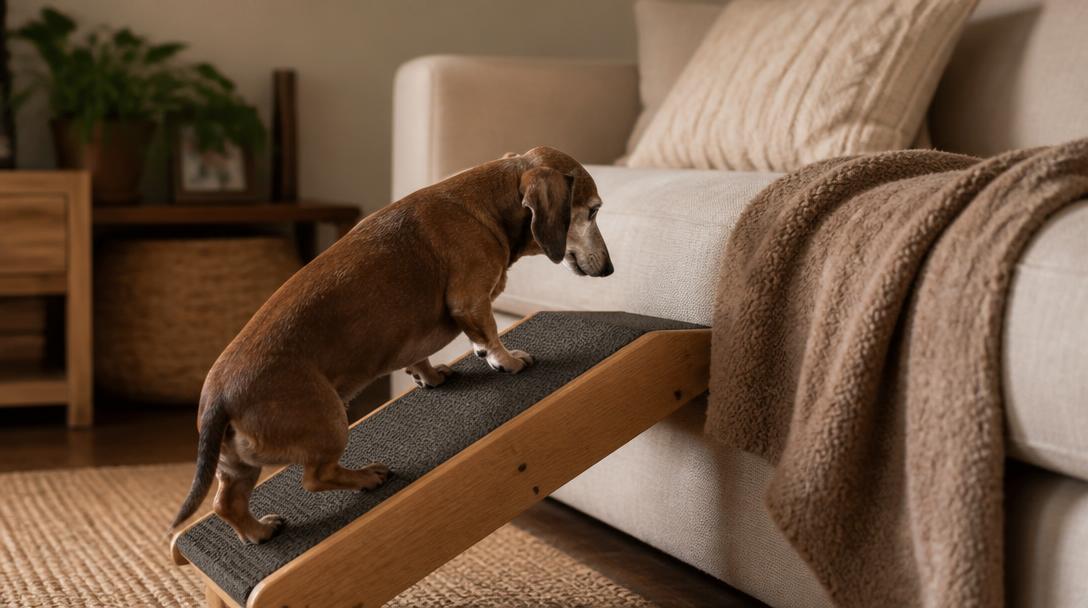
- No jumping on/off furniture or beds — use ramps or steps instead
- Support the full body (front and back) when picking them up, never lifting under just the front legs
- Keep weight in a healthy range — every extra pound is disproportionate strain on that long spine
- Watch for early warning signs: reluctance to move, yelping when touched, dragging a back leg, or a hunched posture — these need same-day vet attention, not a wait-and-see approach
I’ve written a full breakdown of prevention strategies in our dachshund spinal health and IVDD guide, which is essential reading for owners at any life stage but especially relevant once your dog is a senior.
Home Modifications That Help
Small changes to the home environment go a long way for a senior dachshund:
- Ramps or pet stairs at the couch, bed, and any car access point
- Orthopedic bedding with supportive foam, placed somewhere warm and draft-free — senior joints feel cold and hard surfaces more acutely
- Non-slip rugs or runners on hardwood or tile floors, where hind-leg slipping is both uncomfortable and a fall risk
- Raised food and water bowls if neck or back stiffness makes bending down to floor-level bowls uncomfortable
- Consistent layout — avoid rearranging furniture if vision is starting to fade
Veterinary Care Frequency for Seniors
Once your dachshund crosses into the senior years, twice-yearly vet visits (rather than annual) let you catch problems while they’re still manageable rather than after they’ve progressed. A typical senior wellness visit should include bloodwork, a dental check, a weight and body-condition assessment, and a hands-on check of mobility and spinal comfort. Many of the conditions common in senior dachshunds — kidney changes, thyroid issues, early arthritis, dental disease — are far easier and less expensive to manage when caught early.
Frequently Asked Questions
At what age is a dachshund considered a senior?
Most vets consider dachshunds seniors starting around 7 to 8 years old, with “geriatric” typically applying from about 13 years on. Individual health history matters as much as age alone.
How long do dachshunds typically live?
With good care, many dachshunds live into their mid-to-teens, with some reaching 16 or even older. They’re generally a longer-lived breed compared to larger dogs.
Is it normal for a senior dachshund to sleep more?
Yes, increased sleep is a normal part of aging. That said, a sudden or dramatic increase, especially paired with reduced appetite or mobility changes, is worth a vet visit to rule out an underlying issue rather than assuming it’s just age.
Should I switch my senior dachshund to a “senior” dog food?
Not automatically. What matters most is that the calorie count and nutrient profile fit your individual dog’s activity level, weight trend, and health status — a conversation to have with your vet rather than a blanket switch based on age alone.
What’s the biggest health risk for senior dachshunds specifically?
IVDD (spinal disc disease) remains a top concern throughout a dachshund’s life and doesn’t diminish with age — if anything, disc degeneration can make senior dogs more vulnerable. Maintaining a healthy weight and avoiding jumping are the two highest-impact habits at any age.
The Bottom Line
Aging in a dachshund isn’t a single event — it’s a gradual shift that rewards owners who pay attention early. A few adjusted habits (more frequent vet visits, a diet that matches your dog’s real activity level, spine-conscious handling, and a home that’s easier on aging joints) make a genuine difference in how comfortable and active your dog stays through their senior years. If you’re noticing any of the warning signs above, especially anything spine-related, don’t wait on a vet visit — early attention is always easier to manage than a crisis.