
If your senior dachshund has started staring blankly at walls, pacing at 3 a.m., or forgetting the housetraining they’ve had down since puppyhood, it’s tempting to chalk it up to “just getting old.” As the healthcare voice on this site, I want to be direct with you: some of that really is normal aging, but some of it can be canine cognitive dysfunction, or CCD — the dog version of Alzheimer’s disease. It’s more common than most owners realize, and it’s genuinely something we can help with, especially when we catch it early.
I’ve written before about the full picture of senior dachshund care and about what actually shortens or extends a dachshund’s life. This post zooms in on one specific, often-missed piece of that picture: the mental side of aging, not just the physical side.
What Is Canine Cognitive Dysfunction?
Canine cognitive dysfunction is a progressive neurological condition caused by changes in an aging brain — a buildup of a protein called beta-amyloid, reduced blood flow, and a drop in certain neurotransmitters. It’s strikingly similar to what happens in human Alzheimer’s disease, and it shows up as gradual changes in memory, learning, awareness, and perception.
Research estimates that a large share of dogs over the age of 11 show at least some signs of CCD, and the older a dog gets, the more likely it becomes. Dachshunds, who often live well into their teens, spend more years in the age range where this condition shows up than shorter-lived breeds do — which is exactly why I think it deserves its own conversation here rather than a passing mention.
The Signs to Watch For
Veterinary behaviorists often use the acronym DISHAA to describe the pattern of changes seen in cognitive decline. You don’t need to memorize it, but the categories are a genuinely useful checklist to run through if something feels “off” about your senior dachshund:
- Disorientation — getting stuck in corners or behind furniture, staring at walls or into space, appearing lost in familiar rooms, or not recognizing family members right away.
- Interaction changes — becoming clingy and following you everywhere, or the opposite: withdrawing from affection and interaction they used to seek out.
- Sleep-wake cycle disruption — sleeping more during the day and pacing, whining, or wandering at night. This is often the change that wears owners down the fastest.
- House soiling — accidents indoors from a dog who has been reliably housetrained for years, sometimes seemingly without realizing they need to go.
- Activity level changes — reduced interest in play or walks, repetitive pacing or licking, or aimless wandering with no clear purpose.
- Anxiety — new or worsening signs of stress, separation anxiety, or increased vocalization, especially in situations that never used to bother them.
One or two of these on their own, especially mild ones, can just be normal aging. A cluster of them, or a clear downward trend over weeks and months, is what points toward CCD specifically.
Don’t Mistake Pain for Confusion (or Confusion for Pain)
This is the part I really want dachshund owners to sit with, because it’s where this breed’s specific health profile matters. Dachshunds are already prone to back problems from IVDD and to joint issues as they age — both of which I’ve covered in detail separately. A dachshund who’s suddenly reluctant to jump onto the couch, hesitant on stairs, or slower to get up isn’t necessarily confused. They may simply be in pain.
The reverse mix-up happens too: an owner sees their dog wandering aimlessly or pacing and assumes it’s “just arthritis acting up,” when it’s actually a sign of disorientation. Because the physical and cognitive issues that come with age can look similar from a few feet away, and because dachshunds are more prone than most breeds to the physical half of that equation, I always recommend a vet visit before assuming either explanation on your own. A thorough exam can tell the difference between a dog who hurts and a dog who’s confused — and sometimes, honestly, it’s both at once.
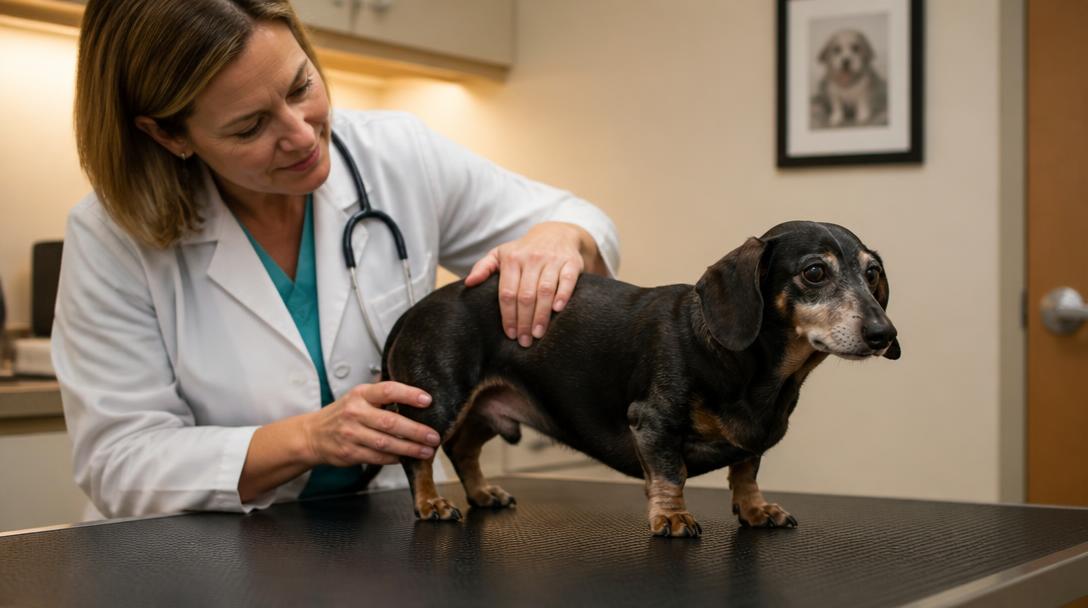
How Vets Diagnose Cognitive Dysfunction
There’s no single blood test or scan that confirms CCD. Instead, diagnosis is a process of ruling out other, more treatable causes of the same symptoms: urinary tract infections (a common cause of sudden house soiling), vision or hearing loss, arthritis and other sources of chronic pain, thyroid disease, and in some cases brain tumors or other neurological conditions. Your vet will likely ask detailed questions about when the changes started and how they’ve progressed, do a full physical and neurological exam, and may recommend bloodwork or imaging depending on what they find.
Bring specifics to that appointment if you can — a note on your phone of what you’ve noticed and when tends to be far more useful to a vet than “he’s just been acting weird lately.”
Managing and Slowing Cognitive Decline
CCD isn’t reversible, but it’s also not something you just have to watch happen. Several approaches have real evidence behind them for slowing progression and easing symptoms:
Diet and Supplements
Diets formulated with antioxidants, medium-chain triglycerides (MCTs), and omega-3 fatty acids have shown measurable benefit for cognitive function in senior dogs in clinical studies. Some vets also recommend supplements like SAMe or specific senior-cognitive formulas — always run any supplement by your vet first, since dosing and quality vary a lot between products.
Prescription Medication
Selegiline (brand name Anipryl) is FDA-approved specifically for canine cognitive dysfunction and can meaningfully reduce symptoms in some dogs. It’s not the right fit for every dog, and it takes a few weeks to show effect, so this is a conversation to have directly with your vet rather than something to source on your own.
Environmental Enrichment
Keeping a senior dachshund’s brain active — short training refreshers, food puzzles, gentle new sniff-focused walks, and simply maintaining a consistent daily routine — appears to help slow cognitive decline in the same way mental stimulation is protective in aging humans. Consistency matters here: a stable routine and familiar layout at home reduce disorientation, while sudden furniture rearranging or unfamiliar environments can make symptoms look worse than they are.

Managing Nighttime Restlessness
If sleep-wake disruption is the main issue, a combination of more daytime mental and physical activity, a consistent bedtime routine, and in some cases vet-guided medication can help restore a more normal sleep pattern for everyone in the house.
Can You Lower the Risk?
There’s no guaranteed prevention, but the same habits that support your dachshund’s overall long-term health seem to support brain health too: keeping them at a healthy weight, regular veterinary checkups that catch problems early, a nutritionally complete diet, ongoing mental stimulation throughout their adult years (not just once symptoms start), and managing chronic pain proactively so it doesn’t compound with cognitive symptoms later. None of this promises your dachshund won’t develop CCD, but it stacks the odds in their favor.
When to Talk to Your Vet
Any new or worsening sign from the DISHAA list above is worth a conversation with your vet — not because every case is an emergency, but because earlier intervention tends to work better than starting after months of unaddressed decline. Sudden, severe changes (collapse, seizures, extreme disorientation, or a dog who seems to be in obvious pain) warrant a prompt visit rather than a wait-and-see approach.
Frequently Asked Questions
At what age do dachshunds start showing signs of cognitive dysfunction?
Signs can begin to appear anywhere from around 9 to 11 years old, though mild changes are sometimes missed until they become more obvious in the mid-teens. Because dachshunds often live into their mid-teens, they spend more years in this higher-risk window than many other breeds.
Is canine cognitive dysfunction the same as dementia in humans?
It’s not identical, but it’s remarkably similar in cause and presentation — both involve age-related changes in the brain, including amyloid protein buildup, and both cause progressive memory, awareness, and behavior changes.
Can diet alone treat cognitive dysfunction?
Diet can help slow progression and support brain health, especially formulas with added antioxidants and MCTs, but it’s rarely a complete treatment on its own. Most dogs benefit from a combined approach of diet, environmental enrichment, and sometimes medication.
How is nighttime pacing and whining treated?
Increasing daytime physical and mental activity, keeping a predictable bedtime routine, and reducing daytime napping can help. For dogs with more severe sleep disruption, your vet may recommend medication alongside these routine changes.
Should I be worried if my senior dachshund has one accident indoors?
Not necessarily — a single accident can have many causes, including a urinary tract infection, which is worth ruling out first. A pattern of repeated accidents, especially alongside other DISHAA signs, is what points more specifically toward cognitive decline.
The Bottom Line
Watching a dachshund you’ve known for years start to seem like a slightly different dog is hard. But cognitive dysfunction is a recognized, studied condition with real management options — not something you or your senior dog have to just push through alone. If any of the signs above sound familiar, the most useful next step is a conversation with your vet, armed with specifics about what you’ve noticed and when. Early support genuinely does make a difference in how gracefully your dachshund gets to move through their senior years.