Spring is my favorite season around here. The snow’s gone, the mud’s out, and every dog on the block suddenly has three times the energy. But I’ll be honest with you: spring sneaks up on dachshund owners in ways winter and summer don’t. We talk a lot about heatstroke in July and ice on the sidewalks in January, but the thaw-and-bloom season has its own list of hazards, and because our breed rides so low to the ground, we run into more of them than a taller dog would.
Every crocus, every puddle of melted snow, every freshly fertilized lawn is right at nose height for a dachshund. That’s not a reason to panic, it’s just a reason to walk into spring with your eyes open. Here’s everything I check for before I let my own dogs loose in the yard once the weather turns.
Why Spring Is Riskier for a Low-Slung Dog
A dachshund’s whole body is built closer to the ground than almost any other breed. That long back and those short legs mean a dachshund’s nose, belly, and paws are in constant contact with whatever’s growing, decomposing, or freshly sprayed on the lawn. A Labrador walks over a patch of chemical-treated grass; a dachshund practically wades through it. That difference matters more in spring than any other season, because spring is when lawns get fertilized, gardens get planted, and the ground itself is thawing out everything that was frozen solid all winter.
Keep that “ground-level exposure” idea in mind as you read through the rest of this guide — it’s the thread that connects almost every spring hazard on this list.
Toxic Spring Plants and Bulbs
Spring bulbs are one of the first things to bloom, and unfortunately several popular ones are toxic to dogs. Tulips and daffodils both concentrate their toxins in the bulb, which is exactly the part a curious dachshund is likely to dig up and chew. Ingesting the bulb can cause drooling, vomiting, diarrhea, and in larger amounts, more serious cardiac or respiratory symptoms. Lily of the valley, another spring bloomer, is toxic to the heart in dogs. Azaleas and rhododendrons, which flower in mid-to-late spring in a lot of yards, contain compounds that can cause vomiting, weakness, and heart rhythm problems if eaten.
The safest approach isn’t memorizing every toxic flower, it’s supervising your dachshund closely any time you’re in a garden bed you didn’t plant yourself, and keeping newly planted bulbs fenced off until they’re established. If you want to landscape with total peace of mind, the ASPCA keeps an updated list of toxic and non-toxic plants that’s worth bookmarking before your next trip to the garden center.
Garden Chemicals: Fertilizer, Mulch, and Pesticides
This is the one I want every dachshund owner to really sit with, because it’s the spring hazard most directly tied to how low our dogs sit. Lawn fertilizers, weed killers, and pest control products go down heavily in spring, and a dachshund’s belly and paws pick up residue that a taller dog’s would never touch. Some fertilizers also contain bone meal or blood meal, which smells irresistible to a dog and can cause a serious, even life-threatening, pancreatitis flare-up if eaten in quantity.
Cocoa mulch deserves its own mention. It’s popular in spring garden beds because of the smell, but it contains the same theobromine compound found in chocolate, and dogs have been poisoned by eating it. If you use mulch, stick to cedar or pine.
A simple rule: if a lawn (yours or a neighbor’s) was treated in the last 24 to 48 hours, keep your dachshund off it, and rinse their paws and belly with plain water after any walk through a garden bed or freshly mulched area, treated or not. If your dog does get into fertilizer, pesticide, or mulch, call your vet or the ASPCA Animal Poison Control Center right away rather than waiting to see if symptoms show up.
Ticks and Fleas Wake Up Too
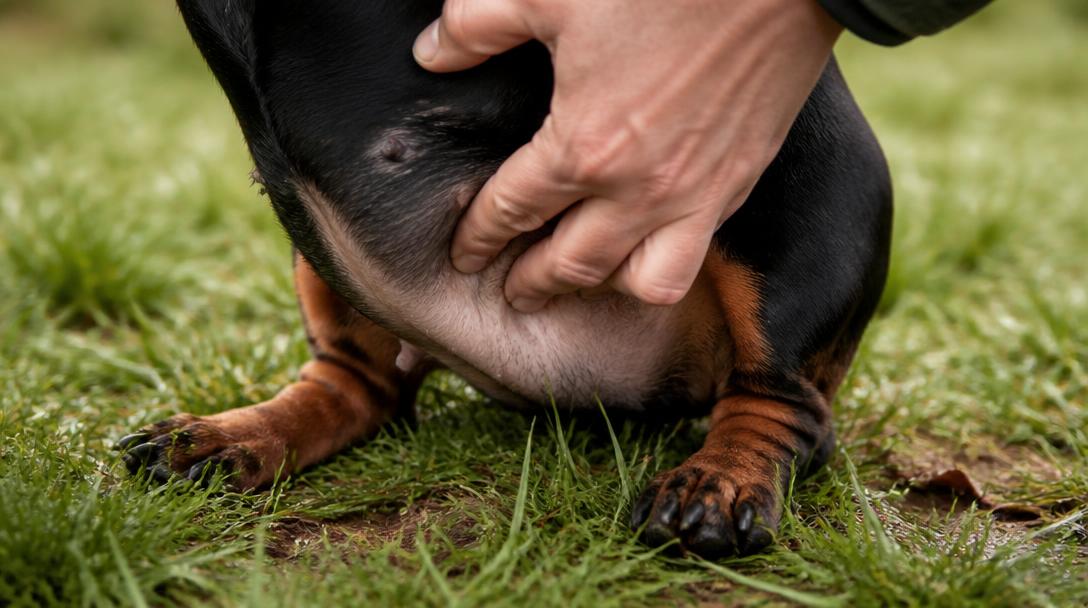
Ticks and fleas both go dormant over a cold winter and come roaring back the moment temperatures climb into the 40s and 50s Fahrenheit. Because a dachshund’s belly and legs brush directly through tall grass, brush, and leaf litter, they pick up ticks far more easily than a dog walking well above the grass line. Ticks can carry Lyme disease, ehrlichiosis, and other tick-borne illnesses, so a spring tick check is worth building into your routine the same way you’d build in a daily potty break.
After every walk through grass, brush, or wooded areas, run your hands slowly over your dachshund’s whole body, paying extra attention to the ears, armpits, groin, and between the toes, since those are a tick’s favorite hiding spots on a low dog. Talk to your vet about starting (or restarting) a flea and tick preventive before the season really gets going rather than after you’ve already found one.
Foxtails and Grass Awns
Foxtails and other grass awns start appearing as grass dries out later in spring, and they’re a genuine emergency risk for a dog built like a dachshund. These barbed seed heads only travel one direction once they attach to fur or skin, working their way in rather than falling back out. A dachshund’s low body and long ears put them right in the path of foxtails hiding in overgrown grass, and a foxtail that gets into an ear canal, nose, paw, or eye can migrate deep enough to require sedation and surgical removal.
Check paws (especially between the toes), ears, and the coat after every walk through anything taller than a well-mowed lawn. Sudden head-shaking, pawing at an ear, sneezing fits, or limping after an outdoor walk are all signs worth an immediate vet check, not a wait-and-see.
Seasonal Allergies
Just like people, dogs can develop seasonal pollen allergies, and dachshunds are no exception. Tree and grass pollen peaks in spring, and in dogs it usually shows up as itchy skin, paw licking, red or watery eyes, ear infections, or sneezing rather than the sniffling most people associate with allergies in themselves. Because a dachshund’s coat and skin are already so close to whatever’s blooming and dropping pollen at ground level, a bad allergy season can hit them harder than it would a taller breed.
If you notice your dachshund suddenly licking their paws obsessively, scratching more than usual, or developing recurring ear infections every spring, mention the seasonal pattern to your vet. It’s worth ruling in (or out) as an allergy before assuming it’s a one-off skin issue, and our full guide to dachshund allergies walks through symptoms and treatment options in more detail.
Mud, Wet Ground, and Belly Care

Spring thaw means mud, and mud means a dachshund’s belly is going to be dragging through it on every single walk. Wet fur trapped against the skin for hours at a time creates the perfect environment for hot spots and yeast or bacterial skin infections, especially on the belly and around the groin where airflow is already limited on a long-backed dog. It’s a small thing, but drying your dachshund’s belly and legs thoroughly after every muddy walk (not just a quick towel pass) heads off a lot of skin trouble before it starts.
This is also a good moment to keep an eye on paw pads. Cracked, thawing ground and sudden temperature swings between the last cold snap and the first warm week can dry out or irritate paw pads more than owners expect.
The Spring Coat Blow
If you have a smooth or wire-haired dachshund, you’ll notice a heavier-than-usual shed as the weather warms, sometimes called “blowing coat.” This is completely normal: your dog is shedding out the denser winter undercoat to make room for a lighter summer one. Daily brushing during peak shedding weeks keeps loose fur from matting and gives you a natural excuse to run your hands over your dog’s whole body, which doubles as a great habit for catching ticks and skin issues early. Our dachshund shedding guide covers the full seasonal shedding cycle if you want more detail on what’s normal and what’s worth a vet visit.
Easter and Spring Holiday Hazards
Easter lands squarely in the middle of spring for most of the country, and it brings its own short list of dangers. Chocolate eggs and bunnies are the obvious one, but xylitol, the sugar substitute in a lot of sugar-free candy, gum, and even some peanut butter brands, is far more dangerous to dogs than chocolate itself and can cause a rapid, life-threatening drop in blood sugar in very small amounts. Easter grass (the plastic or paper shred in baskets) is also a serious intestinal blockage risk if swallowed, and it’s exactly the kind of thing a curious dachshund will investigate nose-first.
Keep baskets up on a counter or table, not on the floor or a low chair where a dachshund can reach them, and make sure everyone in the house, kids especially, knows not to share Easter candy with the dog.
A Quick Spring Safety Checklist
- Supervise closely around any garden bed with spring bulbs, azaleas, or rhododendrons
- Keep your dachshund off any lawn treated with fertilizer or pesticide for at least 24–48 hours
- Rinse paws and belly after walks through mulched or garden areas
- Start (or restart) flea and tick prevention before tick season peaks
- Do a full-body tick check after every walk through grass or brush
- Watch for foxtails in paws, ears, and coat after walks in tall or overgrown grass
- Mention any recurring spring paw-licking, scratching, or ear infections to your vet
- Dry your dog’s belly and legs thoroughly after muddy walks
- Brush daily during the spring coat blow
- Keep Easter candy, xylitol products, and Easter grass out of reach
Frequently Asked Questions
Are dachshunds more sensitive to spring hazards than other breeds?
In some specific ways, yes. Their low body means more direct skin, paw, and nose contact with garden chemicals, mud, pollen-covered grass, and foxtails than a taller breed experiences on the same walk. It’s not that dachshunds are more biologically sensitive to these hazards, it’s that they’re physically closer to them.
What spring flowers are safe to plant if I have a dachshund?
Snapdragons, roses, marigolds, and sunflowers are all generally considered non-toxic to dogs and make good choices for a dachshund-friendly garden. When in doubt on a specific plant, check the ASPCA’s toxic and non-toxic plant list before adding it to your yard.
How soon after fertilizing can I let my dachshund back on the lawn?
Most granular fertilizers are considered safe once they’ve been watered in and the lawn is fully dry, typically 24 to 48 hours, but always check the specific product label since some formulations recommend longer. When in doubt, keep your dog off the treated area and rinse paws after any accidental contact.
My dachshund’s ear canal is affected by a foxtail. Is this an emergency?
Yes. A suspected foxtail in the ear, nose, or eye needs same-day veterinary attention. These barbed seeds only move deeper over time and can cause serious infection or migrate to other parts of the body if not removed promptly.
Can seasonal allergies cause ear infections in dachshunds?
Yes, allergy-driven skin inflammation is a common cause of recurring ear infections in dogs, and dachshunds’ floppy ears already trap moisture and limit airflow, which compounds the problem. If ear infections show up on a seasonal pattern every spring, it’s worth discussing allergy management with your vet alongside routine ear cleaning and care.
Enjoy the Season, Just Watch the Ground
None of this is meant to keep you and your dachshund inside until summer. Spring is one of the best times of year to get your dog moving after a long winter. It just takes a little more awareness than the other seasons, mostly because of how close to the ground our breed lives its whole life. Check the yard before you let them loose, rinse the mud off after, do your tick checks, and keep the Easter candy on a high shelf, and you’ll both get to enjoy everything spring has to offer.