
I love Christmas at our house, and I’ll be honest, a lot of that is because of how much my dachshunds love it too. There’s something about a tree full of low-hanging ornaments, a kitchen that smells like roasting ham for three straight days, and a living room full of guests dropping food that makes a dachshund think the holidays were invented just for them. But that same low-to-the-ground curiosity that makes the season so fun for them is exactly what puts them at risk. A tree skirt covered in tinsel, a plate of ham bones left on a side table, an unattended candle at nose height, a door propped open while someone hauls in gifts, these are everyday Christmas scenes that read very differently once you’re seeing them from fourteen inches off the floor.
This guide walks through the specific hazards that tend to catch dachshund owners off guard every December, and what to actually do about each one. None of it requires skipping the decorations or scaling back the gathering. It just means knowing where the risk actually is.
Why the Holidays Are Riskier for a Dog Built Like Yours
Most generic “holiday pet safety” articles are written with dogs of every shape in mind, and a lot of the standard advice doesn’t quite map onto a dachshund. Dropped food and ornaments that would sit harmlessly on a coffee table for a taller dog are right at nose level for a dachshund. Their long backs and short legs also make the season’s physical temptations, like jumping to grab something off a low branch, scrambling under the tree skirt, or being swept up by an over-excited kid, more consequential than they’d be for a sturdier breed. And because dachshunds are famously food-motivated and not shy about counter-surfing or stealing from an unattended plate, the holiday kitchen is its own category of risk entirely.
None of this means the holidays have to be stressful. It just means a few specific things are worth double-checking before the first guest arrives.
The Christmas Tree: Water, Tinsel, and the Climbing Temptation
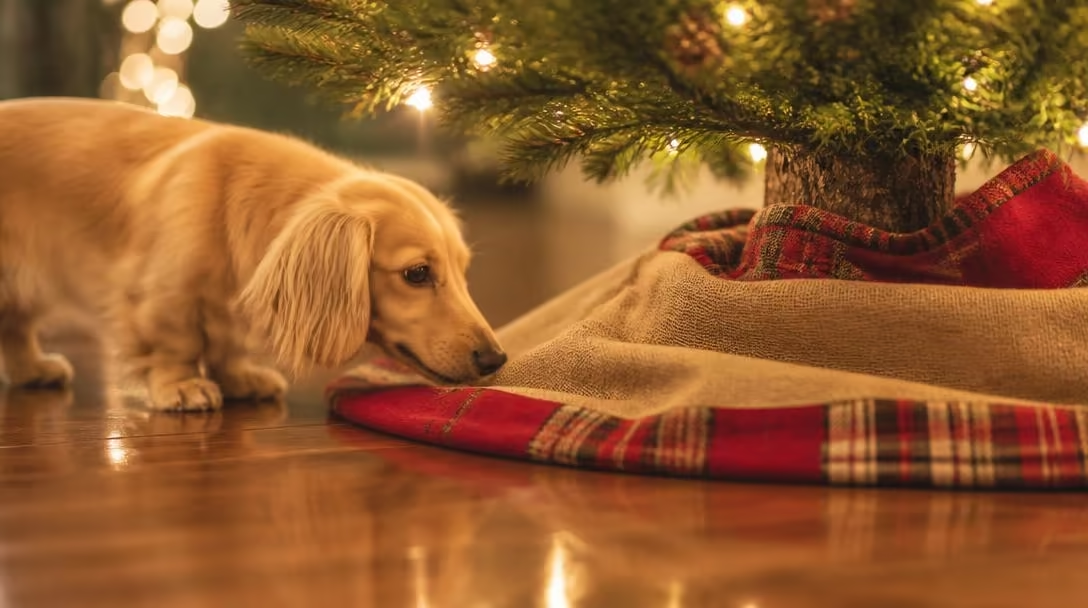
The tree itself causes more holiday emergency vet visits than almost anything else on this list, and it’s rarely the ornaments people expect. Tree water is the biggest one: if you have a live tree, the water in the stand often contains fertilizers, preservatives, or bacteria from standing stagnant water, and dogs will drink it if they can reach it. Skirt the base of the tree stand or use a pet-proof tree stand cover so your dachshund can’t get a tongue in.
Tinsel and thin metallic garland are a second major risk, especially for a breed that likes to chew and tug on dangling things. If swallowed, tinsel can cause a linear foreign body obstruction, which is a genuine surgical emergency. The safest move is simply skipping tinsel in a dachshund household and using ribbon garland or wooden ornaments instead, which are far less dangerous if chewed.
Finally, don’t assume your dachshund can’t reach the lower third of the tree just because they’re short. Dachshunds are determined, low-slung, and perfectly capable of nosing their way into the branches or using a nearby ottoman as a launch point. Anchor the tree to the wall if you have a particularly curious or food-driven dog, and keep the lowest branches free of anything edible-looking, including bread or popcorn garland.
Decorations and Ornaments Worth a Second Look
Glass ornaments are the obvious hazard, since a dropped or batted ornament shatters into sharp pieces exactly where your dog’s paws and nose are. But a few less obvious decorations deserve attention too. Snow globes sometimes contain antifreeze (ethylene glycol), which is highly toxic even in small amounts and reportedly has a taste dogs find appealing, so a cracked or broken snow globe is a real emergency, not just a mess to clean up. Battery-operated decorations and string lights have small button batteries that are dangerous if chewed and swallowed, causing chemical burns internally. And artificial snow spray, along with some scented candles and potpourri, can irritate a dog’s respiratory system or stomach if inhaled or licked.
If you like decorating with a dachshund theme, ornaments and keepsakes made specifically for display are a safer way to get that festive look without introducing anything your dog could actually reach and chew. If you haven’t already, our guide to adorable dachshund Christmas ornaments has some fun, display-only picks worth a look.
Holiday Foods That Are Genuinely Off-Limits
Your dachshund is going to beg, and depending on who’s visiting, someone is probably going to slip them something under the table. A few holiday staples are worth specifically warning guests about:
- Chocolate, especially dark or baking chocolate, found in cookies, yule logs, and gift boxes left within nose range.
- Grapes, raisins, and currants, hidden in fruitcake, stuffing, and some holiday cookies, which can cause acute kidney injury even in small amounts.
- Onions, garlic, leeks, and chives, common in stuffing, gravy, and mashed potatoes, which damage red blood cells over time.
- Cooked bones, especially ham and turkey bones, which splinter easily and can perforate the intestines or cause a dangerous obstruction.
- Fatty table scraps and ham drippings, a leading cause of holiday pancreatitis in dogs, which shows up as vomiting, lethargy, and abdominal pain, often a day or two after the meal.
- Alcohol and unbaked yeast dough, both of which are far more dangerous to a small dog than most people realize.
- Xylitol, a sugar substitute now common in “sugar-free” baked goods, mints, and peanut butter, which is extremely toxic to dogs even in tiny amounts.
The easiest fix is a short, friendly heads-up to guests before the meal: no table scraps, and nothing gets handed down without checking with you first. Most people are happy to comply once they understand why.
Candles, Cords, and Other Easy-to-Miss Hazards
Holiday ambiance brings its own risks. Lit candles at a dachshund’s nose height are a real burn and fire hazard, since a curious sniff or a wagging tail can easily knock one over. Keep candles on stable, elevated surfaces your dog genuinely can’t reach, not just ones they haven’t reached yet. String lights and extension cords multiply during the holidays, and a bored or teething dog can chew through one, risking an electric shock or burn, so tuck cords behind furniture or use cord protectors where you can.
Wrapping paper, ribbon, and bows look like toys to a lot of dogs, and ribbon in particular poses a linear foreign body risk similar to tinsel if swallowed in any real length. Keep wrapped gifts with ribbon or bows out of reach until they’re being actively opened and supervised.
Managing the Chaos of Guests and Gatherings
A house full of guests is its own category of risk, separate from decorations and food. Doors open and close constantly as people arrive, step outside, or haul things in from the car, and a dachshund who’s never been a flight risk on a normal day can slip out during the holiday shuffle. Consider a baby gate near the entryway, or ask whoever answers the door to keep an eye on your dog’s location before opening it wide.
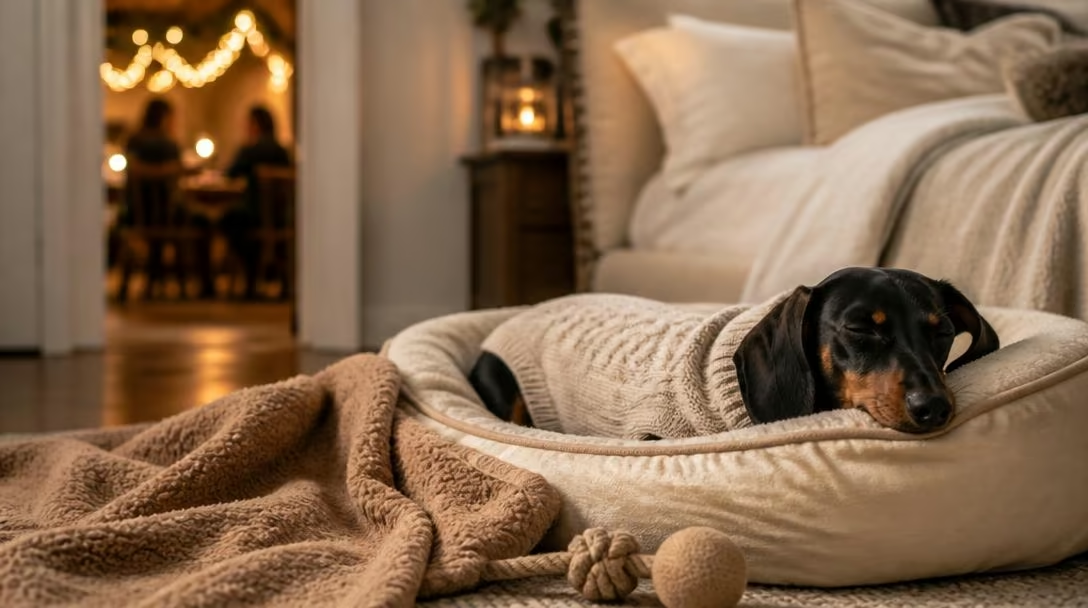
Not every dachshund enjoys a crowded, loud room either. If your dog seems overwhelmed, pacing, hiding, or showing whale eye, it’s completely fine to set up a quiet room with their bed, water, and a favorite chew, away from the noise. This isn’t a failure of socialization; it’s just good management, the same instinct behind giving them a calm retreat during fireworks or a thunderstorm.
Kids visiting for the holidays also need a quick reminder about handling a long-backed dog properly, no picking up under the belly only, no swinging, and no letting toddlers climb on a resting dog. Dachshunds generally tolerate a lot, but a holiday full of excited children is exactly the kind of day where a well-meaning hug goes wrong.
Protecting That Long Back During the Holiday Excitement
Excitement runs high over the holidays, and that often means more jumping on and off furniture, more racing around a living room full of new obstacles, and more enthusiastic greetings at the door. All of that adds up to real risk for a breed already prone to back injuries and IVDD. A set of pet steps by the couch or bed, a firm “off” cue practiced ahead of time, and a calmer greeting routine at the door can all help manage this. If your dachshund already has back issues or you want a deeper refresher on protecting their spine day to day, it’s worth revisiting our guide on safe exercise for dachshunds with back problems before the season gets busy.
If your holiday plans include cold-weather outings, like a trip to see lights or a walk after an early snowfall, pair that with sensible cold-weather precautions too. A dachshund’s low build means more belly contact with snow and ice, and their thin coat (especially on smooth-coat dogs) offers little insulation. A warm, well-fitted coat and shorter outdoor sessions go a long way, something we cover in more detail in our full winter safety guide.
A Quick Pre-Holiday Safety Checklist
- Skirt or cover the Christmas tree stand so your dog can’t drink the water.
- Skip tinsel and thin metallic garland entirely.
- Check snow globes, battery-powered decorations, and scented candles for accessibility at dog height.
- Brief guests on the no-table-scraps rule before the meal starts.
- Store wrapped gifts with ribbon and bows out of reach until gift-opening time.
- Set up a baby gate or door-watch plan for the busiest arrival and departure times.
- Prepare a quiet retreat room with bed, water, and a chew for an overwhelmed dog.
- Remind kids and new guests how to handle your dachshund’s back safely.
- Keep the vet’s number and the ASPCA Animal Poison Control line (888-426-4435) somewhere handy for the week.
Frequently Asked Questions
Is it safe to leave my dachshund alone near the Christmas tree?
For most well-adjusted adult dachshunds, short unsupervised periods near a properly secured, tinsel-free tree are generally fine. For puppies, known chewers, or dogs who’ve shown interest in ornaments or tree water, it’s safer to use a playpen or baby gate to limit tree access when you’re not in the room.
My dachshund ate a small piece of wrapping paper. Should I worry?
A small scrap of plain paper usually passes through without issue, though watch for vomiting, lack of appetite, or straining over the next day or two. Ribbon, string, or foil-backed paper is more concerning because of the obstruction risk, so call your vet if you saw them swallow either of those or if any symptoms show up.
What are the first signs of pancreatitis from rich holiday food?
Watch for vomiting, a hunched or painful posture, reluctance to eat, lethargy, and a bloated or tender abdomen, often appearing six to twelve hours after a fatty meal and sometimes not until the next day. This needs a same-day vet visit, since pancreatitis can escalate quickly.
Are poinsettias actually dangerous to dogs?
Poinsettias are generally overrated as a holiday hazard. They can cause mild mouth or stomach irritation if chewed, but true poisoning is rare. Mistletoe and holly berries are a bigger concern and can cause more significant vomiting, diarrhea, and in the case of mistletoe, more serious symptoms, so keep both well out of reach regardless.
A Holiday Worth Planning For
None of this is meant to make the season feel like a minefield. A dachshund who gets to sniff the tree, beg politely at a safe distance, and nap through most of the chaos in a cozy sweater is living their best Christmas. A little advance planning, mostly around the tree stand, the food table, and the front door, is really all it takes to keep that holiday picture intact instead of ending it with an emergency vet visit. Here’s to a calm, cozy, thoroughly spoiled Christmas for your sausage dog this year.


