
Every year around this time, I get the same message from readers: “Hank, my dachshund was fine at Thanksgiving last year, but this year she threw up all night after dinner. What happened?” The answer is almost always the same — someone at the table, usually a well-meaning guest, slipped her a little “just this once” off their plate.
Thanksgiving is one of the trickiest holidays of the year for a dachshund. There’s more food on more surfaces than any other day, more people in the house who don’t know your house rules, and a dog whose nose-first, food-motivated personality was practically bred for sneaking exactly the wrong bite at exactly the wrong moment. Add in a body built low to the ground with a back that doesn’t love extra strain, and you’ve got a holiday that deserves a little more planning than most.
This guide walks through exactly what’s safe, what isn’t, and how to keep the whole day calm for your dog — without missing a minute of your own dinner.
Why Thanksgiving Is Riskier for Dachshunds Specifically
A lot of general “Thanksgiving safety for dogs” advice is written with an average-sized, average-risk dog in mind. Dachshunds have a few traits that change the math.
First, size. A miniature dachshund might weigh 10 pounds; even a standard rarely tops 32. A piece of turkey skin or a spoonful of gravy that would barely register for a 70-pound Labrador is a much bigger percentage of your dachshund’s body weight — which means toxic foods hit harder and fattier foods cause trouble faster. For a full breakdown of what’s safe and what isn’t year-round, our guide to human foods dachshunds can and can’t eat is worth bookmarking alongside this one.
Second, pancreatitis risk. Dachshunds are already considered one of the breeds more prone to pancreatitis, and Thanksgiving is the single fattiest eating day most households have all year — turkey skin, gravy, butter-laden mashed potatoes, and pie all in one sitting. A rich holiday plate can trigger a painful, sometimes dangerous flare-up even in a dog who’s never had stomach issues before.
Third, the back. Dachshunds have a long spine and short legs, and that combination means repeated jumping, lunging, or being underfoot in a crowded kitchen carries real risk. A dog leaping at the counter to snag a dropped roll, or getting stepped on by a guest who didn’t see her dart past, can turn into an emergency vet visit that has nothing to do with food at all. If your dog already has back sensitivity, our weight management guide covers how extra holiday pounds add pressure to an already vulnerable spine.
Thanksgiving Foods: What’s Safe and What to Avoid
Here’s the practical breakdown, organized by what’s actually on the table.
Turkey
Plain, cooked, boneless, skinless turkey breast in small amounts is genuinely fine for most dachshunds and is actually a nice occasional treat. The danger isn’t the turkey meat itself — it’s everything around it.
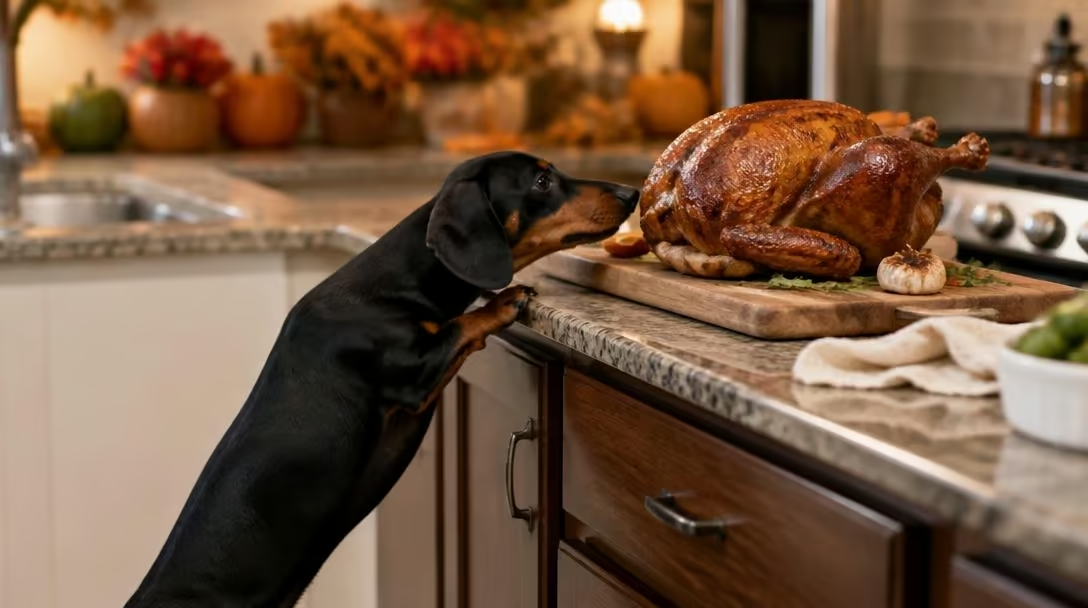
- Turkey skin and fat drippings are the biggest pancreatitis trigger on the table. Keep them off your dog’s plate entirely, no matter how much begging you get.
- Cooked bones splinter easily and can cause choking, punctures, or intestinal blockages. Never let a dachshund near the carcass, and make sure the garbage with turkey bones in it is somewhere she can’t reach — including after everyone’s gone to bed and the kitchen is quiet.
- Raw turkey carries salmonella risk, same as it would for a person.
Stuffing and Gravy
Stuffing is one of the riskiest dishes on the table because of what’s typically mixed in: onions, garlic, and shallots are all toxic to dogs and can cause a type of anemia, even in cooked form. Many stuffing recipes also include raisins or currants, which are toxic to dogs in ways that aren’t fully understood but can cause kidney failure. Gravy is usually loaded with drippings and fat — another pancreatitis risk, and often contains onion or garlic as well. Skip both entirely rather than trying to pick out the “safe” parts.
Mashed Potatoes and Casseroles
Plain mashed potatoes without butter, cream, garlic, or onion are okay in small amounts. The more common version — loaded with butter and sour cream — is a fat bomb best left off your dog’s plate. Green bean casserole is a frequent offender too, since the classic recipe includes cream of mushroom soup and fried onions, both of which belong on the “avoid” list.
Cranberry Sauce
Plain, cooked cranberries themselves aren’t toxic, but most cranberry sauce is loaded with sugar, and some homemade recipes include raisins, orange peel, or other add-ins that aren’t dog-safe. When in doubt, leave it off the plate.
Desserts
Pumpkin pie’s biggest issue isn’t the pumpkin — small amounts of plain, unsweetened pumpkin are actually good for digestion — it’s the nutmeg, sugar, and crust. Nutmeg contains a compound called myristicin that can cause serious reactions in dogs if eaten in large enough quantities, and pie crust is heavy in fat and sugar. Chocolate desserts are an automatic no, and watch carefully for anything labeled “sugar-free,” which is often sweetened with xylitol — a substance that’s extremely toxic to dogs even in tiny amounts, and especially dangerous for a dog as small as a dachshund.
Managing the Day Itself
Food is only half the challenge. The other half is simply having a houseful of people, noise, and a kitchen in constant motion for hours at a time.
Before guests arrive, it helps to set expectations out loud: let people know your dog has a sensitive stomach and shouldn’t get table scraps, even “just a little.” Kids especially love sneaking food to the dog under the table, usually without telling anyone, so it’s worth a quick word with parents too.
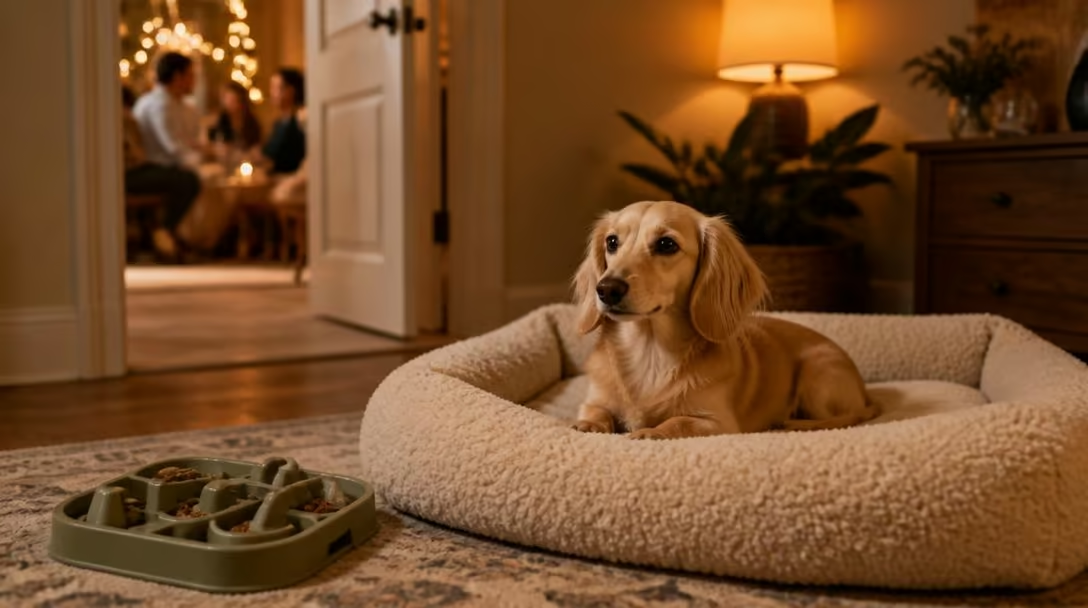
Giving your dachshund a safe retreat — her crate, a gated-off room, or just a quiet corner with a favorite chew — during the chaotic parts of the day (meal prep, serving, and cleanup) does double duty: it keeps her out from underfoot where she could get stepped on or jump at the counter, and it gives her a lower-stress way to be part of the day without being overwhelmed by it. A sturdy frozen food puzzle or a safe chew toy in that space can keep her happily occupied while everyone else eats.
It’s also worth taking the trash out to a secured bin rather than leaving a kitchen garbage can full of turkey carcass and wrappers within nose range overnight — dachshunds are determined counter-surfers and trash raiders, and a full bin after dinner is often more tempting than anything that was ever on the table.
Signs of Trouble and When to Call the Vet
Even with every precaution, it’s good to know what to watch for. Vomiting, diarrhea, lethargy, loss of appetite, or a hunched, painful posture in the hours after a big meal can be signs of pancreatitis or gastrointestinal upset and are worth a call to your vet, especially if symptoms last more than a few hours or seem to be getting worse rather than better.
If you know or suspect your dog got into something seriously toxic — chocolate, grapes or raisins, xylitol, or onions/garlic in quantity — don’t wait to see if symptoms show up. Call your vet or an emergency animal hospital right away, or contact the ASPCA Animal Poison Control Center at (888) 426-4435. Having the number saved in your phone before the holiday starts means you’re not searching for it with a sick dog in your lap.
Frequently Asked Questions
Can my dachshund eat turkey on Thanksgiving?
Yes, in small amounts — plain, cooked, boneless, and skinless. Skip the skin and any fat drippings, which are the real risk for pancreatitis.
Is pumpkin pie safe for dogs?
Plain pumpkin itself is fine in small amounts, but pie filling with nutmeg, sugar, and a buttery crust isn’t a good choice. If you want to share something pumpkin-flavored, a small spoonful of plain canned pumpkin (not pie filling) is the safer option.
Can my dachshund have mashed potatoes?
Plain mashed potatoes with no butter, cream, or garlic are okay in small amounts. The buttery, loaded version most families make is too rich and fatty to share safely.
What’s the most dangerous Thanksgiving food for dogs?
Onions and garlic (common in stuffing and gravy), grapes and raisins (sometimes hidden in stuffing or cranberry sauce), and xylitol in sugar-free desserts top the list, along with cooked bones from the turkey carcass.
My dachshund got into the trash and ate turkey bones — what should I do?
Call your vet or an emergency animal hospital right away rather than waiting for symptoms. Cooked bones can splinter and cause internal injury or blockages that need prompt attention.
Enjoy the Holiday — Just Plan Ahead
None of this means Thanksgiving has to be stressful for your dachshund. A little planning — deciding ahead of time what she will and won’t get, giving her a safe space during the busiest hours, and making sure the trash is secured before everyone heads to bed — goes a long way toward keeping the whole day calm and happy for everyone at the table, four legs included. We covered a similar set of precautions in our Halloween safety guide last month, and the same basic principle applies here: the goal isn’t to exclude your dog from the holiday, it’s to include her safely.


