“How long will my dachshund live?” It’s one of the first questions new owners ask me, and honestly, one of the more comforting ones I get to answer. As Simply Dachshund’s Healthcare Specialist, I spend a lot of my time talking owners through back problems, joint care, and the aches that come with aging — but the flip side of that conversation is good news: dachshunds are, breed-for-breed, one of the longer-lived dogs you can bring home. With the right care, a healthy dachshund’s lifespan should run well into the mid-teens.
That said, “with the right care” is doing a lot of work in that sentence. A dachshund’s genetics set the ceiling, but daily habits — weight, exercise, dental care, and how well you manage their back health — decide how close they actually get to it. This guide covers what the real numbers look like, what shortens a dachshund’s life the most, and the specific habits I recommend to owners who want their dog around for as many good years as possible.
The Average Dachshund Lifespan
Most dachshunds live 12 to 16 years, which puts them solidly ahead of the average for dogs their size and well ahead of many larger breeds, some of which top out at 8 to 10 years. It’s one of the perks of loving a small dog: smaller breeds tend to age more slowly and live longer than giant ones, and dachshunds sit comfortably in that longer-lived range.
A few breed-specific patterns worth knowing:
- Miniature dachshunds often live slightly longer on average than standards — commonly toward the upper end of that 12–16 year window, sometimes past it. Lower body weight generally means less cumulative strain on joints and the spine over a lifetime.
- Standard dachshunds average a bit lower within that same range, though a well-cared-for standard easily reaches 14–15 years.
- Coat type (smooth, wire, or long-haired) doesn’t meaningfully affect lifespan on its own — it’s a cosmetic and grooming difference, not a health one.
- Well-documented dachshunds have lived into their late teens and even early twenties in rare cases, though that’s the exception rather than something to expect.
If your dachshund is already a senior, I’d also point you to my full Senior Dachshund Care guide, which goes deeper on what changes once your dog crosses into their geriatric years.
What Actually Shortens a Dachshund’s Life
Genetics matter, but in my experience, the gap between a dachshund who makes it to 12 and one who makes it to 16 usually comes down to a short list of manageable factors. Here’s what I see most often:
Excess Weight
This is the single biggest lifespan factor I can point to that’s also fully within an owner’s control. Dachshunds have a long spine and short legs supporting it — extra weight adds direct mechanical stress to their back and joints, and it’s also linked to a shorter lifespan across dog breeds generally. Studies on calorie-restricted, lean-kept dogs versus their overweight littermates have shown a meaningful difference in median lifespan. For a dachshund, keeping them lean isn’t just about avoiding a pot belly — it’s genuinely one of the most protective things you can do.
Intervertebral Disc Disease (IVDD)
Dachshunds are famous for their back problems, and IVDD is the condition behind most of them. It doesn’t usually kill a dog directly, but a severe episode can lead to paralysis, and the resulting mobility loss, secondary complications, and reduced quality of life can shorten a dog’s remaining years or lead to a harder decision being made earlier than it should be. Prevention is almost entirely about daily habits — I’ve written a full breakdown of this in my Dachshund Spinal Health guide, which covers exactly how to reduce that risk day to day.
Dental Disease
Small breeds are prone to dental disease, and dachshunds are no exception — their jaws are proportionally small relative to their teeth, which crowds things and accelerates plaque buildup. Left unmanaged, dental disease isn’t just a mouth problem: chronic oral infection has been linked to strain on the heart, liver, and kidneys over time. Regular brushing and professional cleanings genuinely add years, not just fresher breath.
Delayed Veterinary Care
Dachshunds tend to mask discomfort well, especially early back pain, which means owners often wait to see a vet until a problem is already advanced. Twice-yearly checkups once your dog passes 7 years old catch problems — organ function changes, early arthritis, dental disease, weight creep — while they’re still cheap and easy to manage, rather than after they’ve become chronic.
Genetics and Breeding
Responsible breeding that screens for known hereditary issues (including early spinal calcification risk) produces measurably healthier, longer-lived dogs than backyard or high-volume breeding operations. If you’re choosing a puppy, ask about the health history of the parents — it’s one of the few lifespan factors you can influence before you even bring your dog home.
How to Help Your Dachshund Live Longer
None of this requires anything exotic — it’s consistency on the fundamentals, applied over years rather than weeks. Here’s what I actually recommend:
- Keep them lean. You should be able to feel (not see) your dachshund’s ribs with light pressure, and see a visible waist from above. If you can’t, it’s time to adjust portions, not just add more walks.
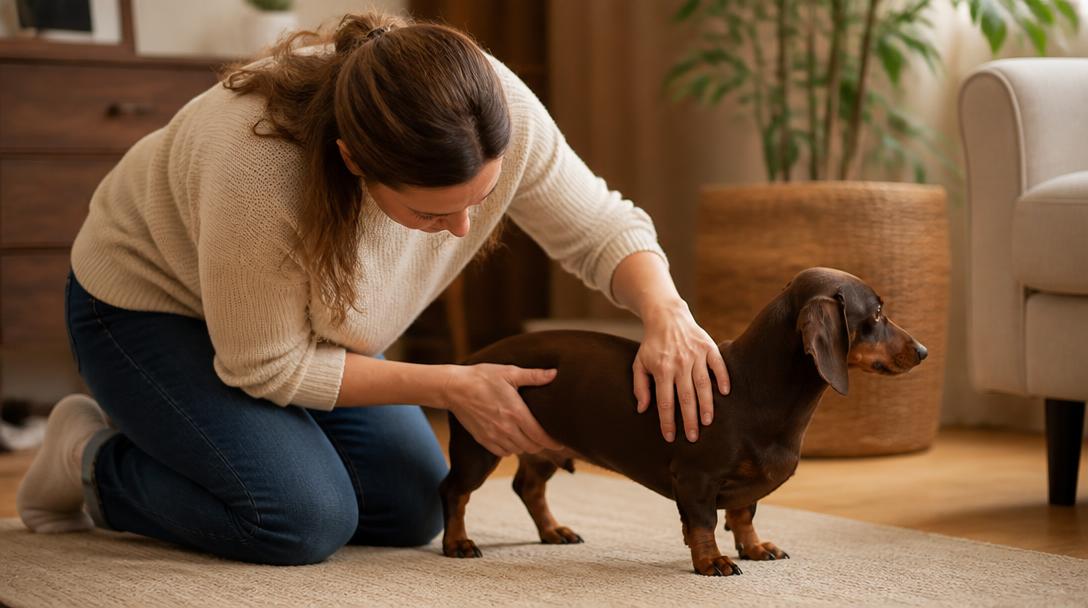
- Protect the back daily. Block access to jumping on and off furniture, use ramps or steps for the couch and car, and support the chest and hindquarters together any time you pick them up.
- Feed a quality, age-appropriate diet. Nutrition needs shift as dachshunds move from puppy to adult to senior — portion and formula matter more than any single “superfood” ingredient.
- Stay current on dental care. Daily or near-daily brushing, dental chews between cleanings, and professional cleanings as your vet recommends.
- Exercise consistently, not excessively. Regular, moderate exercise supports a healthy weight and mobility without the high-impact jumping or twisting that stresses the spine.
- Don’t skip preventive vet visits. Annual visits for young adults, stepping up to twice a year once your dog is 7 or older.
- Spay or neuter unless you have a specific, informed reason not to — it’s associated with a longer average lifespan and removes the risk of several reproductive cancers entirely.
These same habits show up throughout the daily structure I recommend for dachshunds at every life stage — if you haven’t already, it’s worth reading through the Dachshund Joint Care guide as well, since joint health and lifespan are closely connected in this breed.
Frequently Asked Questions
What is the oldest a dachshund has ever lived to be?
While the well-documented average tops out around 16, there are credible reports of individual dachshunds living into their late teens and, in rare, exceptional cases, past 20. These are outliers, not something to expect, but they show what’s biologically possible with excellent genetics and care.
Do miniature dachshunds live longer than standard dachshunds?
On average, yes — mini dachshunds tend to land toward the higher end of the 12–16 year range, likely because their lower body weight puts less cumulative strain on the joints and spine over a lifetime. The difference is modest, though, and individual health and care habits still matter more than size alone.
At what age is a dachshund considered a senior?
Most vets consider dachshunds seniors starting around 7 to 8 years old — earlier than many owners expect. I cover exactly what changes at that point in my Senior Dachshund Care guide.
Does back surgery shorten a dachshund’s lifespan?
Not directly. Dogs that recover well from IVDD surgery and follow-up rehabilitation can go on to live a full, normal lifespan. The bigger risk to longevity is an untreated or repeated injury, not the surgery itself.
What’s the single best thing I can do to help my dachshund live longer?
If I had to pick one, it’s keeping them lean. Excess weight compounds nearly every other risk on this list — it strains the back, accelerates joint wear, and is independently linked to a shorter lifespan. Everything else on this page matters, but weight management is the highest-leverage habit you have.
The Bottom Line
A dachshund’s genetics give them a real shot at 12 to 16 good years, and sometimes more. What actually determines where your dog lands in that range is mostly in your hands: keeping them lean, protecting their back every single day, staying ahead of dental disease, and not skipping the vet visits that catch small problems while they’re still small. None of it is complicated — it just has to be consistent, for years. That’s the whole job, and it’s one worth doing well.