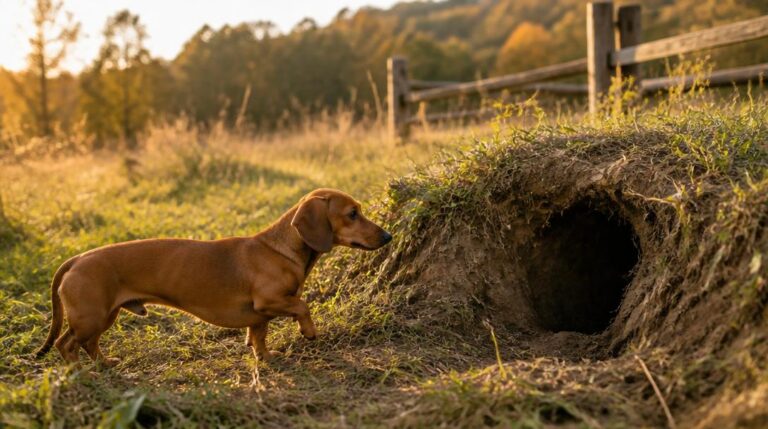
Every few months I hear from a reader who’s decided against a puppy and is thinking about a rescue dachshund instead — usually someone who’s owned the breed before and doesn’t need the chewing-and-housebreaking chaos again, or someone who just wants to give an older dog a good last chapter. I think it’s one of the best decisions a dachshund person can make, and I also think it’s one that goes wrong more often than it should, simply because people go into it expecting a rescue dog to behave like a blank-slate puppy. It won’t. It’ll come with a history, sometimes a rough one, and loving it well means understanding that history rather than ignoring it.
So here’s the honest version of what adopting a rescue dachshund actually involves — where to look, what to ask, what your vet bill might realistically look like, and how to get through the first couple of weeks without either of you losing your mind.
Why a Rescue Dachshund Might Be the Better Fit
A lot of people default to puppies because that’s what “getting a dog” means in their head, but a rescue dachshund solves problems a puppy creates. Many rescues are already housetrained, past the destructive chewing phase, and old enough that their personality isn’t a guessing game — what you see during a meet-and-greet is much closer to what you’ll live with. Rescues also skew toward adult and senior dogs, which means you’re often adopting a dachshund who’s calmer on the leash, less likely to bolt after squirrels, and perfectly happy with a slower afternoon than a six-month-old puppy would tolerate.
None of that makes a rescue “easier” across the board — some come with real behavioral baggage from a bad first home, and I’ll get to that — but it does mean you’re trading puppy problems for a different, often more manageable, set of adjustments.
Where to Actually Find a Rescue Dachshund
Three main paths, and they’re not equal:
- Breed-specific dachshund rescues. Groups that only take in dachshunds and dachshund mixes tend to know the breed’s quirks cold — they’ll flag a bad back before you ask, they’ll tell you honestly whether a dog is dog-selective, and they usually run a foster-based system so the dog has already been living in a home (not a kennel) by the time you meet them. Dachshund Rescue of North America is the largest and longest-running example, and most regions have smaller local or state-level groups doing the same work.
- General shelters and humane societies. Dachshunds and dachshund mixes show up in ordinary municipal shelters too, and shelter staff won’t always have breed-specific knowledge to share — you’ll need to do more of your own homework on temperament and health here.
- “Rescues” that are really unlicensed resellers. Be a little skeptical of any “rescue” that has an unlimited supply of dachshund puppies, charges more than a typical adoption fee, and won’t let you see where the dog actually came from. A real rescue has more adult dogs than puppies, and it can tell you the dog’s intake story.
What to Ask Before You Say Yes
Whoever you’re adopting from, ask the same core questions a good rescue expects and welcomes:
- What’s known about the dog’s history — owner surrender, stray, or transferred from another rescue?
- Has the dog had a full vet exam, and what did it turn up? Ask specifically about the back and spine, since IVDD (intervertebral disc disease) is the breed’s signature risk and a dog who’s already had one episode is more likely to have another.
- Vaccination status, spay/neuter status, and any parasite treatment completed.
- How does the dog do around children, other dogs, and cats — has this actually been tested, or is it a guess?
- What’s the dog currently eating, and is a transition plan or sample bag provided?
- What’s the return policy if the placement doesn’t work out? A rescue that won’t take a dog back under any circumstances is a red flag — reputable ones build this in specifically so dogs don’t bounce back into bad situations.
If you get vague, defensive, or rushed answers to any of these, that’s information too.
Be Honest With Yourself About Health and Age
This is the part people skip, and it’s the part that matters most for this breed specifically. A meaningful share of rescue dachshunds are surrendered in their middle-age or senior years, sometimes because a previous owner couldn’t manage a health issue — and back problems are a common one. That doesn’t mean you should avoid an older or previously-injured dog. It means you should adopt with clear eyes about what you’re signing up for: possible ongoing joint or spinal management, a vet who’s already familiar with the breed’s back risk, and a home set up to prevent re-injury from day one (no jumping on and off furniture, ramps instead of stairs, a harness instead of a collar).
Budget for this honestly. A rescue’s adoption fee is almost always far less than what a breeder charges, but it doesn’t include the ongoing cost of a senior dog’s vet visits, a possible dental cleaning, or a back flare-up down the road. Ask the rescue directly what health costs, if any, you should expect in the first year.
Get Your Home Ready Before Adoption Day
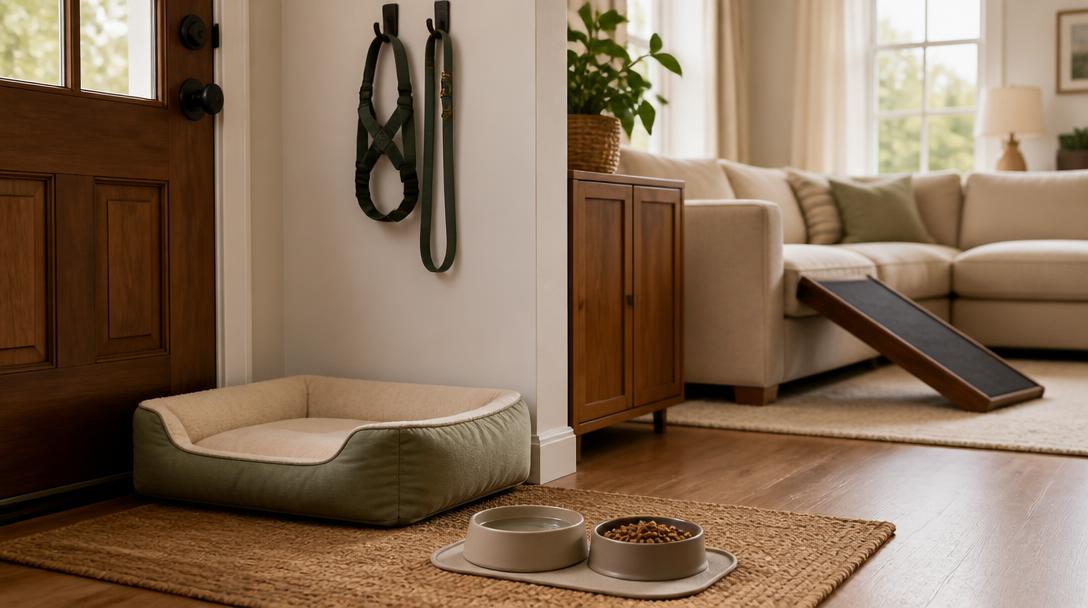
Treat the prep the same way you would for a puppy — a rescue dog benefits just as much from a calm, ready environment on arrival. You’ll want food and water bowls, a properly fitted harness (never just a collar, given the neck and back), a leash, a crate or safe den space, a dog bed low enough that jumping isn’t tempting, baby gates if there are stairs in the house, and pet-safe ramps for the couch or bed if you’ll allow furniture access at all. If you haven’t built out a full supply list before, our dachshund puppy checklist covers the same essentials and applies just as well to an adult rescue coming home for the first time.
Also do a walkthrough for hazards at dachshund height: exposed electrical cords, gaps under furniture a curious nose might wedge into, toxic houseplants, and anywhere a small dog could squeeze through a fence line outside.
The First Two Weeks: Let the Dog Decompress
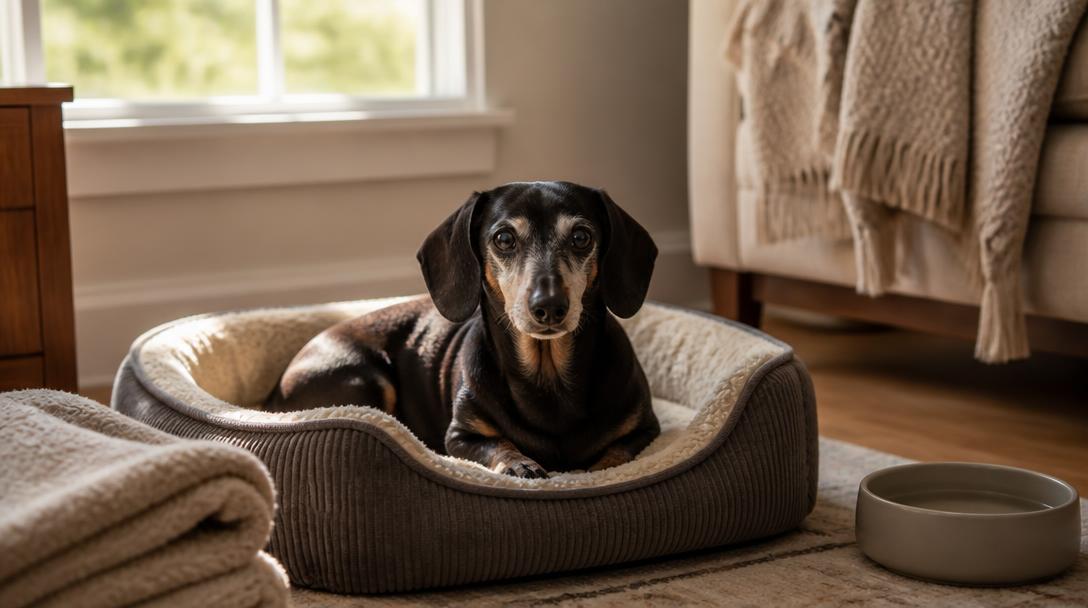
Rescue workers often talk about a “decompression window” — roughly the first two to three weeks — where a newly adopted dog is still figuring out that this home is safe and permanent. During this stretch, keep things boring on purpose: same feeding times, same short walks, minimal visitors, and no rushing to introduce the dog to every friend and family member at once. A dog who seems shut down, clingy, or oddly perfect in week one often shows their real personality by week three, once they trust that nothing bad is about to happen.
If you’re coming from a puppy background, resist the urge to over-manage every minute. Give the dog a predictable daily rhythm — our daily routine guide is written for dachshunds generally and works well as a starting template — and let trust build on its own timeline rather than yours.
Expect Some Behavioral Cleanup, and Be Patient With It
Even a well-cared-for rescue may arrive with a habit or two that needs gentle retraining — accidents in the house from stress rather than a training gap, some resource-guarding around food if meals weren’t reliable before, or nervousness around men, children, or specific sounds if that maps to something in their past. None of this means you got a “broken” dog. It means you got a dog who’s had a harder life than the one you’re about to give them, and a little structured patience — consistent routines, positive reinforcement, and time — resolves the great majority of it. If anything looks like it’s escalating rather than easing after the first month, that’s worth a session or two with a trainer experienced in rescue dogs rather than something to muscle through alone.
Frequently Asked Questions
Is it harder to adopt a rescue dachshund than to buy a puppy?
The application process is often more involved — expect a questionnaire, a reference check, and sometimes a home visit — but that’s the rescue doing its job well, not a sign something’s wrong. Most reputable rescues can walk you through the full process in a few weeks.
Are rescue dachshunds usually older dogs?
Not always, but they skew that way. Rescues do take in puppies and young adults, but a large share of dachshunds available for adoption are middle-aged or senior, often because a previous owner could no longer manage their care.
Do rescue dachshunds come with health guarantees?
Reputable rescues will disclose what’s known from a vet exam, but they generally aren’t offering the kind of health guarantee a breeder might. Ask directly what’s been tested for and what hasn’t, especially regarding the back and spine.
How much does it typically cost to adopt a rescue dachshund?
Adoption fees vary by organization and region, but they’re almost always well below what a breeder charges, and the fee typically covers some combination of spay/neuter, vaccinations, and a vet exam already completed.
Can a rescue dachshund bond with a new owner as strongly as a puppy raised from birth?
Yes, and often faster than people expect. Dachshunds are famously attached to their people regardless of when that bond starts — give a rescue a stable routine and a few weeks of consistency, and most settle into being just as devoted as a dog you’ve had since eight weeks old.
A Rescue Dog Is a Slower Kind of Reward
Adopting a rescue dachshund isn’t the instant, clean-slate experience a puppy is, and I don’t think it’s meant to be. It’s slower, sometimes messier at the start, and it asks you to meet a dog where they are instead of shaping them from scratch. In exchange, you get a dog who already knows how to be a dog — house manners, personality, and all — and who tends to show their gratitude for a stable home in a way that puppies, who’ve never known anything else, simply can’t. If you’ve been on the fence, that patience is usually the whole trade.