Every summer, I get some version of the same message from a reader: “Hank, my neighbor said there’s a wiener dog race happening at the county fair this weekend — is that a real thing, and should I sign my dog up?” It’s a real thing, alright, and it’s been a real thing for a lot longer than most people realize. What started as a novelty act at a Arizona restaurant decades ago has grown into an entire circuit of races drawing thousands of spectators and hundreds of entrants a season, all watching dachshunds do something their bodies were never actually built to do well: sprint in a straight line.
I love this corner of dachshund culture because it says so much about how people feel about this breed. Nobody organizes a stadium event around a dog they don’t already adore. So let’s get into where wiener dog racing came from, how the races actually work, whether it’s something your own dog should try, and the honest answer on whether all that sprinting is safe for a breed known for its back problems.
What Exactly Is a Wiener Dog Race?
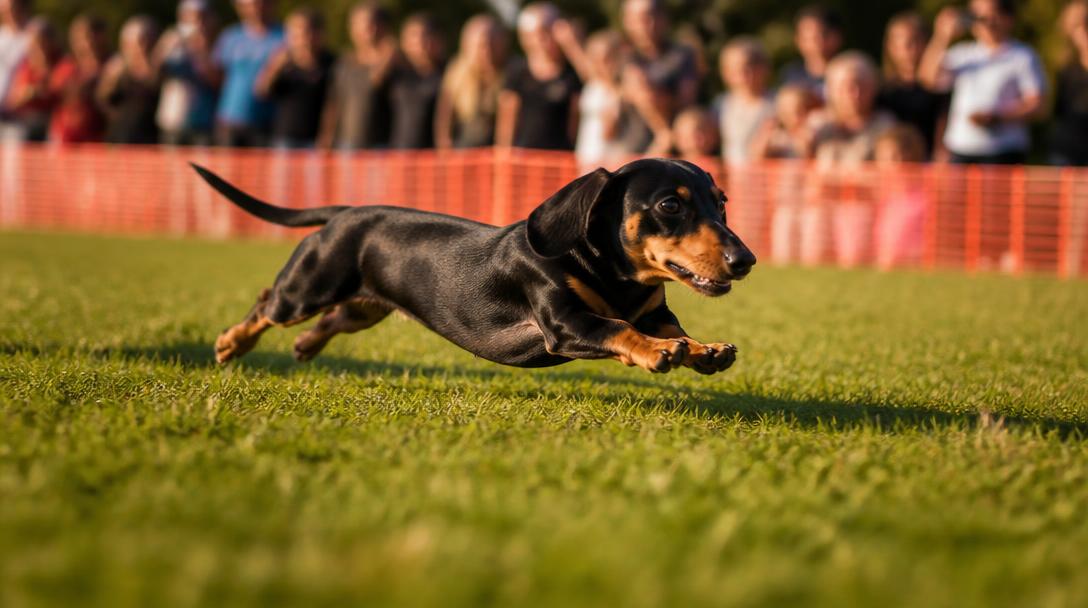
At its simplest, a wiener dog race is a short sprint — usually somewhere between 25 and 50 feet — where a handful of dachshunds are released from starting gates at the same time and race toward an owner or handler waiting at the finish line, usually calling their dog’s name and waving a treat or toy. There’s no track skill involved, no training required in the traditional sense. It’s pure motivation: a dog running toward the person and the reward it wants most.
Races are typically run in heats, with the fastest dogs from each heat advancing to semifinals and then a final. Most events also run costume contests, “wiener dog 500” style laps for spectacle, and sometimes a “howl-off” or best-trick contest alongside the racing, since the whole point is entertainment as much as competition.
Where Wiener Dog Racing Actually Came From
The tradition most commonly traces back to Suds ‘n’ Sundaes, a bar and grill in Solvang, California, which is credited with holding one of the first organized dachshund races back in 1971 as a lighthearted way to draw a crowd. From there, the idea spread the way good novelty ideas do — county fairs, breweries, and German heritage festivals across the country picked it up, since dachshunds and their unmistakable silhouette were an easy draw for anyone hosting an Oktoberfest-style event.
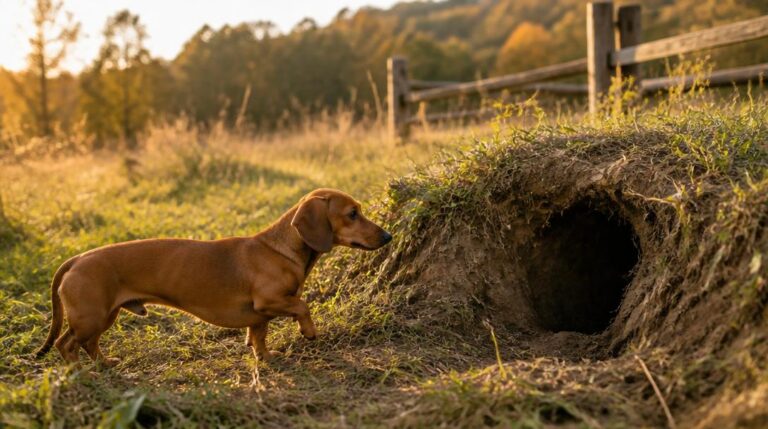
What kept it going, though, wasn’t just the German heritage angle. It’s the simple visual comedy of the thing. A dachshund’s whole body was engineered for tunneling after badgers, not flat-out running — I wrote about how that badger-hunting history shaped the dachshund’s build in an earlier piece, and that same low, long frame that made the breed such a good digger makes it look genuinely hilarious in a full sprint, ears flopping, legs a blur, body barely leaving the ground. People show up because it’s funny. They keep coming back because the dogs are having a blast.
The Big Leagues: The Wiener Nationals and Other Famous Races
Wiener dog racing has a few marquee events that have grown well beyond a single bar parking lot:
- The Wienerschnitzel Wiener Nationals — held for years at Los Alamitos Race Course in California, this is the closest thing the sport has to a championship series, with regional qualifying heats feeding into a nationally recognized final. It’s sponsored by the fast-food chain of the same name, which tells you everything about the tone of the event.
- The Buda Wiener Dog Races — an annual fixture in Buda, Texas, that’s grown into one of the largest dachshund-specific gatherings in the country, complete with costume contests and vendor booths.
- Local Oktoberfest and county fair races — by far the most common version, run at German heritage festivals, breweries, and fairgrounds all over North America every spring and summer.
None of these require any special credential or pedigree paperwork to enter. Most are open to any dachshund (and often dachshund mixes) whose owner is willing to sign a waiver and show up on race day.
How a Typical Race Day Actually Works
If you’ve never been to one, the format is refreshingly low-key. Dogs are usually grouped into heats of somewhere between four and eight, released from a simple gate or starting line, and timed or simply judged by who crosses first. Owners stand at the far end, and this is where the entertainment really lives — some dogs bolt straight for their person, some get distracted by the crowd, some turn around and trot the wrong way entirely, and a few sit down halfway and refuse to move another inch. Race organizers plan for all of it and keep things moving with good humor.
Most events separate dogs loosely by size (standard versus miniature dachshunds) since the size difference affects stride length enough to matter. Some races also separate by age, keeping senior dogs and puppies in their own gentler heats.
Is Racing Safe for a Dachshund’s Back?
This is the question I take most seriously, because it’s a fair one. Dachshunds are famously prone to intervertebral disc disease (IVDD) — the same long spine that makes the breed so recognizable also makes it vulnerable to disc injuries, and I’ve written a full guide on preventing IVDD and protecting your dachshund’s spine that I’d encourage every owner to read regardless of whether racing is on your radar.
The short, honest answer: a single 25 to 50 foot sprint on flat, soft ground is a very different physical demand than jumping off furniture repeatedly or being carried up and down stairs incorrectly, and most veterinarians don’t consider an occasional, well-supervised fun run a significant IVDD risk for a healthy adult dog. That said, a few precautions matter:
- Skip it if your dog has any history of back pain, disc disease, or spinal surgery — even a short sprint isn’t worth the risk for a dog with a compromised spine.
- Warm up first. A few minutes of walking before the race helps loosen muscles the way you’d warm up before any physical activity.
- Race on grass or soft dirt, not pavement or concrete — the impact absorption matters more than people think.
- Don’t force a reluctant dog to run. Some dachshunds genuinely enjoy the chase toward their owner; others find the noise and crowd stressful. Let your dog’s body language decide, not the entry fee.
- Keep your dog at a healthy weight year-round. Extra weight is one of the biggest controllable risk factors for disc problems, race day or not.
How to Get Your Dachshund Into a Race (or Just Go Watch)
If you want to try it, the easiest path is usually a local one. Search for “wiener dog race” plus your city or region, or check with any nearby German heritage festival, Oktoberfest event, or dachshund-specific meetup group — many are organized on Facebook or through local dachshund rescue organizations as a fundraiser. Entry is typically inexpensive, sometimes free, and most events welcome spectators just as warmly as entrants if you’d rather watch this year and decide later.
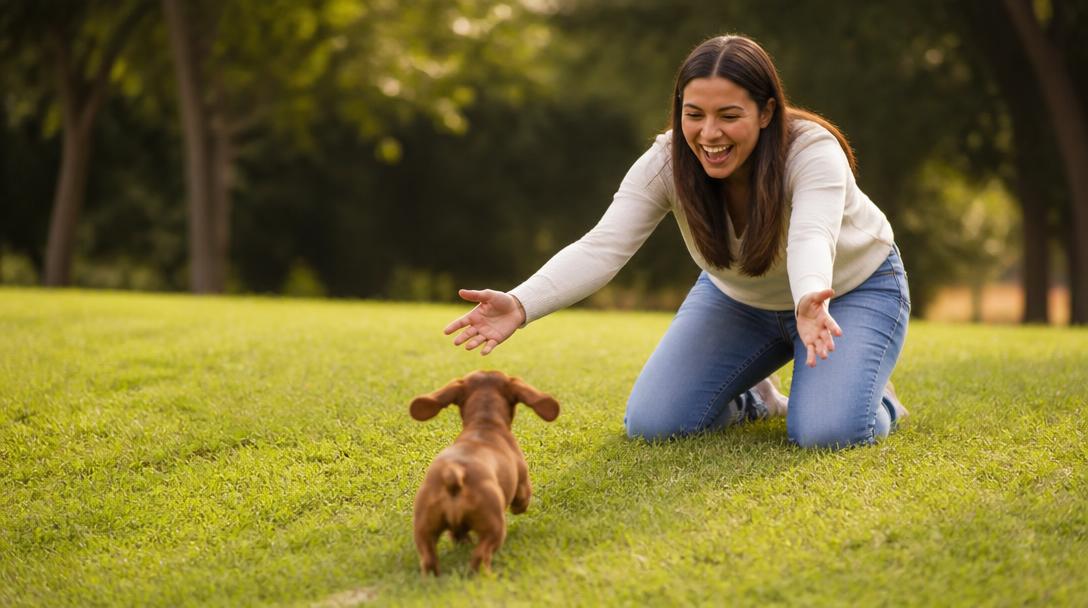
A few practical tips if you do enter: bring your dog’s favorite high-value treat or squeaky toy rather than relying on their name alone, do a couple of practice “recalls” in your own yard beforehand so the concept of running toward you for a reward feels familiar, and don’t skip the warm-up walk mentioned above. Most importantly, go in expecting comedy over competition. The dogs who “win” the crowd’s heart are rarely the fastest ones.
Fun Facts About Wiener Dog Racing
- A dachshund’s top sprint speed tops out around 15 to 20 mph over a short distance — respectable for the size, but nowhere near a greyhound’s 45 mph.
- Many races include a “wobble factor” scoring or crowd-favorite award specifically because the actual race outcome is so unpredictable.
- Some events dress dogs in costumes for a separate parade before the race itself, especially around Oktoberfest season.
- Miniature dachshunds and standard dachshunds are almost always raced in separate heats since the size difference is significant enough to affect results.
- Several races donate entry fees to dachshund rescue organizations, making race day a fundraiser as much as a spectacle.
Frequently Asked Questions
Do dachshunds actually like racing?
Many do, especially the ones motivated by food or a favorite person waiting at the finish line — for those dogs, it reads more like an exciting game of recall than actual competition. Others find the noise and crowd overwhelming. Watch your own dog’s comfort level rather than assuming every dachshund enjoys it.
Is there an age requirement for wiener dog races?
Most events set a minimum age of about one year to make sure a dog’s growth plates and joints are fully developed, and many also have a senior division with a gentler, shorter course. Check the specific event’s rules, since they vary.
Can mixed-breed dachshunds enter?
Most casual community races welcome any dog that’s visibly a dachshund or dachshund mix — this isn’t AKC conformation showing, and papers usually aren’t required. The larger sanctioned events like the Wiener Nationals may have their own eligibility rules, so check ahead.
What should I bring to my dog’s first race?
Water, shade access, your dog’s favorite treat or toy for motivation at the finish line, and a leash for before and after the heat. Avoid feeding a full meal right before racing.
Where can I find a wiener dog race near me?
Search for local Oktoberfest events, county fairs, and dachshund rescue fundraisers in your area during spring and summer, or look up whether a Wiener Nationals qualifying heat is scheduled anywhere within driving distance.
The Bottom Line
Wiener dog racing is one of those wonderfully specific traditions that could only exist around this breed — equal parts athletic event, comedy show, and community gathering, and it’s stuck around for more than fifty years because it captures something true about dachshunds: they’re funny, they’re determined, and they’ll do just about anything for the person waiting for them at the other end. If your dog is healthy, food-motivated, and up for a short sprint on soft grass, it’s a genuinely fun way to spend an afternoon. And if racing isn’t your dog’s thing, there’s no shortage of spectator seats — I’ve never met anyone who left one of these events without a smile.