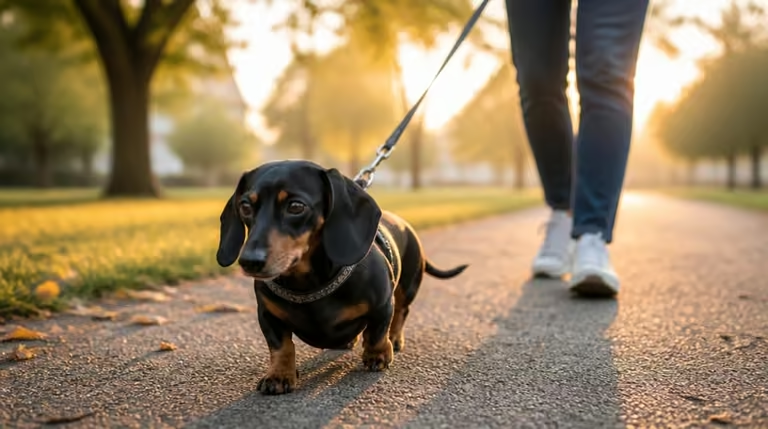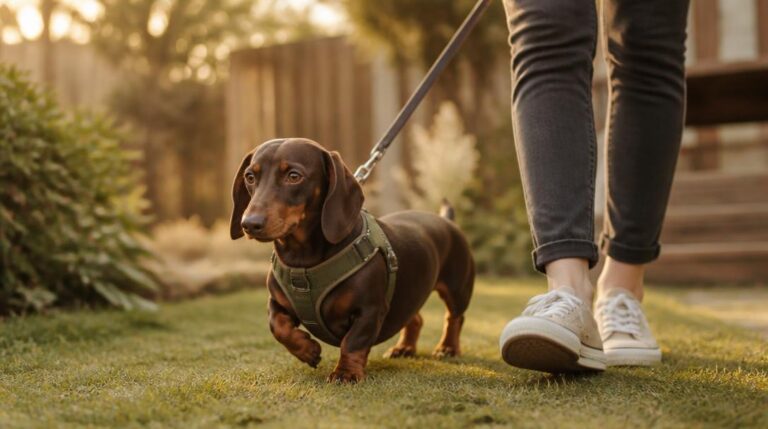
People ask me some version of this question more than almost anything else: “How much exercise does my dachshund actually need?” And I get why it’s confusing. Dachshunds are working dogs at heart – they were bred to hunt badgers underground for hours – but they’re also short, long-backed, and prone to a spinal condition that makes the wrong kind of exercise genuinely dangerous. So the honest answer isn’t a single number. It’s a number that changes by age, plus a set of rules about the kind of movement that’s safe for that long little body.
I’ve spent a lot of time on this site talking about daily routines and back health separately. This post is where I bring the two together, because exercise sits right at the intersection of both – get it right and you’ve got a lean, confident, well-behaved dog. Get it wrong and you’re looking at either a bored, overweight dachshund or a trip to the vet for a back injury that didn’t need to happen.
Why Exercise Matters So Much for This Breed
Dachshunds were bred for stamina and grit, not for sitting still. A dachshund that doesn’t get enough physical outlet tends to find its own – usually in the form of barking, chewing, digging up the yard, or that particular brand of stubborn defiance the breed is famous for. Regular exercise burns off that hunting-dog energy, keeps their weight in a healthy range, and does a lot of quiet work for their mental health too. A tired dachshund is, almost without exception, a calmer and easier dachshund to live with.
But there’s a second reason exercise matters here that doesn’t apply to most other breeds: weight control is directly tied to spinal health. Dachshunds are genetically predisposed to intervertebral disc disease (IVDD), and extra weight on that long spine significantly raises the risk of a disc injury. So exercise isn’t just about behavior and cardio fitness for this breed – it’s part of protecting their back for the long run.
How Much Exercise Does a Dachshund Puppy Need?
Puppy exercise is where I see owners get it wrong most often, usually out of enthusiasm rather than carelessness. The instinct is to take a new puppy on long walks right away, but a dachshund puppy’s growth plates don’t fully close until somewhere around 12 to 18 months, and their joints and spine are still developing. Over-exercising a puppy – especially with repetitive high-impact movement – can cause lasting joint and skeletal problems.
The general rule of thumb vets use for puppies of any breed is about five minutes of structured exercise per month of age, twice a day. For a dachshund, that means:
- 2-4 months old: Short, gentle play sessions and potty-break walks in the yard – a few minutes at a time, several times a day. No stairs, no jumping on or off furniture.
- 4-6 months old: Brief leashed walks of 10-15 minutes, plus supervised free play. Keep it low-impact – sniffing and exploring matter more than distance at this age.
- 6-12 months old: Walks can extend to 15-20 minutes, once or twice a day, but still avoid jumping off beds, couches, or car seats, and skip the stairs where you can.
- 12-18 months old: As your puppy approaches physical maturity, you can gradually build toward adult exercise levels, watching closely for any signs of fatigue or discomfort.
The theme at every puppy stage is the same: frequent, short bursts of activity rather than one long outing, and strict avoidance of jumping and stairs while those growth plates are still closing.
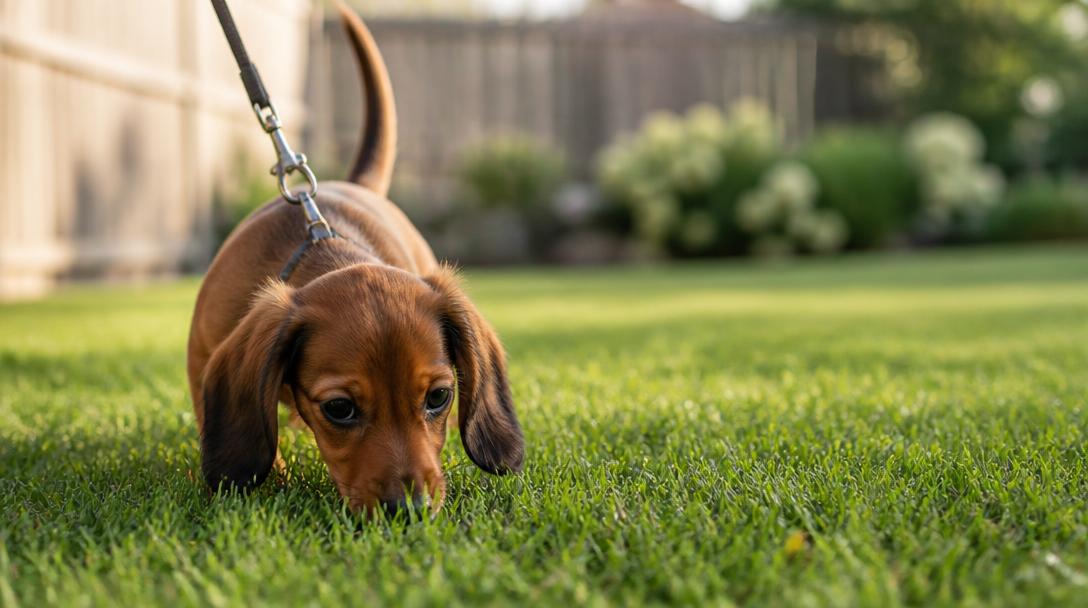
How Much Exercise Does an Adult Dachshund Need?
Once a dachshund reaches full maturity – typically around 12 to 18 months – most healthy adults do well with about 30 to 60 minutes of exercise per day, though the right amount depends on the individual dog’s energy level, weight, and any existing health considerations. I usually recommend splitting that into two walks rather than one long one; it matches their natural energy pattern better and gives you two chances a day to reinforce good leash manners.
A good adult exercise routine looks something like this:
- Two daily walks of 15-30 minutes each, at a comfortable pace that lets your dog sniff and explore – this isn’t just physical exercise, it’s mental stimulation too.
- Flat-ground play like fetch or gentle tug, kept to level surfaces without sharp pivots or repeated jumping.
- A weekly change of scenery – a new trail, a different park, a friend’s backyard – to keep things mentally engaging, since dachshunds are smart enough to get bored of the same loop.
If you’ve read my post on structuring a dachshund’s daily routine, this exercise breakdown slots right into that bigger picture – exercise is one piece of a day that also needs consistent feeding, rest, and mental stimulation to keep a dachshund balanced.
How Much Exercise Does a Senior Dachshund Need?
Senior dachshunds – generally those around 7 years and up – still need regular movement, just in a gentler form. Skipping exercise entirely in the senior years actually accelerates muscle loss and stiffness, which in turn puts more strain on an aging spine. The goal shifts from cardio and play to maintaining mobility and muscle tone.
For most seniors, that looks like two or three shorter walks a day – 10 to 15 minutes each is often plenty – at a relaxed pace, on flat, even ground. Watch closely for signs of arthritis or reduced stamina, and don’t be afraid to adjust day to day. Some senior dachshunds have great days and slower days, and that’s normal.
The Non-Negotiable Rule: Protecting the Back During Exercise
No matter the dachshund’s age, there’s one rule that overrides everything else: avoid movement that stresses the spine. This is the piece of the exercise conversation that’s specific to this breed, and it’s worth taking seriously, because IVDD affects a meaningful share of dachshunds over their lifetime.
Specifically, that means:
- No jumping on or off furniture, beds, or car seats – use ramps or steps instead.
- No repetitive stair use, especially at speed. If your home has stairs, consider a baby gate or carrying your dog for frequent trips.
- No twisting games like aggressive tug-of-war that involve sudden spinal rotation.
- No rough play with much larger dogs that could result in an awkward fall or collision.
- Support the body properly when picking your dachshund up – one hand under the chest, one under the hindquarters, never lifting by the front legs or torso alone.
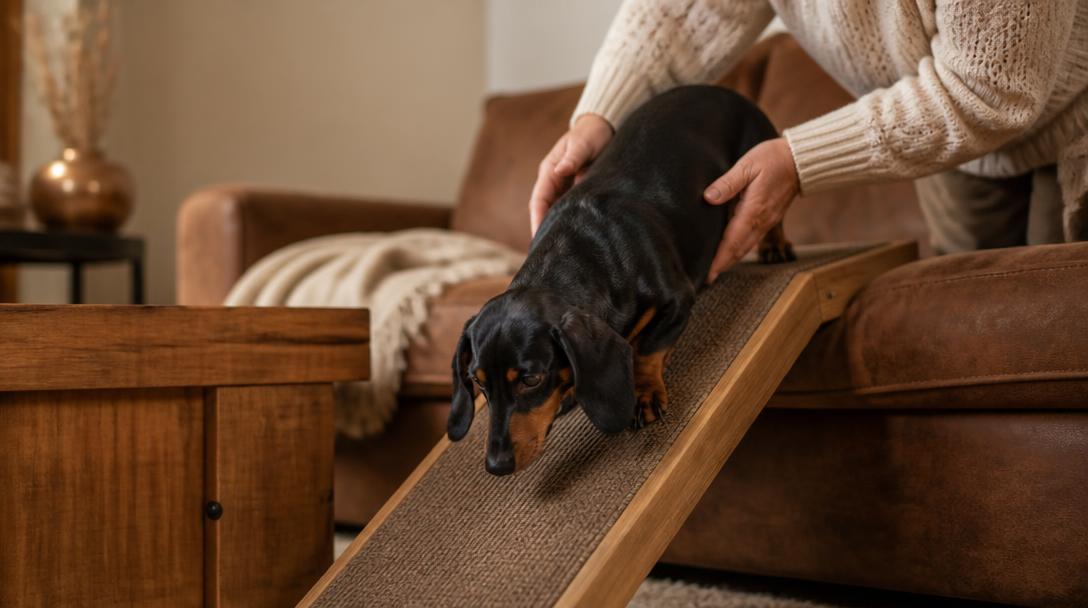
I’ve written a full breakdown of this topic in my post on dachshund spinal health and IVDD prevention, and it’s worth reading alongside this one if you want the complete picture of how exercise choices connect to long-term back health.
The Best Types of Exercise for Dachshunds
Not all activity is created equal for this breed. Here’s what tends to work best:
- Leashed walking – the single best all-around exercise. Low-impact, easy to control the pace, and gives them the sniffing time that satisfies their hunting instincts.
- Swimming (when supervised) – excellent low-impact cardio that doesn’t load the spine the way land-based running does.
- “Sniffaris” – slow walks where you let your dachshund lead with its nose and explore at its own pace. Mentally exhausting in the best way, and gentle on the body.
- Flat-ground fetch with a soft toy, thrown low rather than high, to avoid jumping to catch it.
- Puzzle feeders and scent games indoors – not physical exercise exactly, but genuinely valuable for burning mental energy on days when weather or health limits outdoor activity.
Signs Your Dachshund Isn’t Getting Enough Exercise
An under-exercised dachshund usually tells you, just not in words. Watch for:
- Gradual weight gain despite normal feeding
- Increased destructive behavior – chewing, digging, excessive barking
- Restlessness in the evening, or difficulty settling down
- Attention-seeking behavior that feels more intense than usual
On the flip side, watch for signs of too much exercise, too – limping, excessive panting well after activity has stopped, or reluctance to get up and move the next day. Any of these warrant a call to your vet, especially if they follow a specific activity or fall.
Weather and Seasonal Adjustments
Because dachshunds sit so close to the ground, hot pavement and summer heat affect them more than taller breeds. On hot days, shift walks to early morning or evening and keep an eye out for overheating – I go into much more detail on that in my post on dachshund heatstroke warning signs and prevention. In cold weather, shorter, more frequent outings with a coat for thin-coated dachshunds usually work better than one long walk.
Frequently Asked Questions
Can I over-exercise my dachshund?
Yes. Too much high-impact activity, especially in puppies or dogs recovering from a back issue, can cause joint damage or increase IVDD risk. More isn’t always better with this breed – the right kind of exercise matters more than the amount.
Is it okay to skip a day of exercise?
Occasionally, yes – life happens. But regular skipped days lead to pent-up energy that often shows up as destructive behavior, and consistent inactivity contributes to weight gain, which is a real risk factor for back problems in this breed.
How do I know if my dachshund is overweight?
You should be able to feel (though not necessarily see) their ribs with light pressure, and they should have a visible waist when viewed from above. If you can’t feel ribs easily, it’s worth a conversation with your vet about both diet and exercise.
Are stairs really that bad for dachshunds?
Repeated, unrestricted stair use is one of the more common everyday contributors to back strain in this breed, simply because of how often it happens and the twisting motion involved. Occasional supervised stair use isn’t going to cause harm, but frequent free access is worth limiting.
What’s the single best exercise for a dachshund?
If I had to pick just one, it’s a daily leashed walk that lets them sniff at their own pace. It checks the box for physical activity, mental stimulation, and is about as low-risk to their back as exercise gets.
Building Exercise Into a Routine That Actually Sticks
The dachshunds I hear about doing best long-term aren’t the ones with the most elaborate exercise plans – they’re the ones with consistent, simple routines their owners can actually maintain. Two walks a day, mindful of the back-safety rules above, adjusted for your dog’s age and health, will cover the vast majority of dachshunds well. Start there, watch how your own dog responds, and adjust from it. Your dachshund’s body will tell you what it needs – you just have to pay attention.