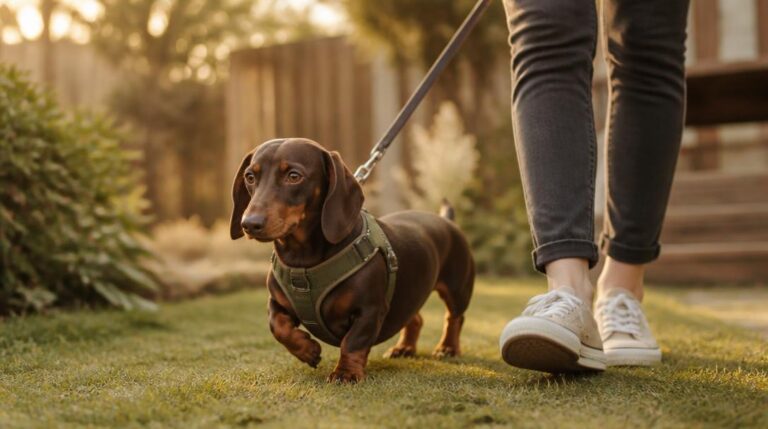
I hear a version of this message at least once a week: “Hank, my dachshund is driving me crazy. She gets her walk every day, but she’s still digging up the couch cushions, barking at nothing, and acting like she’s got somewhere urgent to be.” My answer is almost always the same — she’s not under-exercised, she’s under-stimulated. Those are two very different problems, and a longer walk usually doesn’t fix the second one.
Dachshunds weren’t bred to be couch decorations. They were bred to squeeze into badger dens, follow a scent for hours, and solve problems entirely on their own without a human telling them what to do next. That hunting brain didn’t go anywhere just because your dog’s biggest job now is guarding the mail slot. If you’re not giving that brain something to chew on — sometimes literally — it’s going to find its own project, and you probably won’t love the one it picks. Let’s get into the enrichment activities that actually work for this breed, including a few you can set up in five minutes with stuff already in your kitchen.
Why a Walk Alone Doesn’t Cut It
Physical exercise and mental stimulation are not the same currency, even though we tend to treat them that way. A 20-minute walk tires out a dachshund’s legs. It does almost nothing for the part of their brain that was bred to track, problem-solve, and work independently for a reward. That’s why you can walk a dachshund twice a day and still come home to a shredded pillow — the body was busy, but the mind never clocked in.
This is true for every dog breed to some degree, but it’s especially pronounced in scent hounds like dachshunds. Their entire evolutionary job was mental: read the scent trail, decide which way it leads, keep going even when it gets hard. A dog built for that kind of independent, nose-driven puzzle-solving needs outlets that look nothing like a leash walk around the block. If you want the physical side covered too, I wrote a full breakdown of how much actual exercise a dachshund needs by age and life stage — the two work best together, not as substitutes for each other.
Signs Your Dachshund Is Bored, Not Just Being “A Dachshund”
Owners often chalk up boredom behaviors to personality quirks, and sure, dachshunds have a lot of personality. But a few things are worth a second look before you write them off as “just how she is”:
- Destructive chewing that’s new, or focused on objects that smell like you (shoes, remote controls, couch corners)
- Excessive barking at sounds that never used to bother them
- Digging at carpets, bedding, or furniture with no obvious cause
- Restlessness or pacing in the evening, especially right after a walk
- Following you from room to room more than usual, looking for something to do
None of these automatically mean boredom — they can also point to anxiety, a medical issue, or just an off day. But if the pattern is consistent and your dog is otherwise healthy, mental understimulation is one of the most common and most fixable explanations.
Nose Work: The Single Best Enrichment for This Breed
If I had to pick one category of enrichment that fits a dachshund’s brain better than any other, it’s scent work. This is a dog whose entire ancestry is built around a nose that outperforms its eyes and ears combined, and giving that nose a job is often the fastest way to see a dog visibly relax afterward.
You don’t need a class or special equipment to start. A few ways to work scent games into your week:
- The “find it” game — sit your dog, let them watch you hide a few treats around one room, then release them with “find it.” Expand to multiple rooms as they get the hang of it.
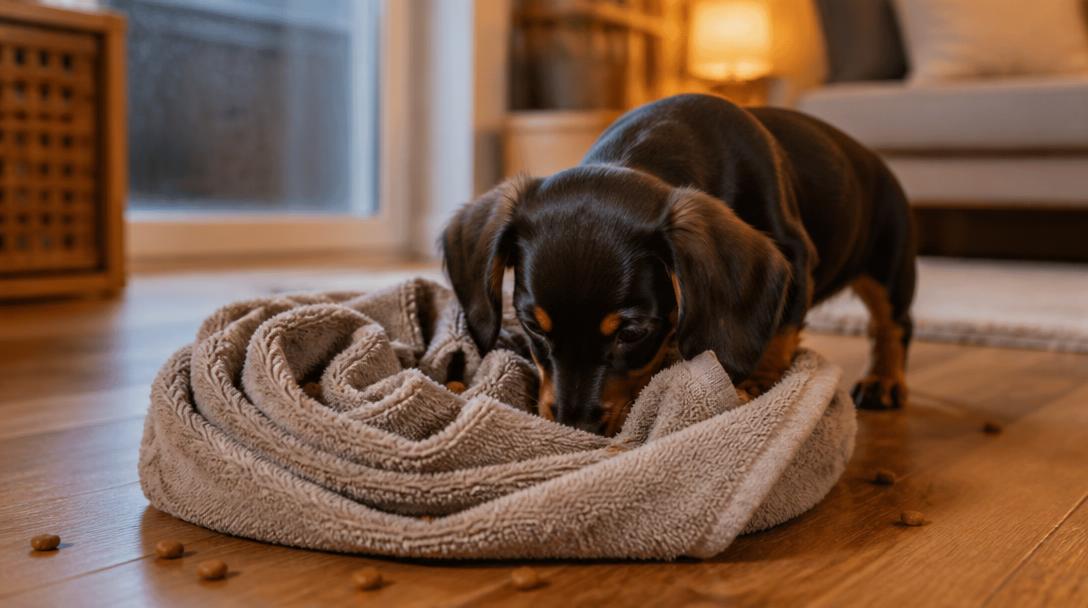
- Snuffle mats — a fabric mat with fleece strips where you scatter kibble or small treats; your dog has to root through the strips with their nose to find each piece. These are inexpensive, machine washable, and turn a two-minute meal into a fifteen-minute activity.
- Scatter feeding — instead of a bowl, toss part of a meal across the grass in the yard and let them hunt it down piece by piece.
- Muffin tin game — drop treats into a few cups of a muffin tin, cover each with a tennis ball, and let your dog figure out which balls to move to get the reward.
All of these tap into the exact instinct that made this breed so effective at flushing badgers out of tunnels centuries ago. It’s not a coincidence that they work so well — you’re just giving the original job description a modern, couch-friendly version.
Puzzle Toys and Food-Dispensing Games
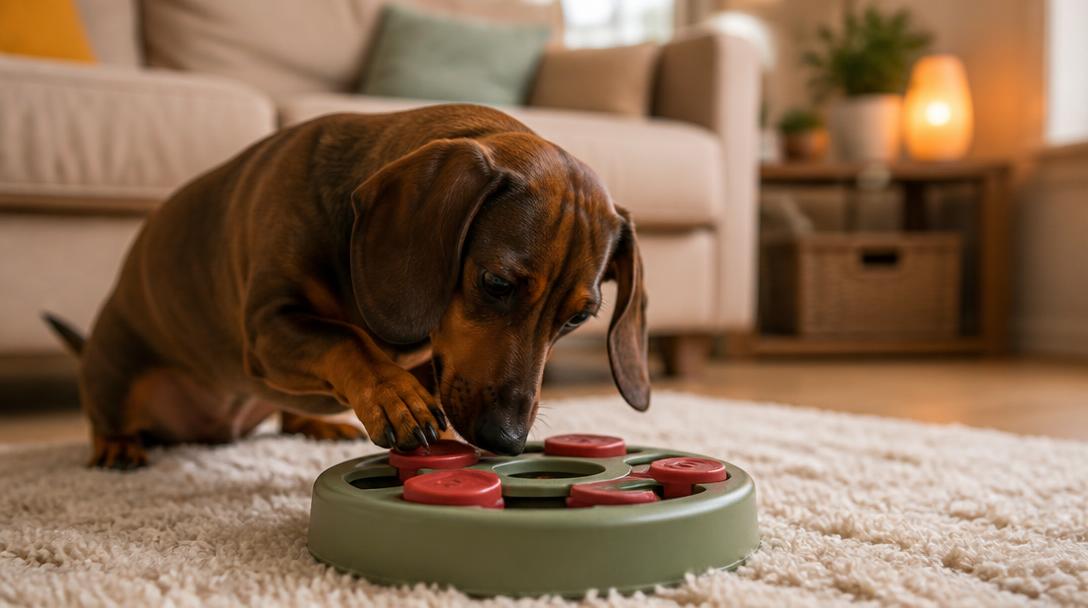
Puzzle feeders are the enrichment world’s most obvious entry point, and for good reason — they work. A treat-dispensing ball that needs to be rolled and nudged, a lick mat with peanut butter or plain pumpkin puree spread into the grooves, or a frozen Kong stuffed with a mix of kibble and a dog-safe wet food all turn “eating” into “problem-solving,” which is exactly the point.
A few things worth knowing before you buy a stack of puzzle toys:
- Start easy. A dog that’s never done puzzle feeding before can get frustrated fast with a toy rated “expert.” Build up difficulty over a few weeks.
- Watch portion sizes. If a puzzle toy is delivering a meal’s worth of food, that meal should come out of their regular daily amount, not be added on top of it.
- Skip anything that requires a lot of jumping, standing on hind legs, or aggressive pawing at height. Dachshunds’ long backs make repetitive twisting or high-impact movement a real risk for IVDD (intervertebral disc disease) — I go into this in detail in my post on dachshund spinal health, but the short version for enrichment purposes is: keep the activity low to the ground.
Back-Safe Indoor Enrichment for Rainy Days
Bad weather doesn’t have to mean a bored dog, and it definitely doesn’t mean you need to break out anything requiring your dachshund to leap or twist. Some of the best indoor options are also the gentlest on their spine:
- The towel roll — scatter treats along a towel, roll it up loosely, and let your dog unroll it with their paws and nose to find each one.
- Cardboard box hide-and-seek — a few empty (tape-free, staple-free) boxes with treats hidden inside one or two of them, all low to the ground so there’s no climbing involved.
- Frozen lick mats — freeze a thin layer of plain yogurt or pumpkin puree on a silicone lick mat for a slower, calming activity that’s perfect for a stormy afternoon.
- Training refreshers — five minutes of practicing “sit,” “stay,” or a new trick uses mental energy just as effectively as a toy, and it costs nothing.
DIY Enrichment You Probably Already Have at Home
Enrichment doesn’t have to mean another Amazon order. Some of the cheapest options work just as well as anything from a pet store:
- An empty tissue box with treats tucked inside for your dog to fish out
- A shallow cardboard tray filled with crumpled paper balls, a few hiding a treat
- Ice cubes with a small piece of low-sodium broth frozen inside for a warm-weather version of the lick mat idea
- A “shell game” with three cups and one treat hidden underneath — most dachshunds pick this up within a few tries
The common thread in all of these is that your dog has to work a little for the reward. That small amount of effort is what makes it enrichment instead of just another handout.
Rotate Toys Instead of Buying More
One of the simplest enrichment upgrades costs nothing at all: rotation. Dogs habituate to toys the same way we stop noticing a picture on the wall after a while. Instead of leaving every toy out all the time, keep three or four in circulation and swap them out weekly. A toy that’s been in the closet for a month comes back feeling brand new, and you get the novelty effect without buying a single new item.
How Much Mental Stimulation Does a Dachshund Actually Need?
There’s no strict daily quota, but a good target is 15 to 20 minutes of dedicated brain work on top of regular exercise — split across one or two sessions rather than one long one. A quick snuffle mat session before breakfast and a puzzle toy in the evening covers most dogs comfortably. Puppies and younger adults typically need more frequent, shorter sessions since their attention spans are still developing, while senior dachshunds often do best with gentler, slower-paced games like lick mats over anything requiring quick movement.
The real test isn’t a stopwatch, though — it’s your dog’s behavior. If the digging, barking, and 9 p.m. zoomies calm down once you’ve added a couple of enrichment sessions to the week, you’ve found the right dose.
Frequently Asked Questions
How long should a mental stimulation session last?
Most dachshunds do well with 10 to 20 minutes per session. Longer than that and many dogs lose focus or get frustrated, especially with puzzle toys. Short and frequent beats long and rare.
Can enrichment activities replace walks entirely?
No — they complement physical exercise, they don’t substitute for it. Dachshunds still need regular walks for cardiovascular health, weight management, and muscle tone. Enrichment fills the mental gap that walking alone leaves open.
Is nose work safe for a dachshund with back problems?
Generally yes, since most nose work games (snuffle mats, scatter feeding, hide-and-seek) keep your dog’s feet on the ground with no jumping or twisting involved. If your dog has a diagnosed back condition, run any new activity by your vet first.
My dachshund gets bored of puzzle toys after a few uses. What am I doing wrong?
Probably nothing — this is normal. Rotating toys in and out of circulation, rather than leaving the same three out permanently, is usually all it takes to keep interest up.
Are dachshund puppies too young for enrichment games?
Not at all. Simple versions — a treat scattered on a towel, an easy snuffle mat, a short “find it” game — are appropriate from the time they come home, and starting early builds problem-solving confidence that carries into adulthood.
A Tired Mind Makes a Calmer Dog
If there’s one thing I want every dachshund owner to take from this, it’s that the “naughty” behaviors so many of us deal with — the digging, the barking, the 9 p.m. chaos lap around the living room — often aren’t a training failure. They’re an unspent-energy problem, and specifically an unspent-brain-energy problem. A snuffle mat costs less than a large coffee and can turn a restless evening into a calm one. Give that hunting brain a job, even a small one, and you’ll usually see the difference within a week.