
People ask me this one constantly, usually right after they’ve watched their dachshund stare down a puddle like it personally offended them: “Can dachshunds even swim?” The short answer is yes, most of them can. The honest answer is a little more complicated, because a dachshund’s body wasn’t built for water the way a Labrador’s was, and the same long back that makes them so prone to injury on land can get them into trouble in a pool, too.
I’ve written a lot on this site about protecting a dachshund’s spine during everyday activity — walks, stairs, play. Water is a different animal, so to speak. It can actually be one of the gentlest forms of exercise for a dachshund’s joints when it’s done right, and one of the more dangerous ones when it isn’t. This post covers what makes swimming different for this breed, how to introduce it safely, and the specific warning signs that mean it’s time to get your dog out of the water.
Why a Dachshund’s Body Makes Swimming Different
Picture the classic swimming dog — a retriever paddling smoothly across a lake, front legs doing most of the work, back legs kicking along behind. A dachshund’s proportions work against that picture. Short legs sit low on a long, heavy-chested body, which means less paddling leverage and less natural buoyancy than a longer-legged breed. Instead of gliding, a lot of dachshunds end up working hard just to keep their head above the surface, which burns energy fast and tires them out well before they’d admit it.
That barrel-shaped chest that gives a dachshund its distinctive silhouette also throws off its balance in water. Some dogs compensate just fine and paddle happily for ten or fifteen minutes. Others struggle within the first minute, especially if they’re carrying extra weight, which adds drag and makes the whole effort harder. None of this means swimming is off the table. It means it needs more supervision and more caution than it would with a breed built for the water.
Is Your Dachshund a Natural Swimmer?
Dachshunds were bred to go underground after badgers, not into lakes after ducks. There’s no strong hunting-water instinct baked into the breed the way there is with retrievers or spaniels, so don’t assume your dog will take to water automatically just because most dogs “can” swim. Some dachshunds genuinely love it. Others will avoid the water entirely, and a few will panic the moment their feet leave solid ground.
Watch your individual dog rather than going in with expectations based on the breed in general. A dachshund that tenses up, tries to climb you, or paddles frantically the second it’s in over its feet is telling you this isn’t its thing, at least not without a lot more gradual, positive introduction. Never force a dachshund into water it’s clearly afraid of. Fear plus a bad first experience is how you end up with a dog that won’t go near a bathtub for the rest of its life.
Water Safety Rules Before You Ever Get In
If your dachshund seems interested and healthy enough for the activity, a few ground rules make the difference between a fun afternoon and a trip to the emergency vet.
A Life Jacket Isn’t Optional
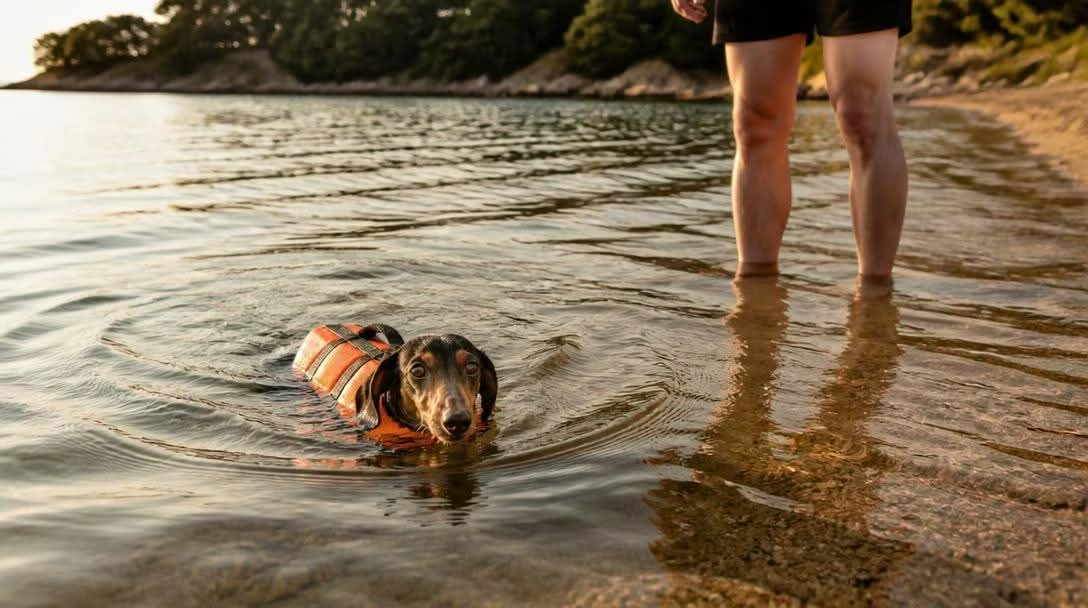
This is the one piece of gear I’d tell every dachshund owner to buy before their dog ever gets near open water. Look for a snug-fitting jacket with a chin float or head support panel, adjustable chest and belly straps, and — this part matters — a sturdy handle on the back so you can lift your dog straight out of the water if it starts to struggle. Given how quickly a dachshund can tire, a properly fitted jacket buys you the extra seconds you need to react. Fit it before the trip, not at the water’s edge, so you’re not fumbling with straps while your dog is already swimming.
Introduce Water Slowly and in Stages
Start small. A shallow kiddie pool or even a few inches of water in the bathtub is enough for a first exposure — let your dog wade and get comfortable with the sensation before there’s any actual swimming involved. From there, move to calm, shallow water where your dog can still touch the bottom, like the shallow end of a pool or the edge of a calm lake. Only progress to deeper water once your dog is relaxed and confident at each stage.

Skip rivers, ocean surf, and anything with a current for a first swim. Moving water is disorienting even for strong swimmers, and it’s not the place to find out how your dachshund handles being out of its depth. Keep early sessions short, somewhere in the one-to-five-minute range, and let your dog set the pace for how much more it wants.
Signs Your Dachshund Is Struggling in the Water
Because dachshunds tire faster than most breeds in water, knowing the warning signs matters more here than it does with a natural swimmer. Watch for heavier or labored breathing, coughing or choking sounds, whining, visible trembling, or a change in posture where the back legs start to sink lower than the front. A dog that’s thrashing instead of paddling, or straining to keep its head up, needs to come out immediately, not after “one more lap.”
Don’t wait for obvious panic. The earlier, quieter signs — a dog that’s gone a little stiff, that’s paddling faster without covering more distance, that keeps glancing toward the shore or the pool steps — are your cue to end the session while your dog is still comfortable. Ending a swim a few minutes early builds trust for next time. Pushing past those early signs is how a fun activity turns into a scary one.
Swimming, IVDD, and What Owners Should Actually Know
Dachshunds have one of the highest rates of intervertebral disc disease of any breed, largely because of that long spine and short rib cage, and it’s worth being clear about where swimming fits into that picture, because the two topics don’t usually get connected. I’ve covered safe exercise for dachshunds with back problems in more depth elsewhere on this site, but here’s the swimming-specific version.
For a healthy dachshund with no history of back injury, gentle recreational swimming is generally considered one of the lower-impact activities available, since the water supports the dog’s weight and takes pressure off the spine that walking or jumping would otherwise put there. That’s different from hydrotherapy, which is a structured, vet- or rehab-professional-guided form of water therapy used specifically to help dogs recover from back injuries or surgery, including IVDD cases. If your dachshund has ever been diagnosed with IVDD, had back surgery, or is currently showing any signs of back pain, weakness, or reluctance to move, don’t improvise a swim on your own. Talk to your vet first. They can tell you whether recreational swimming is appropriate right now, or whether supervised hydrotherapy through a rehab professional is the safer route.
Hazards to Watch For Beyond Fatigue
A few other risks are worth knowing about before you head out. Cold water can cause a shock response even in dogs that swim confidently, so ease your dog in rather than letting it jump straight into a cold lake. Weeds, reeds, and debris in natural water can tangle around short legs and cause panic, so stick to areas with a clear, sandy or gravel bottom when you can. Steep or slippery banks make it hard for a dachshund to climb out on its own, so pick entry and exit points your dog can actually manage, and consider a ramp for pool access rather than expecting your dog to scramble over the edge. Stagnant or algae-covered water carries its own health risks and should be avoided outright.
Pool, Lake, Ocean, or Bathtub: Where Should You Start?
For most dachshunds, the safest progression runs roughly in this order. A bathtub or shallow kiddie pool works well for a first-ever introduction to water, since there’s no current, no depth to worry about, and your dog can stand the whole time. A calm backyard or supervised pool is a good next step, ideally one with a ramp or shallow entry point rather than a ladder. A calm, shallow lake with a gentle, gradually sloping bottom can work once your dog is confident, though algae and water quality are worth checking first. Ocean swimming, with its waves and currents, is the most advanced setting and isn’t the place to start — save it, if you go there at all, for a dog that’s already a confident, experienced swimmer, and always with a life jacket on.
Chlorinated pools are generally fine for occasional dips, but rinse your dog off afterward to keep chlorine from drying out its skin and coat. If you’re building an activity routine around your dachshund’s age and energy level more broadly, I’ve laid out a fuller framework in my guide to dachshund exercise by age and life stage, which covers how swimming and other activities should shift as your dog grows and ages.
Frequently Asked Questions
Can all dachshunds swim?
Most dachshunds are physically capable of paddling, but not all of them enjoy it or take to it naturally. Ability and willingness are two separate questions — always let your dog’s comfort level guide whether and how far to go.
Do dachshunds need a life jacket in a pool?
Yes, especially for a dog that’s new to swimming or that tires quickly. A well-fitted life jacket with a rescue handle gives you a fast, reliable way to lift your dog out if it starts to struggle, even in a familiar backyard pool.
Is swimming good for a dachshund’s back?
Gentle, supervised swimming can be a low-impact way to keep a healthy dachshund’s muscles toned without the joint stress of running or jumping. It’s not a substitute for veterinary guidance if your dog has an existing back condition — talk to your vet before starting any water routine in that case.
How long can a dachshund safely swim?
Start with sessions of just one to five minutes and watch closely for fatigue. Even confident swimmers should take breaks, and total swim time should build up gradually over multiple outings rather than all at once.
The Bottom Line
A dachshund can absolutely enjoy the water, but this isn’t a breed you can treat like a natural-born swimmer and leave to its own devices. Go slow, use a proper life jacket, watch for the early signs of fatigue, and check in with your vet first if your dog has any history of back trouble. Handled that way, swimming can become one of the gentler, more enjoyable activities in your dachshund’s routine rather than a risk you’re managing.


