If you’re a few weeks into life with a new dachshund puppy and you’re starting to wonder whether “housebroken” is a myth, I want you to hear this first: it’s not you, and it’s not a bad dog. Dachshunds have a well-earned reputation as one of the tougher breeds to potty train, and there are real reasons for that — not stubbornness for its own sake, but a mix of temperament, anatomy, and instinct working against the standard playbook. I’ve worked with enough dachshund owners over the years to know exactly where this process goes sideways, and I’ve also seen it done right. Here’s how.
Why Dachshunds Are Genuinely Harder to Potty Train
Before we get into the how-to, it helps to understand the why — because a lot of frustrated owners assume their puppy is being defiant when really, the breed is working against a few stacked disadvantages.
- Small bladders, big consequences. A dachshund puppy simply can’t hold it as long as a Labrador puppy can. Their bladder capacity is small relative to how much they drink and eat, so the margin for error is thin — especially in the first few months.
- Independent, scent-driven minds. Dachshunds were bred to work independently underground, following their nose without checking in with a human first. That same independence that makes them such characterful, confident dogs also means they’re less naturally inclined to “ask permission” or look to you for guidance the way a more biddable breed might.
- Low-slung and weather-averse. Their long backs and short legs put them closer to wet grass, snow, and cold pavement than most breeds. A lot of dachshunds genuinely dislike going out in bad weather, and some will hold it rather than squat in the rain — which backfires the moment they can’t hold it any longer.
- Subtle signals. Some dachshunds give you almost no warning before they go. No frantic circling, no whining at the door — just a quick squat and it’s done. That makes the “watch for the signal” advice you’ll read everywhere else a lot less useful with this breed.
None of this means a dachshund can’t be reliably potty trained. It means the timeline is often longer than owners expect, and the method has to account for these traits rather than fight them.
What a Realistic Timeline Actually Looks Like
This is the part most generic puppy-training articles get wrong for this breed. Many dogs are considered largely housebroken by 4 to 6 months, but it’s completely normal for a dachshund to take longer — some owners report full reliability closer to 8 or 9 months, particularly with stubborn individuals or households that started training inconsistently. If you’re three months in and still cleaning up accidents, you have not failed. You’re within the normal range for this breed.
The good news is that early, consistent effort pays off. If you’re just bringing a puppy home, our Dachshund Puppy Checklist covers the supplies worth having in place before day one, including the crate and enzymatic cleaner you’ll lean on heavily during this process.
The Core Protocol: Set Up for Success, Not for Failure
Good potty training isn’t about correcting accidents after they happen — it’s about structuring your puppy’s environment so accidents rarely get the chance to happen in the first place. Here’s the framework I recommend.
1. Take Them Out Constantly at First
Young puppies need outdoor trips far more often than most people expect — roughly every 20 to 30 minutes during active, awake periods for the youngest puppies, plus immediately after three key triggers: waking up, eating, and hard play. As bladder control improves over the following weeks, you can stretch that interval out, but in week one, err on the side of “too often.”
2. Supervise Like It’s Your Job
This is the single biggest lever you have. An unsupervised puppy is a puppy who can sneak off and have an accident without you ever seeing the warning signs. In the house, either keep your puppy within eyesight (a leash clipped to your belt loop works well for this) or contain them in a crate or small puppy-proofed pen. The goal isn’t punishment — it’s simply removing the opportunity to practice going in the wrong place.
3. Use the Crate as a Tool, Not a Timeout
Dogs generally avoid soiling the space they sleep in, which makes a properly sized crate one of your most effective training tools. The crate should be just big enough for your puppy to stand, turn around, and lie down comfortably — not so large that they can pick a corner to use as a bathroom. Crate time should always be followed by an immediate trip outside the moment you open the door.
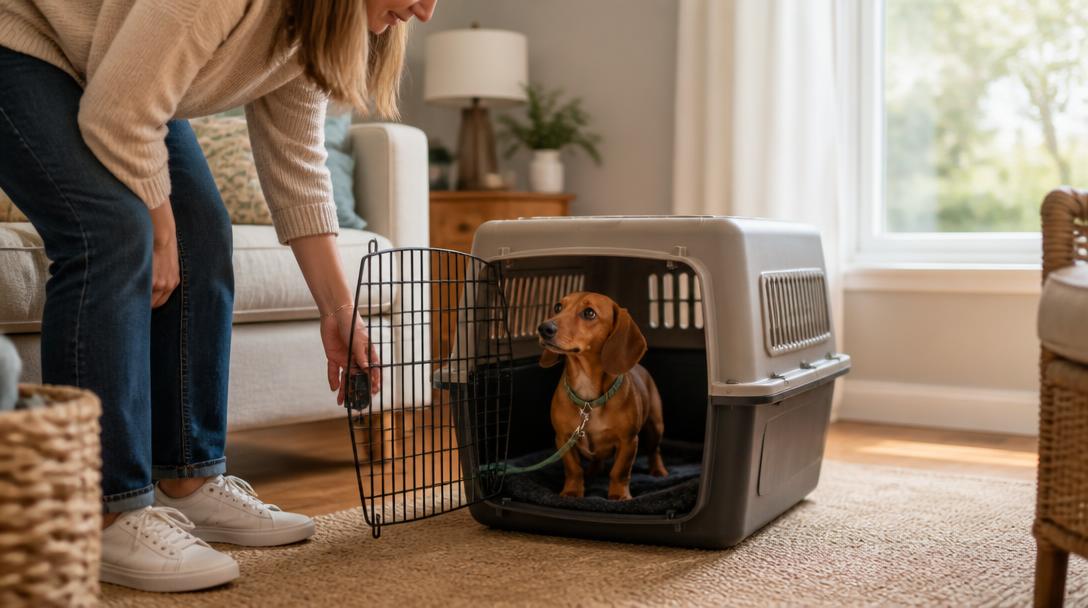
4. Pick One Spot and Leash Them to It
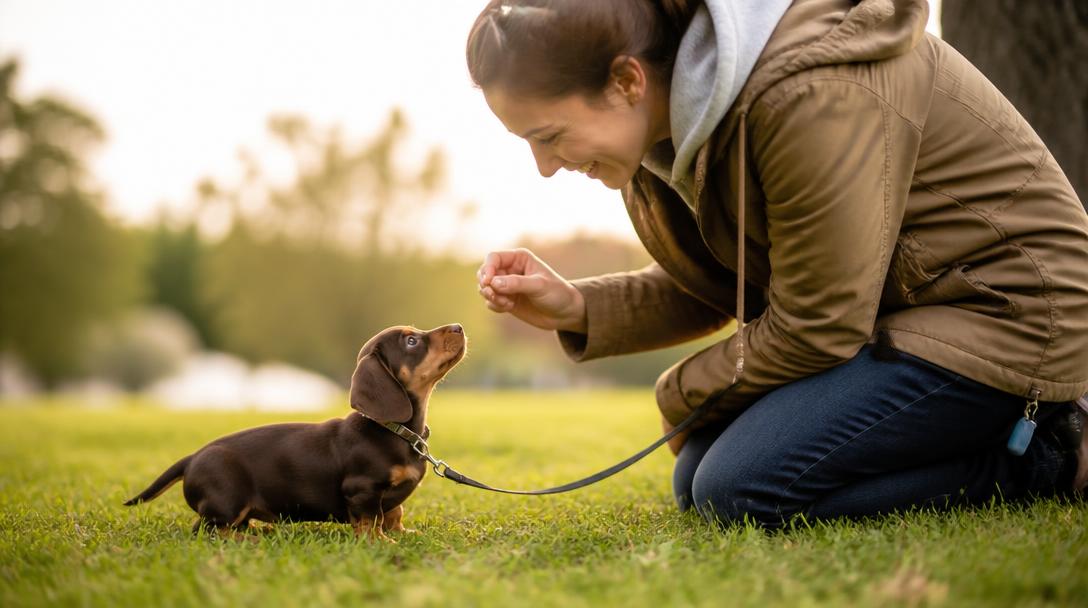
Free-roaming the backyard during potty breaks is tempting, but it slows training down because your puppy gets distracted sniffing and exploring instead of getting down to business. Take them out on a leash to the same general spot every time. The familiar scent cues your puppy that this is the place to go, and once they’ve actually eliminated, reward them immediately — then let the leash off for some play as the payoff.
5. Reward the Moment It Happens
Praise and a small treat within a few seconds of your puppy finishing outside is what actually builds the association. Praising back at the door, or worse, well after the fact, teaches your puppy nothing useful — dogs don’t connect a reward to something they did two minutes ago.
6. Clean Accidents With an Enzymatic Cleaner — Nothing Else
If your puppy has an accident indoors, an enzymatic cleaner is non-negotiable. Standard household cleaners, even ones that smell strong to us, often leave behind trace odors a dog’s nose can still detect — and that residual scent invites them to use the same spot again. Skip ammonia-based cleaners entirely, since the scent can actually resemble urine to a dog and make the problem worse.
Common Mistakes That Slow Dachshunds Down
A few habits tend to derail potty training specifically for this breed:
- Relying on potty pads. Pads can work for apartment dwellers with no other option, but for most owners they send a mixed message — your puppy learns indoor elimination is sometimes fine, which makes the eventual switch to outdoor-only harder, not easier.
- Punishing after the fact. Scolding a puppy for an accident you didn’t catch in the act teaches fear and hiding, not the right behavior. If you didn’t see it happen, the moment has passed — clean it up and tighten your supervision instead.
- Letting bad weather become an excuse — for you or your puppy. If you skip trips out in the rain, your puppy never learns that going potty in the rain is fine, and you’ll pay for it later. Suit up and go anyway, especially in the early weeks.
- Giving too much freedom too soon. A few accident-free days does not mean your puppy is trained. Expand their unsupervised house privileges gradually, over weeks, not days.
When Progress Stalls or Reverses
It’s genuinely common for a dachshund who seemed reliable to suddenly start having accidents again — during teething, after a schedule change, or around 4 to 6 months as adult hormones and independence kick in. If that happens, don’t panic and don’t assume you’re back at square one. Go back to the basics for a week or two: more frequent trips out, closer supervision, and crating when you can’t watch closely. Most regressions resolve quickly once the structure tightens back up.
If accidents suddenly increase alongside other changes — drinking more water than usual, straining to go, or blood in the urine — that’s a signal to call your vet rather than a training problem. A urinary tract issue can look exactly like a training regression at first glance.
It’s also worth building potty training into your broader routine rather than treating it as an isolated task. Our guide on How to Train a Dachshund Puppy covers the foundational obedience work that tends to go hand in hand with housebreaking — a puppy who’s already learning to focus on you during training sessions is usually easier to read during potty breaks too.
Frequently Asked Questions
How long does it take to potty train a dachshund puppy?
Most dachshunds take longer than the average breed — commonly 4 to 6 months for solid progress, with some taking up to 8 or 9 months for full reliability. Consistency in the early weeks shortens this considerably.
Are dachshunds harder to potty train than other breeds?
Generally, yes. Their independent temperament, small bladder capacity, and dislike of bad weather all work against the standard training timeline, so patience and a structured routine matter more with this breed than with many others.
Should I use potty pads for a dachshund puppy?
Only if outdoor access is genuinely limited, such as a high-rise apartment. For most households, skipping pads and going straight to outdoor training avoids the mixed signals that slow the process down.
How often should a dachshund puppy go outside?
As a general rule, roughly every 20 to 30 minutes during awake, active periods for very young puppies, plus immediately after waking, eating, and play. That interval stretches out naturally as bladder control matures over the following months.
Why does my dachshund puppy keep having accidents even though we go outside often?
Usually it comes down to supervision gaps — a puppy who slips out of sight for even a minute can have an accident you never see coming. Tightening supervision, crating during unwatched periods, and cleaning prior accidents with an enzymatic cleaner usually closes the gap quickly. If accidents increase alongside other symptoms like excessive thirst or straining, check in with your vet to rule out a urinary issue.
The Bottom Line
Potty training a dachshund takes more patience than most breed-specific guides let on, but it is absolutely achievable with a consistent routine, close supervision, and realistic expectations for the timeline. Set your puppy up to succeed rather than waiting to correct failure, and you’ll get there — usually faster than the discouraging stories you’ll find online.