Bringing home a dachshund puppy for the first time is one of those moments you replay in your head for years — the tiny ears, the confident little strut on legs that are somehow already too short for their own body, the way they immediately claim a spot on the couch like they’ve lived there forever. It’s also, if I’m honest, a little overwhelming. Dachshunds are a unique breed with a unique set of needs, and getting the basics right in the first few weeks makes a real difference in how smoothly the transition goes for both of you.
I put this checklist together from what actually mattered when getting a doxie puppy settled in — not just the standard “buy a bowl and a leash” advice you’ll find everywhere, but the dachshund-specific things that make a real difference for this breed’s long back, short legs, and famously stubborn streak.
Before Puppy Comes Home: The Essentials
Have these ready and set up before your puppy arrives, not after. The first 24 hours are stressful enough for a puppy leaving its littermates without also trying to figure out where everything goes.
A Properly Sized Crate
Crate training gives your puppy a safe den space and makes housetraining dramatically easier. Get a crate sized for your dachshund’s adult size with a divider panel, rather than buying a new one every few months as they grow. A crate that’s too large defeats the purpose — puppies won’t soil the area right next to where they sleep, but they will use a far corner of an oversized crate as a bathroom.
Ramps or Pet Stairs
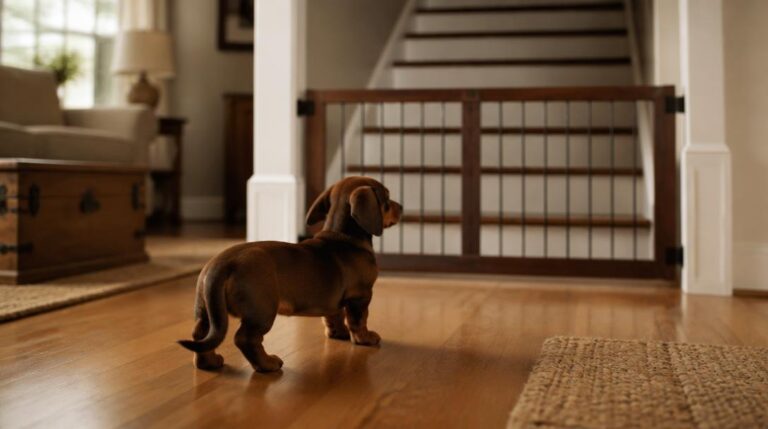
This is the one piece of advice that’s specific to dachshunds and genuinely non-negotiable: limit how much your puppy jumps on and off furniture from day one. Dachshunds are prone to intervertebral disc disease (IVDD) because of their long spines, and the jumping habits they build as puppies stick with them for life. A set of pet stairs by the couch and bed costs very little and can spare your dog a lot of pain down the road. We go into more detail on this in our guide to dachshund back problems and spinal health if you want the full picture.
A Harness, Not Just a Collar
A properly fitted H-style or Y-style harness distributes pressure across the chest instead of the neck and spine, which matters a lot for a breed already prone to back issues. Save the collar for holding an ID tag while your puppy is home, and clip the leash to the harness for actual walks.
Puppy-Appropriate Food and a Feeding Schedule
Ask your breeder or rescue what your puppy has been eating and stick with it for at least the first week to avoid stomach upset, then transition gradually if you plan to switch. Dachshund puppies do best on 3–4 small meals a day rather than one or two large ones — their little stomachs can’t handle much volume at once, and frequent small meals help prevent the blood sugar dips that can make young puppies lethargic or shaky.
Puppy Pads or a Designated Potty Spot
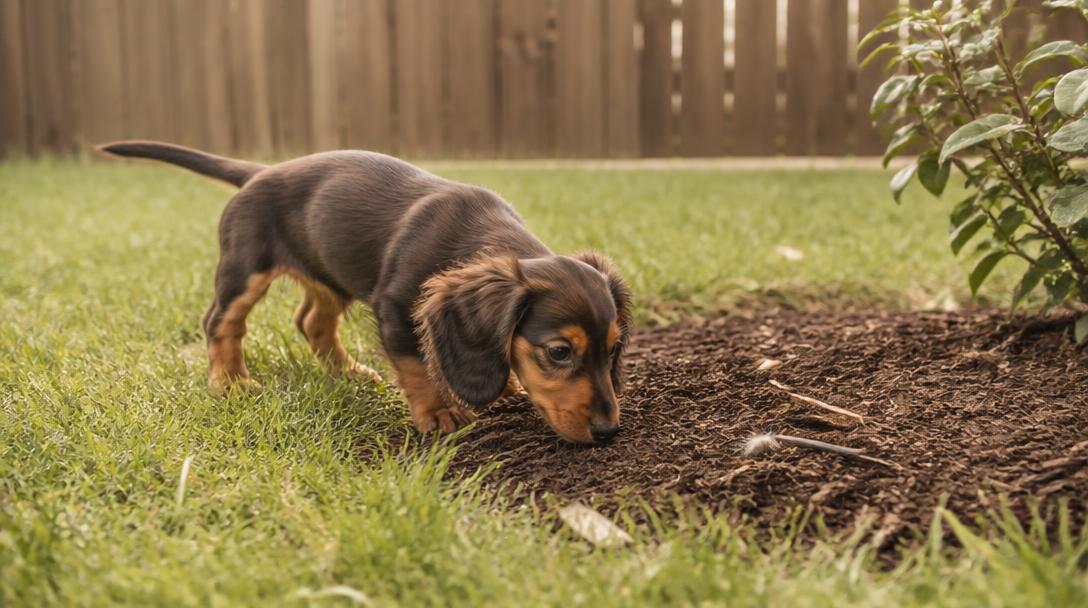
Whether you’re going the puppy-pad route for apartment living or heading straight outside, decide on your approach before puppy arrives and stay consistent. Dachshunds are smart but can be a bit stubborn about housetraining, so a predictable routine matters more than almost any other factor.
The First Week: What to Expect
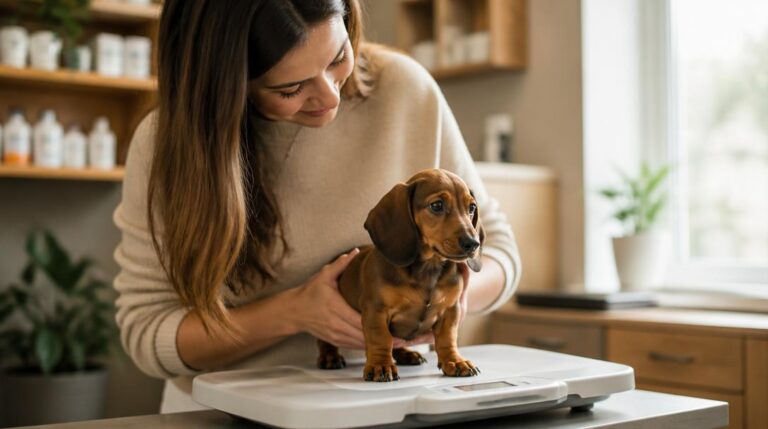
The first few days are an adjustment for everyone. Your puppy has just left its mother and littermates, so some whining at night and hesitance around new people is completely normal — it usually settles within a week or two as they build confidence in their new home.
A few things that help:
- Keep the first few days low-key. Resist the urge to invite everyone over to meet the new puppy right away. Let them settle into the household first.
- Start basic training early, but keep sessions short. Five-minute sessions a few times a day work far better than one long session. If you want a full walkthrough, we cover this in how to train a dachshund puppy.
- Puppy-proof at floor level. Get down on your hands and knees and look at your home from puppy height. Loose cords, small objects, and gaps behind furniture all look different from down there.
- Schedule the first vet visit within the first few days. Your vet will check for any health concerns, confirm the vaccination schedule, and answer breed-specific questions. We go into what to expect in our guide to dachshund veterinary care.
Supplies Worth Having on Hand
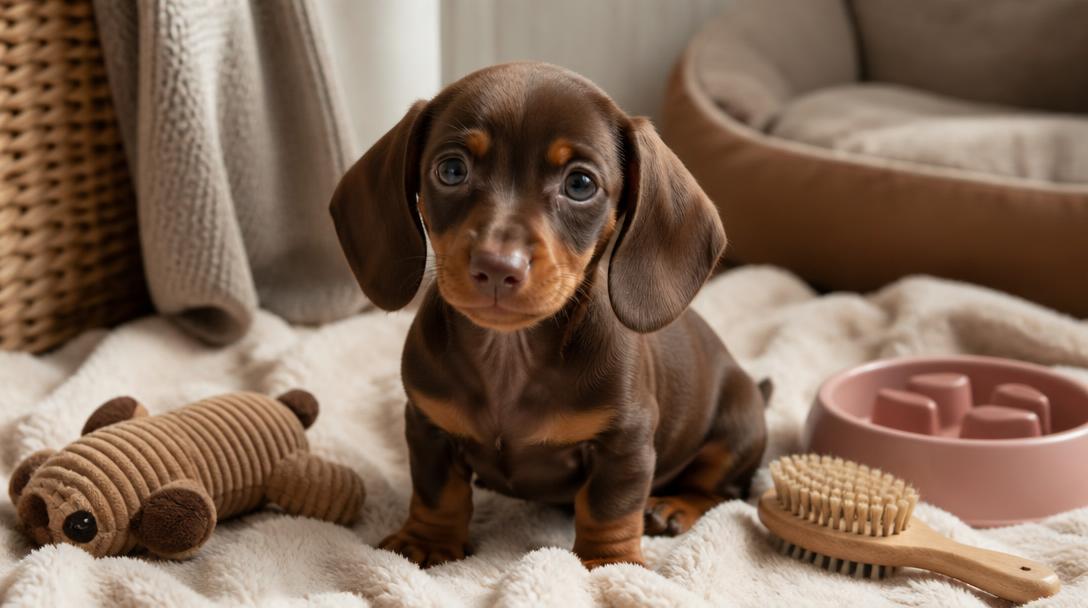
Beyond the core essentials above, a few smaller things make the first weeks noticeably easier:
- Puppy-safe chew toys (teething starts early and dachshunds are enthusiastic chewers)
- A soft-sided carrier or car seat for trips to the vet
- Enzymatic cleaner for the inevitable housetraining accidents
- A slow-feeder bowl if your puppy tends to eat too fast
- Grooming basics — a soft brush and dog-safe shampoo, more or less depending on coat type
Frequently Asked Questions
How long does it take a dachshund puppy to settle into a new home?
Most puppies noticeably relax within one to two weeks, though full comfort with the household routine can take closer to a month. Consistency in feeding times, potty breaks, and sleep schedules speeds this up significantly.
Do dachshund puppies need a special diet?
They need a high-quality puppy-formula food appropriate for a small breed, but nothing exotic. The bigger factor is portion control and meal frequency — small, frequent meals rather than diet type.
At what age can a dachshund puppy start going up and down stairs?
Ideally, not until they’re closer to a year old and fully grown, and even then it’s worth limiting where possible. This is one of the most important long-term habits you can build early, given how prone the breed is to back problems.
Getting Started on the Right Foot
None of this needs to be complicated. Get the essentials set up before your puppy arrives, keep the first week low-key and consistent, and be mindful of your dachshund’s back from day one. The rest — the personality, the stubbornness, the way they’ll eventually decide your lap is their permanent address — comes naturally.
Have a question about your new puppy that wasn’t covered here? Drop it in the comments or take a look through the rest of our Puppy Care and Health & Wellness guides for more.