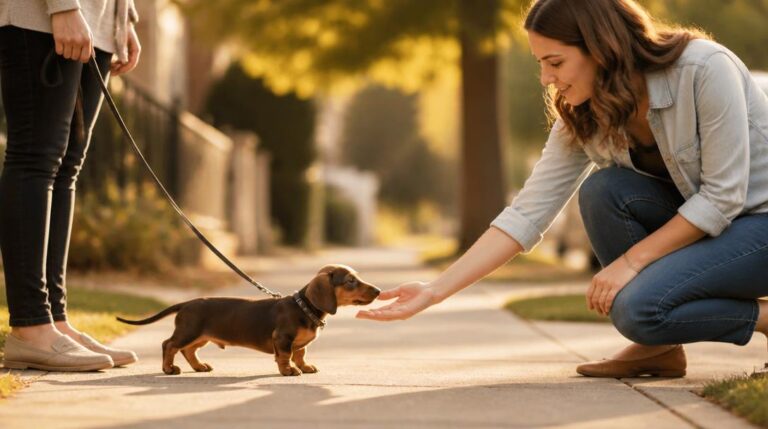
Training a dachshund puppy requires patience, consistency, and positive reinforcement to help the dog learn good behavior. The key to successful training is starting early, using clear commands, and rewarding the puppy when it follows instructions. For detailed advice on how to train a dachshund puppy, follow these essential tips. Dachshunds can be stubborn, so it is important to stay calm and persistent throughout the process.
For anyone wondering how to train a dachshund puppy, it is essential to remember that each puppy is unique and may require specific methods. Understanding individual needs can greatly enhance the training experience.
In addition to these basics, learning how to train a dachshund puppy includes recognizing their strengths and weaknesses, which can help tailor the training approach.
Many owners find success in learning how to train a dachshund puppy by observing their pet’s behavior and adjusting their training methods accordingly.
A dachshund puppy needs to learn basic skills like potty training, leash walking, and socializing. Teaching these early helps prevent problems later and builds a strong bond between the owner and the dog. Training should happen in short, regular sessions to keep the puppy engaged without overwhelming it.
Because dachshunds have unique personalities and energy levels, training methods may need to be adjusted to fit each puppy. Understanding this helps owners stay realistic and focused on steady progress rather than quick results. For detailed tips on training a dachshund puppy, see this helpful guide on training techniques.
Incorporating fun and engaging activities can enhance the process of how to train a dachshund puppy, creating a positive association with training.
Understanding Dachshund Puppy Traits
To effectively understand how to train a dachshund puppy, owners should consider enrolling in training classes to gain insights from professional trainers.
Researching various methods on how to train a dachshund puppy can also help owners select the best techniques for their specific situation.
When asking how to train a dachshund puppy, it is crucial to approach training with a positive mindset to encourage a healthy learning environment.
Dachshund puppies have a strong personality that can shape how they learn and behave. Knowing their key traits helps guide training and care. Early experiences influence how well a dachshund grows into a confident and well-mannered dog.
Knowing how to train a dachshund puppy effectively involves patience and a willingness to adapt strategies as the puppy progresses.
Understanding how to train a dachshund puppy requires careful observation of the puppy’s responses to different stimuli and commands.
Unique Personality And Behavior
Understanding how to train a dachshund puppy effectively will enhance your relationship with your pet and ensure they grow into a well-mannered dog.
Dachshunds, often called sausage dogs, are curious and brave despite their small size. They tend to be independent and sometimes stubborn, which can make training a challenge. This stubbornness means consistent, patient training is needed.
For those wondering how to train a dachshund puppy, consistency and commitment are key factors that will lead to successful outcomes.
As you learn how to train a dachshund puppy, remember that building trust through positive interactions is essential for effective training.
When figuring out how to train a dachshund puppy, employing various training techniques can keep your sessions interesting and effective.
They are loyal and form strong bonds with their owners. However, their hunting background can lead to a tendency to dig and chase small animals. Dachshund puppies need mental and physical activities to stay happy.
Because of their bold spirit, they may bark more than other breeds. Owners should manage this behavior early to avoid it becoming a problem. Recognizing these traits is key for effective dachshund puppy care.
Early Socialization Importance
Socialization is critical for dachshund puppies to grow into balanced dogs. Introducing them to different people, places, sounds, and other animals helps reduce fear and aggression later.
Puppy kindergarten classes are beneficial to begin proper socialization safely. These classes help dachshunds learn to interact without becoming overwhelmed. Early socialization also supports training by making puppies more adaptable.
Without socialization, a dachshund might become wary or overly protective. Controlled, positive experiences during puppyhood prevent many common dachshund behavior issues. Owners should start socialization early to build a strong foundation.
For more detailed training steps and tips, see the Complete Dachshund Puppy Guide.
Preparing For Successful Training
Getting ready for training involves having the right supplies and creating a space where the puppy can focus and learn. Using practical tools and setting up an inviting area helps build good habits and makes training smoother.
Selecting The Right Equipment
Choosing proper gear is key to effective dachshund training. A well-fitting harness is better than a collar for this breed. It helps control the puppy without hurting its neck.
Training treats should be small, tasty, and healthy. These encourage good behavior during short, frequent training sessions. Avoid giving too many to keep the puppy’s diet balanced and healthy.
Chew toys are important to keep the puppy busy and prevent destructive chewing. Durable toys designed for puppies help satisfy their urge to chew and support dental health.
A training leash of about 6 feet helps maintain control while allowing the puppy some freedom to explore. Avoid retractable leashes during training to keep commands clear.
Setting Up A Supportive Environment
A calm, distraction-free space helps the puppy focus better. Setting up a puppy playpen provides a safe, confined area where the dachshund can learn without interruptions.
During potty training, having easy access to the designated potty spot is important. The environment should allow quick bathroom breaks to reinforce this habit.
Keeping training sessions brief—about 5 to 10 minutes—prevents the puppy from losing interest or becoming frustrated. Scheduling consistent training times each day helps form a routine.
As you embrace the journey of how to train a dachshund puppy, keep in mind that every dog is different, and what works for one may not work for another.
Placing all training items like treats, toys, and leash nearby ensures sessions go smoothly without pauses, supporting steady progress.
Fundamental Dachshund Puppy Training Techniques
Training a Dachshund puppy requires clear methods that build good behavior early on. Using the right balance of rewards, consistent commands, and avoiding typical slip-ups will help the puppy learn faster and remain obedient.
In conclusion, understanding how to train a dachshund puppy is a rewarding experience that fosters a deeper bond with your furry friend.
Positive Reinforcement For Success
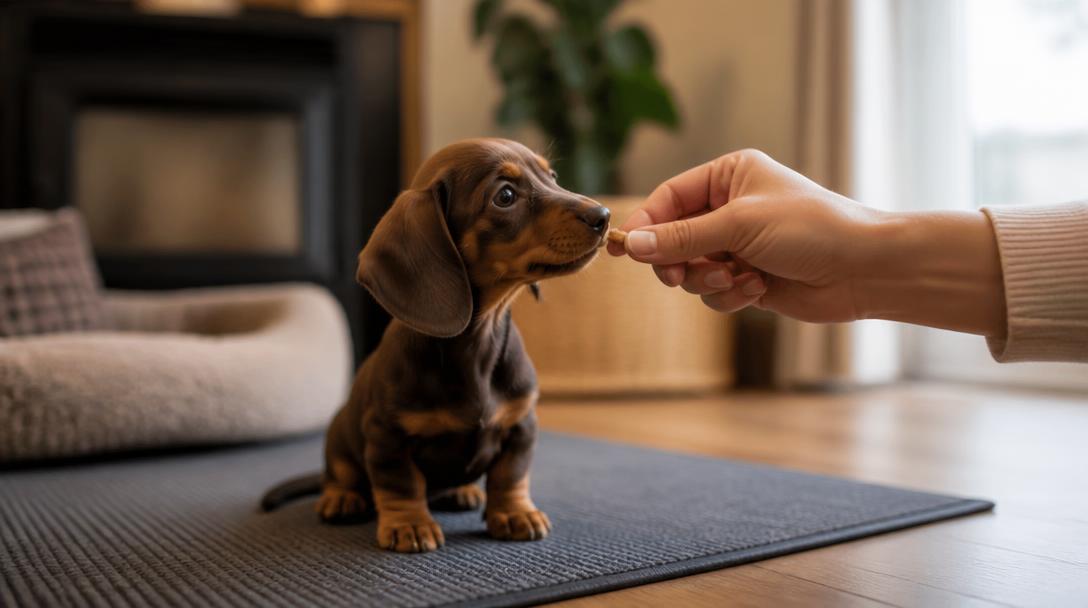
Positive reinforcement training focuses on rewarding a puppy when it shows the right behavior. This can be treats, praise, or playtime. Dachshunds respond well to rewards because they are motivated by food and attention.
It is important to give the reward immediately after the desired action. This helps the puppy connect the behavior with the reward. Avoid using punishment. Instead, redirect bad behavior toward something positive.
Owners should use short training sessions, about 5-10 minutes, several times a day. This keeps the puppy attentive and eager to learn. Consistent use of positive reinforcement encourages the puppy to repeat good actions and makes training easier.
Obedience And Consistency
In summary, knowing how to train a dachshund puppy means combining fun, structure, and understanding to achieve the best results.
Obedience training means teaching commands like “sit,” “stay,” and “come.” Consistency is crucial. The same words and hand signals should be used every time. This reduces confusion for the Dachshund puppy.
Daily practice in different rooms and environments builds a reliable response. Everyone in the household must use the same commands and rules. This avoids mixed messages and behavior problems.
Short, frequent training builds strong habits. Rewards for obedience help maintain focus. Regular obedience training helps the puppy understand limits and expectations clearly and quickly.
Avoiding Common Mistakes
Many owners make mistakes that slow Dachshund puppy training. One common error is starting too late. Early training, starting at 8 to 9 weeks, sets a strong foundation.
Another mistake is inconsistency. Skipping sessions or using different commands confuses the puppy. Also, allowing bad habits like barking or jumping without correction creates long-term issues.
Avoid harsh punishments, as they can cause fear or stubbornness. Instead, stay patient and use redirection with positive reinforcement. Clear, gentle guidance helps the puppy stay confident and learn better.
For more detailed training tips, see how to train a Dachshund puppy with step-by-step techniques.
Core Training Skills For Dachshund Puppies
Training a dachshund puppy calls for clear routines and consistent practice. Key skills focus on helping the puppy learn where to go potty, walk politely on a leash, control barking and digging instincts, and follow basic commands that make everyday life easier.
Housetraining And Crate Training
As you progress in learning how to train a dachshund puppy, be patient and flexible to adapt to your puppy’s unique personality.
Housetraining is one of the first priorities. Using crate training helps by giving the puppy a safe, den-like space, which reduces accidents inside the home. The crate should be the right size—large enough to stand and turn, but not so big that the puppy can eliminate in one corner and rest in another.
Regular bathroom breaks after meals, playtime, and naps build good potty habits. Reward the puppy immediately after going outside to reinforce the behavior. Consistency and timing are essential.
Crate time should never be used as punishment. This training supports housetraining and helps with separation anxiety. A schedule for crate and potty breaks sets clear boundaries.
Leash Walking And Heeling
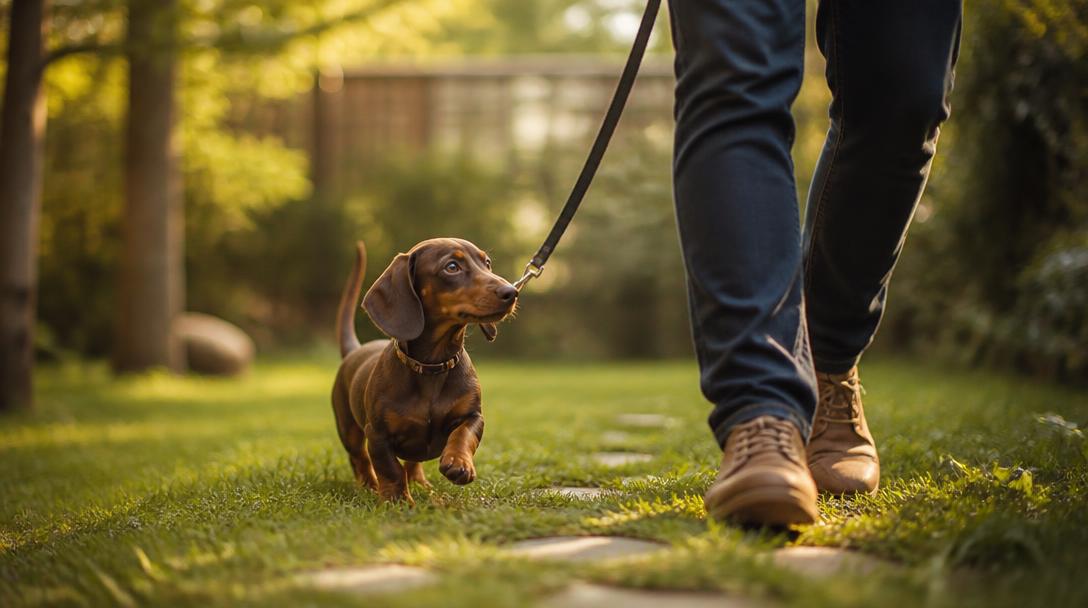
Teaching a dachshund puppy to walk calmly on a leash prevents pulling and unsafe behaviors. Start indoors or in a quiet yard with a lightweight leash and collar.
Encourage the puppy to walk beside you by using treats and praise when it stays close. If the puppy pulls forward, stop moving until it returns to your side. Avoid yanking on the leash.
Heeling means the puppy stays by your side during walks, which improves control and safety near roads or distractions. Short training sessions multiple times a day work best for small breeds like dachshunds.
Reducing Barking And Digging
Dachshunds can be vocal and have a digging instinct due to their hunting background. To reduce barking, identify the triggers such as strangers, noises, or boredom. Teach a “quiet” command by waiting for silence, then rewarding immediately.
For digging, provide alternative outlets like a digging box with toys or supervised outdoor play. Redirect the puppy when it starts digging in undesired areas to a proper spot. Avoid harsh punishment, since it can increase anxiety and unwanted behavior.
Mental and physical exercise reduces excess energy that leads to barking and digging. Regular play and training sessions keep the puppy engaged and calm.
Teaching Essential Commands
Basic commands like “sit,” “stay,” “come,” and “down” are vital for safety and good manners. Start with simple commands in a distraction-free environment.
Use positive reinforcement such as treats, praise, and toys. Keep sessions short, about 5-10 minutes, to maintain the puppy’s attention. Repeat often and gradually add distractions as the puppy improves.
The “down” command, in particular, helps calm an excitable dachshund and is useful for times when control is necessary. Clear signals and patience help dachshund puppies learn these commands quickly.
Ultimately, mastering how to train a dachshund puppy leads to a well-behaved and happy companion that enriches your life.
Consistency in training ensures the puppy understands expectations and feels secure.
Addressing Challenges And Advanced Training
Training a dachshund puppy goes beyond basic commands. It requires consistent strategies to handle common issues like separation anxiety, keep their minds active, and build on what they have already learned.
Handling Separation Anxiety
Dachshunds are prone to separation anxiety because they form strong bonds with their owners. Signs include barking, whining, or destructive behavior when left alone.
To reduce anxiety, start by leaving the puppy alone for short periods, gradually increasing the time. Give them familiar items like a favorite toy or blanket for comfort.
Always remember to celebrate small victories in how to train a dachshund puppy to keep motivation high for both you and your puppy.
Creating a safe space, such as a crate or a quiet room, can help. Avoid long goodbyes or emotional farewells, as these can increase stress.
Using calming pheromone sprays or gentle background noise might also ease their discomfort. Consistent daily routines give dachshunds a sense of security and predictability.
Providing Mental Stimulation
Dachshunds are intelligent dogs that need mental activity to avoid boredom, which can lead to problem behaviors.
Offer puzzle toys or treat-dispensing games to challenge their minds. Rotate toys regularly to maintain interest.
Incorporate short training sessions that teach new commands or tricks. These sessions should be 5 to 10 minutes long to keep focus.
Activities such as scent games or basic agility exercises engage their natural curiosity and energy.
Mental stimulation not only occupies their brain but also strengthens the bond between owner and puppy.
Building On Training Progress
Once basic commands are learned, it’s important to advance training with consistency and patience.
Increase distractions gradually during training to help the puppy learn to obey commands in different situations.
Use positive reinforcement like treats and praise to encourage good behavior. Avoid punishment, which can create fear and confusion.
Incorporate agility or obstacle training to develop physical skills and confidence.
For those still searching for answers on how to train a dachshund puppy, feel free to reach out to other dachshund owners for shared experiences and tips.
Keep sessions short but frequent, usually two to three times a day, to maintain the puppy’s interest and prevent frustration.
Tracking progress in a training journal can help identify what works best and where more effort is needed.
For guidance on these steps, see advanced training techniques for dachshunds.
Ongoing Dachshund Puppy Care And Maintenance
Proper care for a Dachshund puppy involves regular grooming and health checks as well as consistent behavior training. These efforts help maintain the puppy’s health and reinforce good habits over time.
Routine Grooming And Health Care
Dachshund puppies need weekly brushing to keep their coat clean and reduce shedding. Long-haired types require more frequent grooming to prevent mats. Bathing should happen about once a month unless the puppy gets dirty.
Nail trimming and ear cleaning are essential. Overgrown nails cause discomfort, and ears can develop infections if not cleaned regularly. Use dog-safe shampoo and ear cleaner.
Nutrition plays a key role in health. Feeding a balanced, age-appropriate dog food on a set schedule supports growth. Regular check-ups with a vet detect any health issues early.
Vaccinations and parasite control like flea prevention are also important parts of long-term care.
Ensuring Positive Long-Term Behavior
Consistency is crucial when training Dachshund puppies. Using positive reinforcement like treats and praise encourages good behavior. Harsh punishments should be avoided.
Building confidence by setting clear rules helps them know what is expected. Owners must act as the clear leader in the home. This reduces stubbornness and helps with obedience.
Daily training sessions should be short but regular to keep the puppy engaged. Socialization with other dogs and people also promotes good behavior.
Reinforcing house rules consistently and rewarding success maintains progress long term. Patience and repetition are key. For more details, see positive training advice for Dachshunds.