
If you’ve brought home a dachshund puppy and someone’s told you crate training is “cruel” or “just for dogs who misbehave,” I want to clear that up right away — as Simply Dachshund’s Training Expert, crate training is one of the kindest, most effective things you can do for a dachshund, and it’s usually easier than owners expect. This breed has a den instinct baked into its DNA, which means a crate isn’t a cage to them. Done right, it’s the closest thing to a burrow they’ll ever get, and most dachshunds come to genuinely love theirs.
This guide walks through exactly how to crate train a dachshund puppy from the first day home through sleeping through the night, what to do when the crying starts (because it usually does, at least for a few nights), and the mistakes that turn a good tool into a source of stress for both of you.
Why Crate Training Works So Well for Dachshunds
Dachshunds weren’t bred to be house pets first — they were bred to go underground after badgers, which meant generations of dogs selected for comfort in tight, enclosed spaces. I’ve written before about how that badger-hunting history shaped the breed, and crate training is one of the places it shows up most directly in everyday life. A properly sized crate taps into that same instinct: it’s dark, enclosed, and just big enough, which reads to a dachshund as safe rather than confining.
There’s a practical side to this too. Dachshunds are prone to back problems, and a crate gives you a controlled space to protect a puppy’s developing spine — no jumping off furniture, no wrestling matches with a bigger dog, no unsupervised stair access while you’re not in the room. It’s not a punishment tool. It’s a management tool that happens to align with what the dog already wants.
Choosing the Right Crate
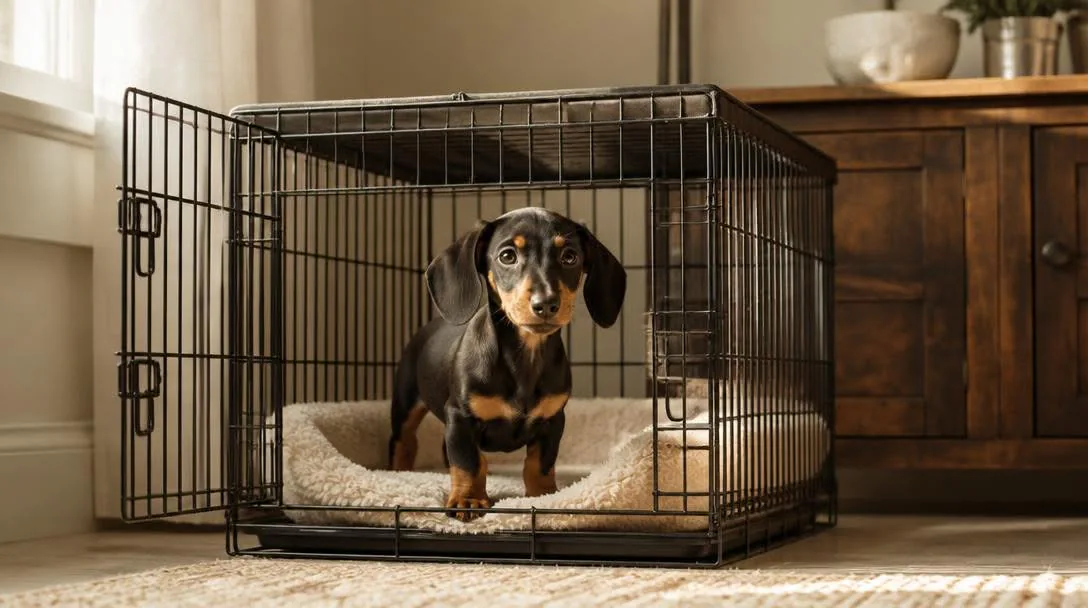
Size matters more for dachshunds than almost any other breed, because the usual “big enough to stand up and turn around” rule can work against you here. Too much extra room and a puppy will simply use one end as a bathroom and the other as a bed, which undoes the whole point of crate training for housebreaking. Look for a crate where your adult dachshund (check approximate adult size by coat type and standard vs. miniature) can stand without ducking, turn around comfortably, and lie fully stretched out — and not much more. Most wire crates come with a divider panel specifically so you can size the space up as a puppy grows, which is the easiest way to get this right without buying three crates over a year.
Wire crates are the most practical choice for most owners: they fold flat, allow airflow, and let you use a cover to adjust light and privacy. Plastic travel-style crates work well too and tend to feel more den-like out of the box, which some dachshunds settle into faster. Whichever style you pick, skip anything with a step-up lip higher than necessary, and avoid encouraging a puppy to leap in and out — a low-profile entrance or a small ramp keeps repeated jumping off the floor of the crate from becoming a habit that stresses the back later.
Line the crate with a washable bed or mat, not a thick cushioned one that swallows the whole floor space, and resist the urge to make it look cozy with blankets a young puppy could chew and swallow. Plain and sturdy beats decorative for the first few months.
Step-by-Step: Crate Training From Day One
The order matters here. Dachshund puppies do best with a slow build rather than being shut in for a full night on day one — that’s the single fastest way to create a dog who dreads the crate instead of seeking it out.
Step 1: Make the Crate a Good Place to Be
Leave the crate door open in a room where your puppy already spends time. Toss treats inside, feed meals near the entrance and then just inside it, and let your puppy wander in and out freely with zero pressure. No commands, no closing the door yet — this stage is purely about building a positive association before training begins in earnest.
Step 2: Start Short, Door-Closed Sessions
Once your puppy is going in voluntarily for treats or naps, close the door for very short stretches — a minute or two — while you stay in the room. Open it before any whining starts if you can; the goal is to end every session on a calm note, not to test endurance. Gradually stretch the time as your puppy stays relaxed.
Step 3: Build Up to Independence
Start stepping out of the room for brief periods while your puppy is crated, then return calmly. Avoid a big excited greeting when you let them out — a low-key release teaches your dog that being crated is simply uneventful, not a lead-up to a party, which keeps anxiety from building around the “coming out” moment.
Step 4: Extend to Real-World Durations
Once your puppy is reliably settling for 20–30 minutes with you out of sight, start using the crate for actual short errands and for naps and bedtime. This is also the stage where most owners introduce crating overnight, ideally once daytime sessions are consistently calm.
Crate Training a Puppy vs. an Adult Rescue Dachshund
If you’ve adopted an adult dachshund rather than starting with a puppy, the process is the same but usually faster — most adult dogs pick up crate comfort within a week or two of consistent, positive exposure. The one difference worth knowing: a rescue dog with an unknown history may have had a negative experience with confinement before. If your adult dachshund shows real panic rather than ordinary fussing at the sight of a crate — frantic scratching, non-stop vocalizing that doesn’t settle, or injuring themselves trying to get out — slow down significantly and consider working with a trainer before pushing forward.
Handling Nighttime Crying and Crate Anxiety
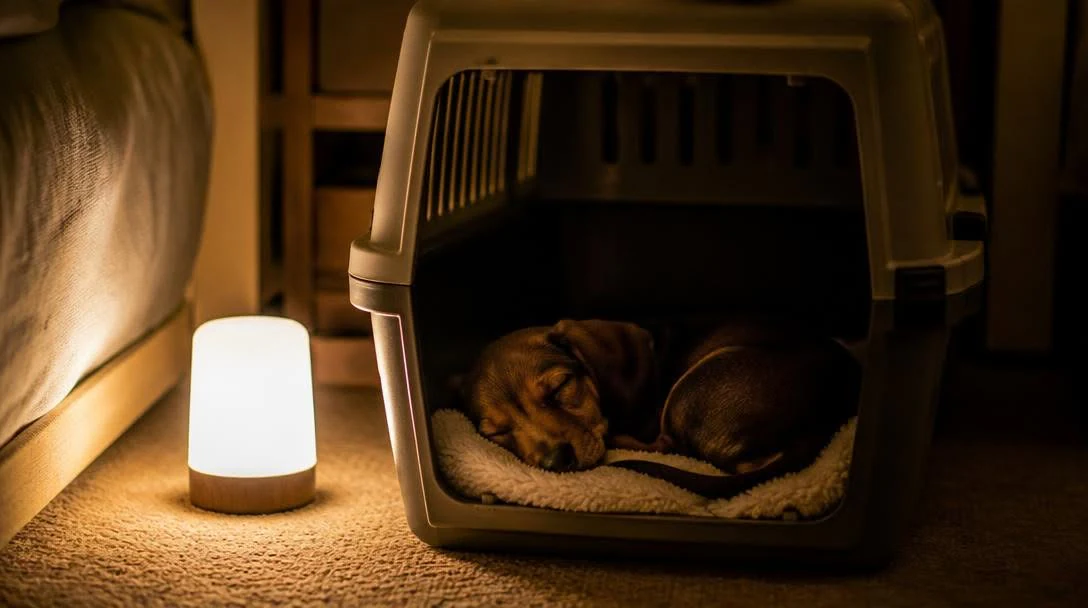
Almost every dachshund puppy cries at the crate at some point, usually in the first week and often specifically at night. Before assuming it’s a training problem, rule out the practical stuff first: an empty bladder from a bathroom trip right before bed, a crate that’s too warm or too cold, or a puppy who’s simply overtired and overstimulated rather than actually distressed.
If the crying is genuine distress rather than a brief protest, resist the urge to let your puppy out the moment they cry — that teaches crying as the fastest way out, which is the opposite of what you want. Instead, wait for even a few seconds of quiet before opening the door, so you’re rewarding the calm moment rather than the complaint. A crate placed in or near your bedroom for the first few weeks helps enormously; dachshunds bond hard and fast, and proximity to you at night does more to settle a crying puppy than almost any other single change.
It’s worth distinguishing ordinary crate protest from true separation-related distress. If the crying is intense, happens every single time regardless of how gradually you’ve built things up, and comes with other signs like destructive escape attempts or self-injury, you may be dealing with something closer to separation anxiety rather than normal adjustment, and the approach needs to be more structured than straightforward crate training alone.
Common Crate Training Mistakes to Avoid
- Using the crate as punishment. Sending your puppy to the crate right after scolding them for a mistake teaches the crate itself to mean “bad,” which works directly against everything you’re trying to build.
- Going from zero to all-night in one jump. Skipping the gradual buildup is the single most common reason crate training fails or creates anxiety where there wasn’t any before.
- Crate that’s the wrong size. Too big invites bathroom accidents inside the crate; too small is genuinely uncomfortable for a breed already prone to back and joint sensitivity.
- Letting a crying puppy out immediately, every time. This accidentally trains crying as an effective strategy rather than teaching settling.
- Isolating the crate too far from the family. A dachshund crated alone in a basement or garage away from people is working against the breed’s strong need for closeness, which makes the whole process harder than it needs to be.
How Long Can You Crate a Dachshund?
As a general guideline, puppies can typically hold their bladder for roughly one hour per month of age, so a three-month-old puppy shouldn’t be expected to go much past three hours without a bathroom break — longer stretches lead to accidents that aren’t really the puppy’s fault. Adult dachshunds can generally manage four to six hours in a pinch, but a crate isn’t meant to be an all-day solution on a regular basis. Pair crate time with the exercise and mental stimulation this breed genuinely needs, and treat the crate as one part of the daily routine rather than a substitute for it.
Frequently Asked Questions
How long does it take to crate train a dachshund puppy?
Most puppies show real comfort with the crate within two to four weeks of consistent, gradual practice, though sleeping through a full night without any protest can take a bit longer. Adult dogs often adjust faster than puppies since they have more impulse control to begin with.
Should I cover the crate at night?
A light cover over part of the crate often helps, since it mimics the enclosed, den-like darkness dachshunds respond well to. Leave at least one side uncovered for airflow, and skip heavy covers in warm rooms.
Is it cruel to crate train a dachshund?
Not when it’s done with gradual, positive training and the crate is never used as punishment. For a breed with this much natural den instinct, a well-introduced crate is generally experienced as a safe retreat rather than confinement.
What size crate does a dachshund need?
Enough for your adult dog to stand without ducking, turn around fully, and lie stretched out — and not much more room than that. A divider panel in a wire crate lets you size it correctly as a puppy grows into their adult length.
Can I skip the crate entirely and use a pen instead?
An exercise pen has its place for daytime containment, but it doesn’t offer the same enclosed, den-like security a crate does, and it’s much less effective for housebreaking since there’s more room to wander away from a mistake. Most owners find the two tools work best together rather than as substitutes for each other.
Getting Started
Crate training a dachshund isn’t about forcing a dog into a box — it’s about giving a breed with a genuine den instinct a space that already makes sense to them, and building up to it patiently enough that they choose to like it. Start slow, keep every early session positive, and resist the urge to rush the overnight stretch before your puppy’s ready for it. Most dachshund owners are surprised by how quickly their dog starts retreating to the crate on their own, blanket pulled in just so, long after the formal training is done.


