
If your dachshund turns into a completely different dog the moment you pick up your keys, you’re not imagining it. As Simply Dachshund’s Training Expert, separation anxiety is one of the questions I hear most from owners — usually described the same way: “He’s fine all day, but the second I leave, he loses it.” Destroyed door frames, panicked howling caught on a doorbell camera, “accidents” from a dog who’s been reliably house-trained for years. It’s distressing for owners and genuinely miserable for the dog.
Dachshunds are wired for closeness in a way a lot of breeds aren’t, which makes them especially prone to this particular problem. The good news is that separation anxiety is one of the most treatable behavior issues out there once you understand what’s actually driving it and commit to a real training plan instead of hoping your dog “grows out of it.” This guide covers why dachshunds struggle with being alone, how to tell true separation anxiety from ordinary grumbling, and a step-by-step approach to building your dog’s independence.
Why Dachshunds Are Especially Prone to Separation Anxiety
Every dachshund owner has heard the phrase “velcro dog,” and it’s earned. Dachshunds were bred to work in an extremely close partnership with a single handler — tracking scent, flushing badgers from their dens, and taking direction in the field. That history selected for a dog who reads people closely and bonds hard, often to one person in particular rather than the household as a whole.
Layer modern life on top of that instinct and you get a breed that’s genuinely built to find solitude stressful. A dachshund who’s spent years as a near-constant lap companion, work-from-home shadow, or bed-sharing sleep buddy hasn’t had much practice tolerating time alone — and dogs, like people, get worse at things they never practice. Add in the breed’s above-average intelligence and tendency toward vigilance (the same instincts behind their famous barking habit), and you have a dog whose brain is very good at noticing you’re gone and very bad at feeling okay about it.
None of this means separation anxiety is inevitable — plenty of dachshunds are perfectly relaxed home alone. But if yours isn’t, it’s not a training failure on your part or a “bad dog” problem. It’s a breed tendency that responds well to a structured plan.
Signs of Separation Anxiety in Dachshunds
True separation anxiety looks different from a dog who’s simply a little bored or under-exercised. The hallmark is that the behavior is tied specifically to your absence — it starts around the time you leave and usually clusters in the first 30 minutes, rather than happening randomly throughout the day.
- Destructive behavior focused on exit points — chewed door frames, scratched baseboards near the door, damaged window sills or blinds where your dog watches you leave
- Vocalizing that starts at departure — howling, whining, or non-stop barking that begins within minutes of you leaving and can continue for an extended stretch, often reported by neighbors or caught on a camera
- House-soiling despite being reliably potty trained — accidents that only happen when left alone, not a general house-training lapse
- Pacing, panting, or drooling — physical signs of a genuine panic response, not just restlessness
- Escape attempts — digging or chewing at doors and crate latches, sometimes severe enough to cause self-injury (broken nails, worn or bleeding gums)
- Frantic greeting behavior — a return-home reaction that goes well beyond normal excitement into something closer to relief or desperation
If you’re not sure whether your dog’s alone-time struggles rise to this level, a cheap indoor camera or even a phone propped up on a shelf for 20 minutes after you leave will usually give you a clear answer.
Separation Anxiety vs. Normal Alone-Time Grumbling
Not every whine at the door is separation anxiety. A dachshund who settles down within a few minutes of you leaving, sleeps for most of the day, and greets you normally (rather than frantically) when you return is showing ordinary “I’d rather you stayed” behavior — completely normal, and not something that needs a formal training protocol.
The distinction that matters most is duration and intensity. Occasional whining for the first minute or two, followed by settling, is typical. Sustained distress — vocalizing, pacing, or destructive behavior that continues for 20, 30, or more minutes without tapering off — is the pattern worth addressing directly. When in doubt, the camera test above is more reliable than guessing based on what you find when you get home, since a dog can settle down well before you walk back in the door.
Building an Independence Training Plan
The core idea behind treating separation anxiety is straightforward, even though the execution takes patience: you’re teaching your dachshund, in very small increments, that being alone is safe and temporary. Rushing this — leaving for a full workday before your dog can handle five minutes — almost always backfires and can make the anxiety worse.
Start With a Safe Space
A properly introduced crate, playpen, or single dog-proofed room gives your dachshund a defined “safe zone” rather than free run of a house they’re anxious in. The crate needs to be a positive association built up separately from departures — fed meals in it, given chew toys in it, allowed to nap in it with the door open — before it’s ever used to contain your dog while you’re gone.
Practice Departure Cues Without Leaving
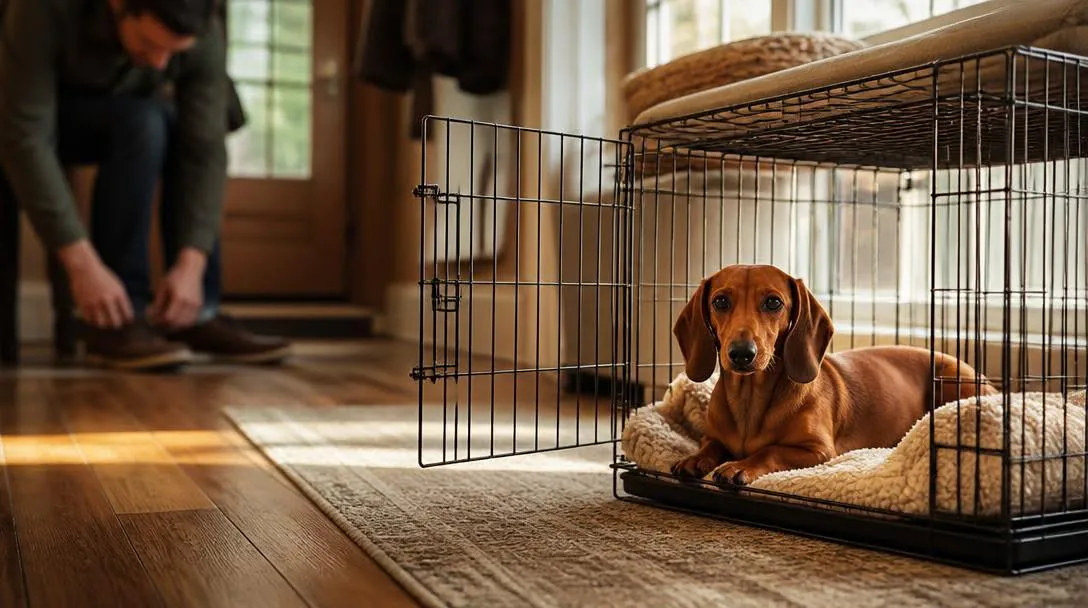
Dogs with separation anxiety often start reacting to the signals that you’re about to leave — picking up keys, putting on shoes, grabbing a coat — long before you actually walk out the door. Break that association by doing these things repeatedly throughout the day with no departure attached: put your shoes on and sit back down, jingle your keys and make coffee, grab your coat and watch TV. Over time, the cues stop predicting abandonment and your dog’s pre-departure stress response fades.
Graduated Absences
Once departure cues aren’t triggering a reaction, start practicing actual absences — but in increments so small they feel almost pointless at first. Step outside and come back in after five seconds. Then ten. Then thirty. Build up gradually over days and weeks, only extending the time once your dog is calm at the current duration. If you see signs of stress at any point, you’ve moved too fast — drop back to the last comfortable duration and progress more slowly from there. This is genuinely tedious work, but it’s the single most effective piece of the whole plan.
Keep Departures and Arrivals Low-Key
A long, emotional goodbye or an exuberant greeting both teach your dachshund that your comings and goings are a big deal — exactly the opposite of what you want. Say goodbye calmly a few minutes before you actually leave, and when you get home, wait until your dog is calm before offering attention and affection.
Practical Tools That Help
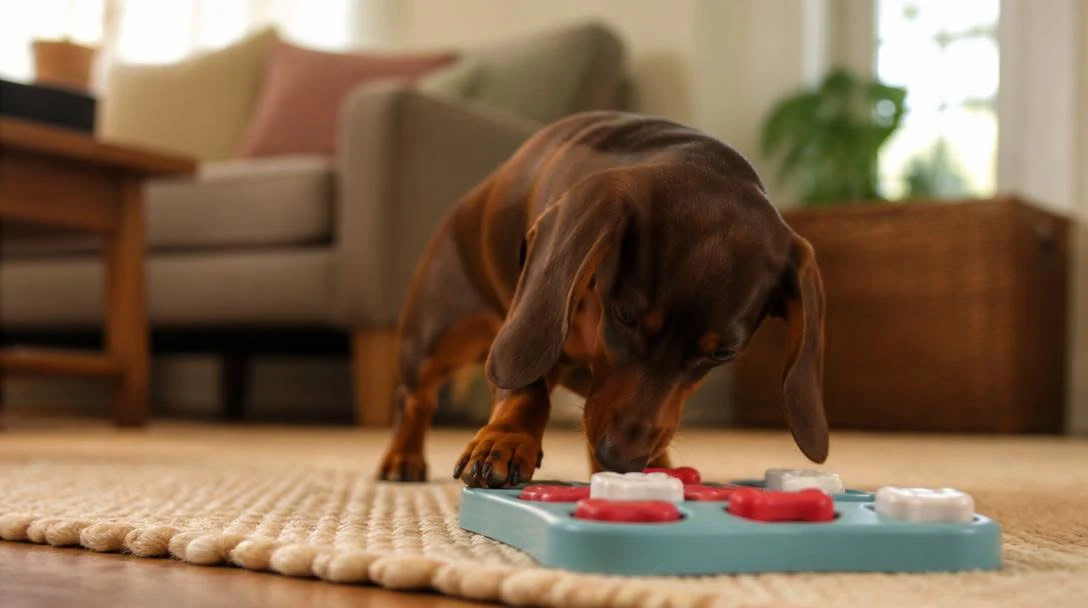
Independence training is the foundation, but a few extra tools can take real pressure off in the meantime:
- Food-based enrichment — a stuffed and frozen food toy or slow feeder given right at departure gives your dog something engaging to focus on during the hardest first few minutes alone. Pair this with a broader enrichment routine so your dachshund’s brain is getting worked even on days you’re home.
- Pre-departure exercise — a walk or active play session 30–60 minutes before you leave takes the edge off physical restlessness and makes settling down easier.
- Background noise — leaving a TV, radio, or white noise machine on can soften the abrupt silence that makes an empty house feel more unsettling.
- Something that smells like you — a worn (unwashed) t-shirt or blanket in the crate or bed can be genuinely calming for a dog whose anxiety is tied to your absence.
- A trusted sitter or doggy daycare for long days — if your schedule regularly requires absences longer than your dog can currently handle, splitting the day with a midday visit or daycare prevents setbacks while you’re still building tolerance.
When to Bring in a Vet or Professional Behaviorist
Most mild to moderate separation anxiety responds well to consistent independence training at home. But if your dachshund is injuring themselves trying to escape, if the anxiety hasn’t budged after several weeks of a genuine, consistent training effort, or if the distress seems severe from the very first minute alone, it’s time to loop in your veterinarian. They can rule out any medical contributor to the behavior and, for more severe cases, discuss anti-anxiety medication used alongside training — never as a replacement for it. A veterinary behaviorist or certified professional dog trainer experienced with separation anxiety specifically (look for the CSAT credential) can also build a customized protocol if progress stalls on your own.
Frequently Asked Questions
How long does it take to fix separation anxiety in a dachshund?
It varies widely by dog and severity, but most owners see meaningful improvement within a few weeks of consistent graduated-absence training. Severe cases can take several months. The pace is set by your dog’s comfort level, not the calendar — moving faster than your dog is ready for usually sets progress back.
Should I get a second dog so my dachshund isn’t alone?
Sometimes it helps, but it’s not a reliable fix on its own. Separation anxiety is typically tied to a specific person, not just the presence of company, so a second dog doesn’t always resolve it — and you can end up with two anxious dogs if it doesn’t. Work through a training plan with your current dog before assuming a second pet is the solution.
Is crate training cruel for a dog with separation anxiety?
Not when it’s introduced properly. A crate your dachshund already associates with comfort and safety (built through the positive-association steps above) is a tool, not a punishment. That said, a crate should never be the go-to for a dog who panics inside one — in that case, a safe dog-proofed room is a better starting point.
Can puppies have separation anxiety, or does it only develop later?
It can start young, especially in a puppy who hasn’t had much practice being alone. Building comfortable alone-time into your routine early — well before it becomes a problem — is one of the best things you can do during the socialization window; see our puppy socialization guide for more on that critical period.
The Bottom Line
A dachshund who struggles with being alone isn’t broken and isn’t being stubborn — they’re working from an instinct toward closeness that’s been part of this breed for a very long time. With a genuine independence-training plan, low-key departures and arrivals, and some patience with the process, most dachshunds can learn to settle into solo time without the panic. Start small, track real progress rather than good days versus bad days, and don’t hesitate to bring in professional support if you’re stuck. Your dachshund’s comfort — and your door frames — will thank you.


