
As our clinic’s resident healthcare specialist, I get more questions about the first week after bringing a dachshund puppy home than almost any other single topic—more than vaccines, more than feeding amounts, sometimes even more than housetraining. That makes sense to me. Everything else in puppy care has a chart or a schedule you can look up. The first week is different: it’s unpredictable, emotionally loaded, and it sets the tone for how your puppy settles into your household for months to come.
So let’s walk through it together—what’s actually normal in those first seven days, what to set up before your puppy arrives, and what I tell every new dachshund owner to watch for.
Before Your Puppy Walks Through the Door
The single best thing you can do for a smooth first week is have the basics in place before your puppy ever sets paw in your home. If you haven’t already worked through it, our complete puppy checklist covers everything from crate size to food bowls to the paperwork your breeder or rescue should hand over. I won’t repeat that whole list here, but a few things deserve special attention specifically for the first week:
- Pick the sleeping spot before arrival day. Decide where the crate will live—ideally somewhere close enough to a bedroom that your puppy can hear you breathing at night—rather than figuring it out in a panic at 11pm.
- Buy the same food the breeder or shelter was using, even if you plan to switch brands eventually. A sudden food change on top of a new environment is a reliable way to end up with an upset stomach during an already stressful week.
- Clear your schedule more than you think you need to. I tell owners to treat the first 48–72 hours like a long weekend with a newborn. You don’t need to entertain your puppy constantly, but you do need to be present and watching.
Day One: The Quietest Day Should Be Intentional
Arrival day is overwhelming for a puppy in ways that are easy to underestimate. In the space of a few hours, a dachshund puppy typically leaves its mother and littermates, rides in a car for the first time, and arrives somewhere that smells, sounds, and looks like nothing it has ever experienced. I ask owners to resist the urge to show the puppy off to extended family or invite friends over on day one, as tempting as that is. A quiet house, a few familiar scent items from the breeder if you have them, and low expectations are the right call.
Let your puppy explore one or two rooms at most rather than the whole house at once. Show it where the water bowl is, where the crate is, and where you’d like it to go to the bathroom, and then let a lot of the rest of the day simply be sleep. Puppies this young need an enormous amount of rest—often 18 to 20 hours a day—and a dachshund puppy that seems to do nothing but eat, potty, play for ten minutes, and crash again is behaving exactly as expected.
The First Night: What’s Normal Crying, and What Isn’t
This is the part nobody warns new owners about strongly enough. Your dachshund puppy has spent its entire life sleeping in a pile with littermates, and the first night alone in a crate—even a crate in your bedroom—is a real adjustment. Some crying and whining in the first few nights is normal and expected. It usually peaks in the first hour or two after lights-out and gradually improves night by night as your puppy builds trust that you’re still there.
A few things genuinely help:
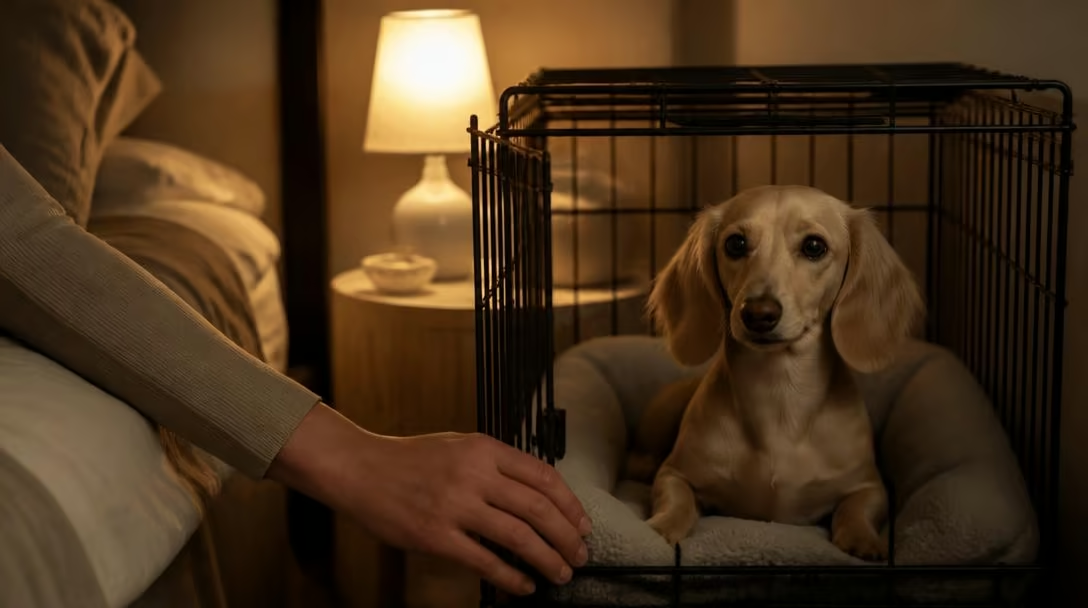
- Keep the crate within arm’s reach of your bed for at least the first week, so your puppy can hear and smell you.
- Take your puppy out for one last bathroom trip right before you turn the lights off, and set a quiet alarm for a middle-of-the-night potty break if your puppy is under about 12 weeks old—their bladders simply can’t hold through an 8-hour night yet.
- Avoid the instinct to pull your puppy out of the crate the moment it cries. If you suspect it genuinely needs the bathroom, take it straight out to potty and straight back to the crate with minimal play or fuss, so the puppy doesn’t learn that crying reliably produces a fun middle-of-the-night playtime.
What I do want owners to take seriously, rather than write off as normal adjustment crying, is crying paired with other symptoms: vomiting, diarrhea, a swollen or painful-looking belly, or crying that sounds like genuine pain rather than protest. Those warrant a call to your vet rather than waiting it out.
Starting Routines From Day One
Dachshund puppies thrive on predictability, and the first week is actually the easiest time to start building the routines you’ll want for the next decade, simply because your puppy hasn’t learned any habits yet to unlearn. I encourage new owners to start loosely scheduling feeding times, potty breaks, and naps right away rather than waiting for a “settling in” period to pass first.
If housetraining feels like the most urgent piece of this puzzle, it genuinely can start on day one—you don’t need to wait for your puppy to feel at home first. Our dachshund potty training guide walks through the exact routine I recommend, and starting it immediately, even imperfectly, tends to go better than waiting a week and trying to retrofit a habit that’s already formed in the wrong direction.
Introducing Your Puppy to Resident Pets and Family
If you have other pets at home, the first week is about calm, supervised, short introductions rather than one dramatic meet-and-greet. Keep initial sessions with resident dogs on-leash and brief, watching body language closely for stiffness, prolonged staring, or a resident dog who won’t disengage—those are cues to separate and try again later rather than push through. Cats generally do better being allowed to approach the puppy’s crate or an exercise pen on their own terms, rather than being presented to a loose puppy who wants to chase anything that moves.

With children in the household, I ask parents to actively supervise every single interaction this first week, no exceptions. A dachshund puppy’s long back and short legs make it genuinely more injury-prone than many other breeds if a well-meaning child picks it up incorrectly or lets it jump from furniture, so this is a good week to teach proper handling—supporting the chest and hindquarters together, never scooping under the belly alone—as a habit from the very start.
Feeding and Appetite During the Adjustment Period
It’s common for a dachshund puppy to eat less than usual for the first day or two, simply from the stress of the transition. A little reduced appetite on arrival day isn’t usually a concern on its own. What does warrant a call to your vet is a puppy who refuses food entirely for more than 24 hours, especially combined with lethargy, since small-breed puppies can develop low blood sugar (hypoglycemia) more quickly than larger breeds if they go too long without eating. Keeping a small amount of a vet-approved high-calorie gel or paste on hand for the first week isn’t a bad idea, just in case.
Signs Your Puppy Is Settling In
By the end of the first week, most dachshund puppies show clear signs of adjusting: shorter and less intense crying at bedtime, more confident exploring of the house, playfulness that looks more relaxed than frantic, and a growing habit of seeking you out rather than just tolerating your presence. Every puppy’s timeline looks a little different—some dachshunds settle in three or four days, others take closer to two weeks—and a slower adjustment doesn’t mean anything is wrong.
When to Call Your Vet During the First Week
Most of what happens in the first week is normal adjustment, not a medical issue. But I do want new owners to know the specific red flags worth a same-day call: persistent vomiting or diarrhea, refusing all food for more than a day, visible lethargy that goes beyond normal puppy sleepiness, pale or white gums, or any difficulty breathing. When in doubt, call—a quick phone conversation with your vet’s office is almost always worth the peace of mind during a week when you’re still learning what’s normal for your own puppy.
Frequently Asked Questions
How long does it take for a dachshund puppy to adjust to a new home?
Most puppies show meaningful improvement within three to seven days, though full comfort in a new routine can take closer to two or three weeks. Patience matters more than speed here.
Should I let my dachshund puppy sleep in bed with me the first night?
I generally don’t recommend it, even though the crying can make it tempting. A crate close to your bed gives your puppy comfort and safety without creating a habit you may need to undo later, and it protects a small puppy from accidentally being rolled on or falling from the bed.
Is it normal for my puppy to have an accident even though we’re taking it out often?
Yes, this is completely normal in the first week. Young puppies have limited bladder control and the stress of a new environment adds to that. Consistency now pays off within a few weeks.
When should I schedule the first vet visit after bringing my puppy home?
Within the first few days if you don’t already have a scheduled appointment, both to establish a relationship with your vet and to confirm your puppy is healthy. If your breeder or rescue already handled early vaccines, bring those records along—our puppy vaccination schedule guide can help you track what’s still due.
The Bottom Line
The first week with a new dachshund puppy is rarely smooth, and it isn’t supposed to be. Expect some crying, some accidents, some reduced appetite, and a puppy that seems to alternate between frantic zoomies and total collapse—all of that is well within normal. Your job this week isn’t to get everything perfect; it’s to stay calm, stay consistent, and watch for the handful of genuine red flags above. Do that, and most of what feels overwhelming on day one will feel like routine by day seven.


