One of the questions I get asked most often by new dachshund owners is some version of “how many shots does my puppy actually need, and when?” It’s a fair question—vaccine schedules can look like a wall of unfamiliar abbreviations the first time you see one, and dachshunds have a few small-breed quirks worth knowing about before you walk into that first vet appointment. As our clinic’s resident healthcare specialist, I want to walk you through exactly what a typical dachshund puppy vaccination schedule looks like, why each shot matters, and a few breed-specific things I always flag to dachshund owners in particular.
This isn’t a replacement for your veterinarian’s guidance—your vet will tailor the schedule to your puppy’s health, region, and lifestyle. But it should give you a clear picture of what’s normal, what to expect, and what questions are worth asking.
Why Vaccines Matter So Much for a Dachshund Puppy
Puppies are born with some temporary immunity passed down through their mother’s milk, but that protection fades over the first several weeks of life—usually somewhere between six and sixteen weeks, depending on the puppy. Until their own immune system takes over, young dachshunds are vulnerable to several diseases that are not just unpleasant but genuinely life-threatening, parvovirus being the one I worry about most.
Parvo hits small-breed puppies especially hard because the vomiting and diarrhea it causes can dehydrate a five- or six-pound puppy far faster than it would a larger dog. A dachshund puppy that goes twelve hours without proper fluids during a parvo infection is in a very different, much more dangerous position than a Labrador puppy would be in the same scenario. That’s the biggest reason I don’t let vaccine timing slide on my own dogs, and why I encourage every dachshund owner to stay on schedule rather than “get to it eventually.”
The Core Vaccines Every Dachshund Puppy Needs
Veterinary guidelines (the American Animal Hospital Association’s core vaccine recommendations are the standard most U.S. and Canadian vets follow) group vaccines into “core” and “non-core” categories. Core vaccines are considered essential for every dog, regardless of lifestyle, because the diseases they prevent are widespread, severe, or transmissible to humans.
For a dachshund puppy, the core vaccines are:
- DHPP (sometimes called DA2PP or DAPP) — a combination vaccine covering distemper, adenovirus (hepatitis), parainfluenza, and parvovirus.
- Rabies — required by law in most jurisdictions, typically given as a single injection once your puppy reaches the minimum age set by local regulations.
Everything else—bordetella, leptospirosis, canine influenza, Lyme disease—falls into the non-core category, which I’ll come back to below, because whether your dachshund needs them really depends on where you live and how your dog spends its time.
Dachshund Puppy Vaccination Schedule by Age
Most vets follow a version of this timeline, though your clinic may adjust it slightly based on your puppy’s individual risk factors:
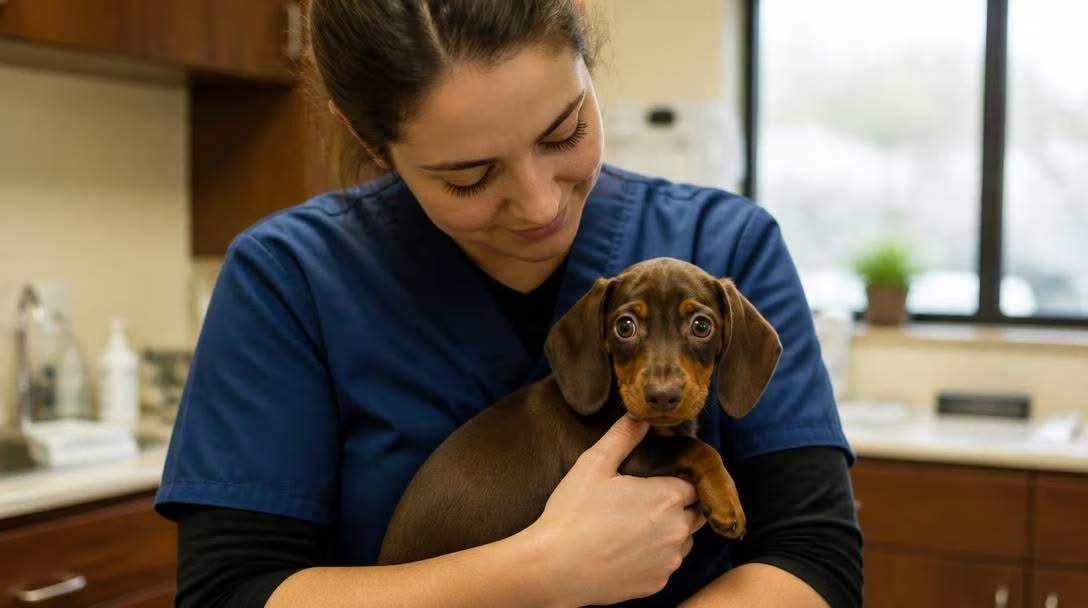
- 6–8 weeks: First DHPP dose (this is often the visit where your dachshund puppy also gets a first deworming treatment and a full physical exam).
- 10–12 weeks: Second DHPP dose, plus a discussion with your vet about whether any non-core vaccines make sense for your household.
- 14–16 weeks: Third DHPP dose and the rabies vaccine, once your puppy meets the minimum age requirement in your area.
- 12–16 months: A booster round covering DHPP and rabies, which then typically shifts to a one- or three-year booster cycle depending on the vaccine type and your local rabies laws.
I always tell owners: don’t be alarmed if your vet’s exact spacing looks a little different from this. Some clinics do three-week intervals instead of four, and some add an extra DHPP dose if a puppy started the series a bit later. What matters more than hitting an exact week number is completing the full series—a puppy that only gets one or two of the three DHPP doses isn’t fully protected, even though it might seem like “enough shots” at a glance.
If you haven’t already put together a broader puppy checklist covering everything else your new dachshund needs in those first few months, our complete puppy checklist is a good companion to this schedule.
Non-Core Vaccines: Does Your Dachshund Actually Need Them?
This is where I see the most confusion, because not every non-core vaccine makes sense for every dog. Here’s how I typically think through it with dachshund owners:
- Bordetella (kennel cough): Worth considering if your dachshund will spend time at daycare, boarding, grooming salons, or dog parks. Many facilities actually require it before they’ll accept your dog.
- Leptospirosis: Increasingly recommended even for dogs that mostly stay in yards and on leash walks, since it spreads through contaminated water and soil that wildlife (raccoons, rodents) can carry into suburban and even urban areas. Ask your vet whether it’s common in your region.
- Canine influenza: More relevant if your dachshund is frequently around other dogs in group settings.
- Lyme disease: Only really relevant in regions with a meaningful tick population carrying Lyme-causing bacteria. Your vet will know your local risk level.
A dachshund who mostly hangs out at home and on quiet neighborhood walks has a very different risk profile than one who goes to daycare three days a week or travels frequently. Bring your actual routine to the vaccine conversation rather than assuming more is automatically better.
Small-Breed Considerations: Vaccine Reactions in Dachshunds
Here’s the part I make sure every dachshund owner hears directly from me, because it doesn’t always come up unprompted: several veterinary studies have found that small-breed dogs have a proportionally higher rate of reported vaccine reactions than large-breed dogs. Part of the reason is straightforward—most vaccine doses aren’t adjusted by body weight, so a ten-pound dachshund receives the same dose as an eighty-pound retriever, which means a comparatively larger dose relative to body size.

This doesn’t mean you should skip or delay vaccines—the diseases they prevent are far riskier than the reactions. It just means it’s worth knowing what to watch for and asking your vet about spacing options. Mild reactions are common and nothing to panic over: brief soreness at the injection site, low energy, or mild fever for a day or so. Watch more closely for facial swelling, hives, vomiting, or difficulty breathing in the hour or two after a vaccine visit—these are less common but warrant an immediate call to your vet.
If your dachshund is receiving multiple vaccines at once and has reacted to a shot before, ask your vet about spacing individual vaccines a couple of weeks apart instead of combining them in a single visit. Many vets are happy to split the schedule for small dogs with a history of sensitivity—it just takes an extra appointment or two.
What to Expect After Each Vet Visit
For most dachshund puppies, a vaccine appointment is a pretty low-key event. Expect your puppy to be a little quieter than usual for the rest of the day—sleeping more, maybe skipping a meal or eating a bit less enthusiastically. A small, firm lump at the injection site is normal and usually resolves within a couple of weeks; if it’s still there after three or four weeks, or seems to be growing, mention it at the next visit.
I generally suggest keeping the day of a vaccine appointment low-key: skip the dog park trip, keep exercise light, and let your puppy rest. This isn’t strictly necessary for most puppies, but it gives you an easier opportunity to notice if something feels off, and it’s a gentle day either way.
Since you’re already tracking growth milestones during this stage, it’s worth keeping your vaccination schedule alongside your puppy’s weight checkpoints—our dachshund puppy growth chart is a useful place to log both side by side.
Keeping Records and Staying on Track
Ask your vet clinic for a written vaccine record at every visit, and keep it somewhere you’ll actually find it again—a folder, a note on your phone, whatever works. You’ll need this record for boarding, daycare, grooming appointments, and sometimes even for registering with a new vet if you move. Most clinics will also send reminders when your dachshund’s next booster is due, but I still recommend setting your own calendar reminder as a backup, especially around that first-year booster round when the schedule shifts from puppy doses to an adult maintenance cycle.
Frequently Asked Questions
Can I start vaccines earlier than 6 weeks if my dachshund puppy is smaller than average?
Generally no—starting too early can actually interfere with the immunity a puppy still has from its mother, making the vaccine less effective rather than more protective. Your vet will time the first dose based on your puppy’s individual situation, not just its size.
Is it normal for my dachshund puppy to be tired after a vaccine?
Yes, mild tiredness or reduced appetite for a day is common and not usually a concern. Persistent lethargy beyond 48 hours, repeated vomiting, or any swelling around the face or throat should prompt a call to your vet right away.
Do miniature dachshunds need a different vaccine schedule than standard dachshunds?
The core schedule itself doesn’t change based on size, but the small-breed reaction considerations above apply even more to miniatures given their lower body weight. It’s worth mentioning your dachshund’s size to your vet so they can discuss spacing if needed.
What happens if we miss a scheduled vaccine appointment?
Don’t panic—just get back on schedule as soon as you can. Depending on how much time has passed, your vet may restart part of the series rather than simply picking up where you left off, so call ahead and let them guide you rather than guessing.
The Bottom Line
A dachshund puppy’s vaccination series is one of the most important things you’ll do in those first several months—it’s a short list of appointments that protects against diseases that are genuinely dangerous for a small dog. Stick to the core schedule, have an honest conversation with your vet about which non-core vaccines fit your dachshund’s actual lifestyle, and keep an eye out for the small-breed reaction signs above. Do that, and you’ve covered one of the biggest health basics before your puppy is even out of its first year.