
I’ve lost count of how many times I’ve told someone the dachshund is a German breed and watched their eyebrows go up like it’s news. It shouldn’t be. This dog is practically a walking postcard from Germany – its name is German, its job was German, and for a lot of people around the world, a wiener dog is the first thing that comes to mind when they picture German culture outside of beer and sausages (and honestly, we’re kind of the mascot for both). What I find more interesting than the “dachshund is German” fact itself is just how far that connection goes. This isn’t a one-line trivia answer. It’s Olympic mascots, wartime identity crises, a dedicated museum, and a beer tent tradition that’s older than most of us realize.
Born in Germany: The Roots That Started It All
I’ve gone deep on the breed’s origin story before – if you want the full history of how German breeders built this dog to hunt badgers underground, I covered that in detail here. The short version for this post: by the 1600s, German hunters needed a dog low and long enough to go into a badger’s tunnel system and either corner the animal or drag it out. That purpose-built job is where the long body, short legs, and famously stubborn streak all come from. It’s also where the name comes from – Dachs is German for badger, Hund is German for dog. There was never any ambiguity about where this breed belonged.
What’s easy to miss is how quickly the dachshund stopped being just a working dog in Germany and started becoming a cultural shorthand for the country itself. By the late 1800s and early 1900s, the breed had become genuinely fashionable among German nobility and, from there, a kind of unofficial national mascot – the same way you might associate a kangaroo with Australia or a maple leaf with Canada, except this one has a heartbeat and an opinion about squirrels.
Waldi: The Dachshund Who Became an Olympic Icon
If you only remember one fact from this whole post, make it this one: in 1972, a dachshund named Waldi became the first official mascot in Olympic history. Munich hosted the Summer Games that year, and organizers wanted a mascot that captured the qualities they wanted the Games to be known for – resistance, tenacity, and agility. They didn’t reach for a lion or an eagle. They reached for a rainbow-striped dachshund, because when German organizers thought about which animal best represented their country to the rest of the world, the wiener dog was the obvious answer.
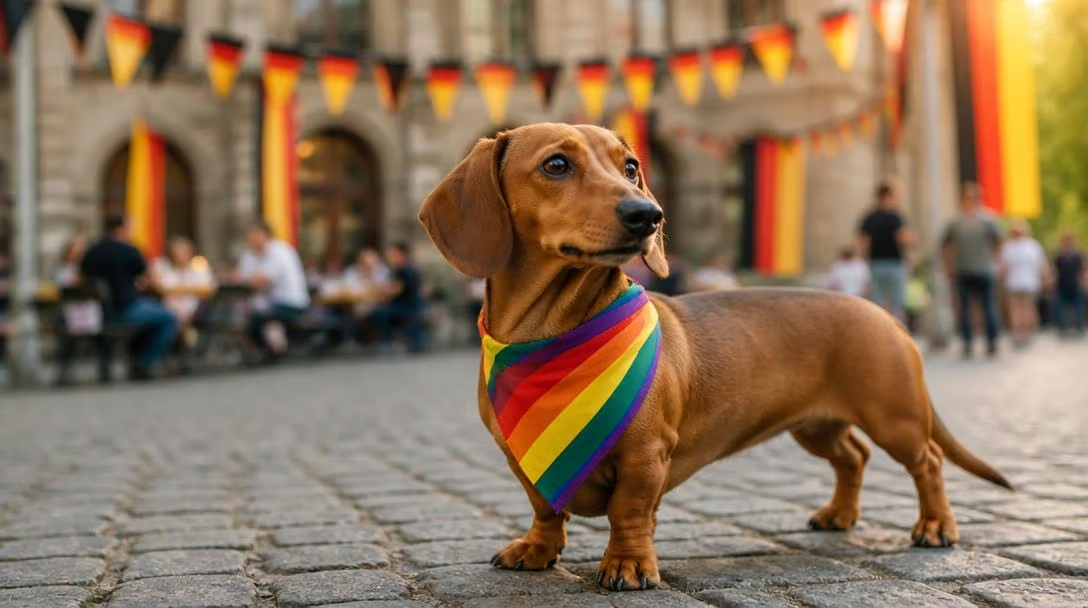
Waldi wasn’t just a logo slapped on merchandise, either. The 1972 marathon course was even shaped like Waldi’s silhouette, which is a genuinely wild level of commitment to a mascot. Every Olympic mascot since – from Misha the bear to Wenlock the one-eyed mascot nobody fully understood – owes something to Waldi being first through the door. For a breed that started out crawling through badger tunnels, going on to represent an entire nation on the world’s biggest sporting stage is a pretty remarkable career arc.
A Regular at Oktoberfest and German Festival Culture
Dachshunds show up all over German festival life, and Oktoberfest is the clearest example. Walk through a beer tent in Munich during the festival and you’ll spot dachshund imagery everywhere – on steins, on souvenir hats, on the little felt figurines tourists bring home. Some of that is just good branding (a wiener dog next to a stein of beer is an easy visual joke), but it also reflects how deeply the breed is woven into how Germany presents itself, both to its own people and to visitors.
The dachshund’s festival presence isn’t only decorative, either. Dachshund-specific events, meetups, and even informal racing traditions have popped up around German festival culture for generations, and that racing instinct eventually crossed the Atlantic and took on a life of its own. I wrote a full rundown of wiener dog racing history here if you want to see how a breed built for underground tunnels ended up sprinting down a track in front of cheering crowds – it’s one of my favorite rabbit holes on this whole site.
The Wartime Identity Crisis: When Being German Was a Problem
Here’s a part of dachshund history that doesn’t get told as often, and it’s a little uncomfortable: during both World Wars, the breed’s German identity actually worked against it. Anti-German sentiment ran high in Britain, the United States, and elsewhere, and the dachshund – precisely because its name and origin were so unmistakably German – became an unfortunate casualty of wartime politics. Some owners reportedly avoided the breed’s German-sounding name in public, dachshund registrations dropped noticeably during both conflicts, and the breed’s popularity took a real hit at points when having anything “German” in your life was socially risky.
It’s a strange thing to sit with – the same qualities that made Waldi a point of national pride in 1972 made the breed a target of suspicion a few decades earlier. It says less about the dog and more about how political moods can attach themselves to anything, even an animal that has no idea what a war is. The dachshund survived both periods just fine, obviously, and the breed’s popularity rebounded well past where it started. But it’s a reminder that “cultural symbol” cuts both ways depending on the decade.
The Dachshund Museum: Germany’s Shrine to the Sausage Dog
If you needed proof that Germany takes its relationship with this breed seriously, there’s a museum for it. The Dackelmuseum – the Dachshund Museum – opened in the Bavarian city of Passau and is widely reported as the world’s first museum dedicated entirely to the breed. It houses thousands of dachshund-related objects: figurines, artwork, vintage advertising, memorabilia, and plenty of items tracing the breed’s cultural footprint well beyond Germany’s borders.
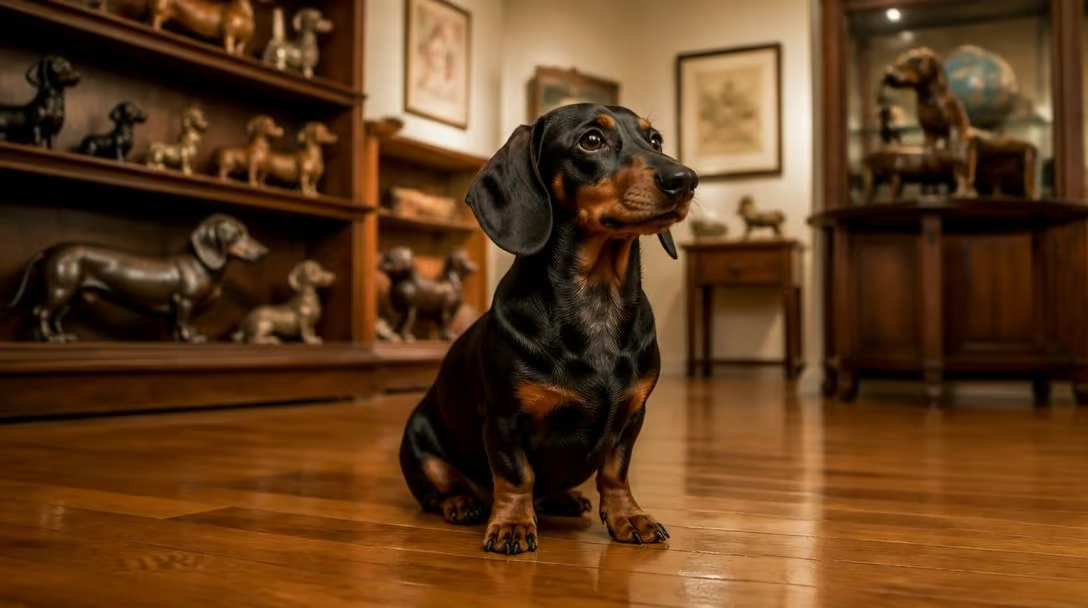
What struck me reading about the museum is that it’s not framed as a quirky roadside attraction – it’s treated as a legitimate piece of German cultural history, on the same shelf as beer gardens and castle tours. That’s really the throughline of this whole post: Germany doesn’t just happen to have invented this breed. It has continued, generation after generation, to claim the dachshund as something worth celebrating, documenting, and putting in a museum.
Why the Connection Still Holds Today
None of this is ancient history, either. Dachshund figurines are still a go-to German souvenir. German breed clubs remain some of the most active and historically rigorous in the world, maintaining standards that trace directly back to the original 1600s working dog. And every time a dachshund shows up in a German tourism ad, a beer commercial, or a city’s festival branding, it’s drawing on the exact same cultural equity that made Waldi a logical Olympic choice in 1972.
As an owner, I think there’s something nice about knowing your dog isn’t just a pet – it’s a small, four-legged piece of a national identity that’s been in the making for centuries. Your dachshund didn’t choose any of this, obviously. It’s just going to keep digging in the yard and ignoring your dinner guests either way. But the next time someone asks why your dog has such a strange shape, you’ve now got a much better answer than “that’s just how they’re built.”
Frequently Asked Questions
Is the dachshund Germany’s official national dog?
No – Germany doesn’t have an officially designated national dog breed. The dachshund is better described as an unofficial cultural symbol, earned through centuries of history, the 1972 Olympic mascot role, and its ongoing presence in German festival and tourism branding.
What breed was the 1972 Munich Olympics mascot Waldi?
Waldi was a dachshund, and he holds the distinction of being the first official mascot in Olympic history. Organizers chose the breed specifically because it represented traits – tenacity, resistance, and agility – that they wanted associated with the Munich Games.
Where is the Dachshund Museum located?
The Dackelmuseum is located in Passau, a city in Bavaria, Germany. It’s widely reported as the first museum in the world dedicated entirely to the dachshund breed, housing a large collection of breed-related art, memorabilia, and historical objects.
Why did dachshunds become unpopular during the World Wars?
Anti-German sentiment during both World Wars affected how the breed was perceived in countries like Britain and the United States, simply because of its unmistakably German name and origins. Registrations and popularity dipped during both periods before rebounding afterward.
A Breed Worth Being Proud Of
I’ll be honest – most days I’m thinking about dachshunds in much more practical terms, like whether mine needs another back-safe ramp or if it’s time to rotate her toys again. But every so often it’s worth stepping back and appreciating the bigger picture: this breed carries a genuinely fascinating cultural legacy, and it’s one that’s still being written. Next time you’re at a German restaurant, a beer garden, or scrolling past Oktoberfest photos, keep an eye out – your dog’s unmistakable silhouette is probably somewhere in the decor.


