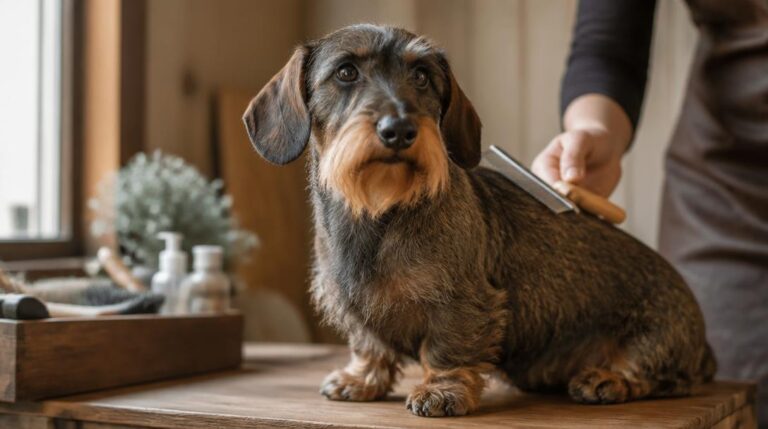
Long-haired dachshunds have beautiful, silky coats that need special care to stay healthy and tangle-free. Unlike their smooth-coated relatives, these dogs require daily attention to prevent mats and keep their flowing locks looking their best.
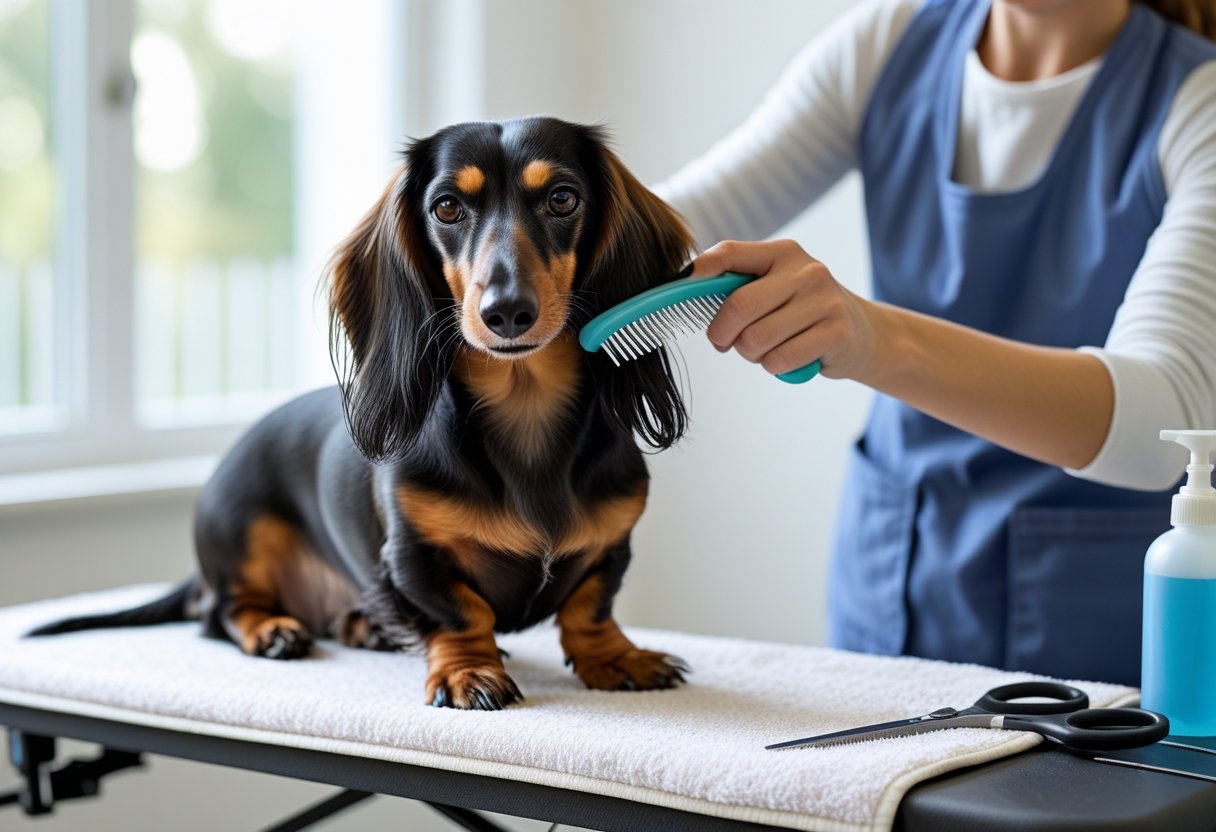
Daily brushing with a slicker brush and regular bathing every 2-3 months are essential for maintaining a long-haired dachshund’s coat and preventing painful mats from forming. The long, silky coat requires regular grooming to maintain its softness and shine, especially around the ears and legs where tangles form easily.
Without proper grooming, these dogs can develop skin irritation and infections from trapped dirt and bacteria in matted fur. Learning the right techniques and using proper tools makes grooming easier and keeps your dachshund comfortable and healthy.
Key Takeaways
- Long-haired dachshunds need daily brushing to prevent mats and tangles from forming in their silky coats
- Essential tools include a slicker brush, metal comb, dog shampoo, and scissors for trimming around ears and paws
- Regular grooming prevents skin problems and keeps the coat healthy while maintaining the dog’s natural insulation
Understanding the Long-Haired Dachshund Coat

Long-haired dachshunds possess a distinctive silky coat that sets them apart from their smooth and wire-haired counterparts. This beautiful coat requires specific care to prevent matting and maintain its natural luster.
Unique Coat Characteristics
The long-haired dachshund coat is silky and smooth, typically measuring several inches in length. This double-layered coat provides insulation and protection from the elements.
Key coat features include:
- Soft, flowing hair on the ears and legs
- Feathering along the tail and chest
- Fine, silky texture throughout
- Natural oils that give the coat its shine
The coat grows continuously and varies in density between individual dogs. Some dachshunds develop thicker coats during colder months.
The hair grows longest on the ears, chest, legs, and tail. These areas require extra attention during grooming sessions.
Importance of Regular Grooming
Daily brushing is essential for maintaining the coat and preventing tangles from forming. Without proper care, the beautiful coat can quickly become matted and uncomfortable.
Regular grooming provides several benefits:
- Prevents painful mats and tangles
- Removes loose hair and reduces shedding
- Distributes natural oils throughout the coat
- Allows early detection of skin problems
Neglected coats can trap dirt and bacteria against the skin. This creates an environment for skin irritation and infections to develop.
Tangled, matted fur can cause discomfort and even injury when it pulls on the dog’s skin. Professional grooming may be needed to remove severe mats.
Common Coat Challenges
Long-haired dachshunds face specific grooming challenges that owners must address. The most common issues involve matting in high-friction areas.
Problem areas include:
| Location | Issue | Prevention |
|---|---|---|
| Behind ears | Tight mats form quickly | Daily brushing with metal comb |
| Legs and feet | Hair tangles around paws | Regular trimming and brushing |
| Chest and belly | Mats from lying down | Weekly thorough brushing |
| Tail feathering | Knots from wagging | Gentle daily detangling |
Long-haired dachshunds shed considerably throughout the year. Regular brushing helps control loose hair around the home.
Environmental factors like humidity and rain can worsen matting problems. Wet coats tangle more easily and require immediate attention after outdoor activities.
Essential Grooming Tools for Long-Haired Dachshunds

The right grooming tools make all the difference when maintaining a long-haired dachshund’s flowing coat. Pin and bristle brushes help combat shedding while preventing damage to the dog’s delicate fur, and specific combs address tangles in problem areas.
Selecting the Right Brushes
A double-sided pin and bristle brush serves as the most versatile tool for long-haired dachshunds. This brush type detangles thicker fur areas while smoothing the coat gently.
The pin side works best for initial brushing sessions. It separates longer hairs and removes loose fur without pulling.
The bristle brush side adds the finishing touch. It smooths the coat and distributes natural oils throughout the hair.
Slicker brushes offer another excellent option for daily maintenance. Professional groomers recommend Chris Christensen slicker brushes for their effectiveness on long-haired breeds.
These brushes feature fine wire bristles set at angles. They grab loose undercoat and prevent matting around the ears and legs.
For dogs with particularly thick coats, consider adding an undercoat tool. Mars Coat undercoat tools help remove excess fur during shedding seasons.
Choosing the Best Combs
Wide-tooth combs handle the most challenging tangles without causing discomfort. Start with these combs in areas where matting commonly occurs.
Focus on the ears, under the legs, and around the tail. These spots collect debris and form knots quickly.
Steel combs with tight teeth work better for finishing touches. Professional groomers use these combs after the initial brushing to catch any remaining tangles.
The tight spacing catches smaller knots that other tools miss. They also help part the hair for trimming sessions.
Buttercomb tools provide precision for detailed grooming work. These specialized combs help section hair during professional grooming sessions.
Other Must-Have Grooming Accessories
Quality shampoo and conditioner designed for long-haired breeds protect the coat’s natural oils. Professional groomers prefer Chris Christensen products for their gentle formulas.
Thinning shears allow for natural-looking trims around problem areas. These tools help maintain the coat without creating harsh lines.
A dog-safe blow dryer prevents tangles after bath time. The warm air helps fluff the coat while drying thoroughly.
Nail trimmers complete the grooming kit since monthly nail trims prevent paw damage from overgrown nails.
Stripping stones remove dead hair naturally. These tools work alongside thinning shears for professional-quality results at home.
Brushing Routine and Techniques
Long-haired dachshunds need daily brushing with proper tools like slicker brushes and wide-tooth combs. The right technique prevents mats while regular scheduling keeps their coat healthy and manageable.
How to Brush Effectively
Start with a slicker brush to remove tangles and mats from the coat. Work in sections, beginning at the head and moving down the body following the direction of hair growth.
Use gentle strokes to avoid pulling or causing discomfort. Pay extra attention to areas that mat easily like behind the ears, under the legs, and around the tail.
Follow up with a wide-tooth comb to catch any remaining tangles the slicker brush missed. This two-step process ensures thorough dachshund grooming.
Key brushing areas to focus on:
- Behind the ears
- Chest and underside
- Legs and feet
- Tail and rear end
- Areas where the harness sits
Always brush before bathing. Wet mats become tighter and harder to remove.
Brushing Frequency and Scheduling
Daily brushing is essential for long-haired dachshunds to prevent tangles and reduce shedding around the home. Missing even one day can lead to mat formation.
Set a consistent time each day for brushing sessions. Many owners find success with morning or evening routines.
Short 5-10 minute sessions work better than longer weekly sessions. This prevents the dog from becoming restless and makes the process more manageable.
Weekly brushing schedule:
- Monday-Friday: Quick 5-minute touch-ups
- Saturday: Thorough 15-minute session
- Sunday: Check for missed spots
During shedding seasons, increase brushing frequency to twice daily. This helps manage the extra loose hair.
Tackling Mats and Tangles
Work on mats immediately when found. Small tangles become large mats quickly if left untreated.
Hold the hair above the mat to avoid pulling on the skin. Use fingers or a wide-tooth comb to gently separate the tangled hair.
For stubborn mats, apply a small amount of detangling spray. Work from the outside of the mat toward the center, never pulling straight through.
Mat removal steps:
- Isolate the matted section
- Hold hair at the base near skin
- Gently work apart with fingers
- Use comb to smooth remaining tangles
- Brush area with slicker brush
Large mats that cannot be brushed out may need professional removal. Never cut mats with scissors as this can injure the dog’s skin.
Prevention through regular brushing remains the best approach for mat-free coats.
Bathing and Drying Your Long-Haired Dachshund
Long-haired dachshunds need careful bathing preparation and gentle dog shampoo to protect their silky coats. Proper drying techniques prevent matting and keep their flowing locks healthy and tangle-free.
Preparing for Bath Time
Brush the long-haired dachshund thoroughly before bathing. This removes loose hair and prevents tangles from getting worse when wet.
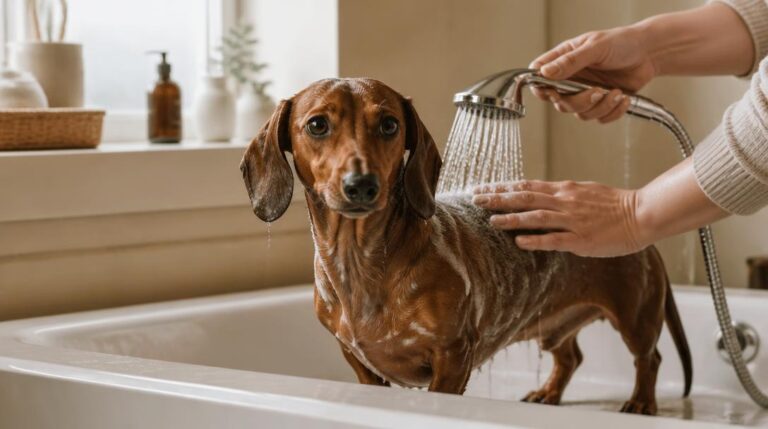
Check the water temperature with your hand. It should feel lukewarm, not hot or cold. Hot water can burn their sensitive skin.
Place a rubber mat in the bathtub to prevent slipping. Long-haired dachshunds have short legs and need secure footing during bath time.
Essential pre-bath checklist:
- Remove any mats or tangles with a slicker brush
- Gather all supplies within reach
- Close bathroom doors to prevent escapes
- Have towels ready nearby
Wet the coat gradually from neck to tail. Avoid getting water directly in their ears or eyes. The dense undercoat takes time to soak through completely.
Dog-Safe Shampoos and Conditioners
Use only dog-specific shampoo on long-haired dachshunds. Human products can irritate their skin and strip natural oils from their coat.
Look for shampoos made for sensitive skin or long-haired breeds. Oatmeal-based formulas work well for dogs with dry or itchy skin.
Apply shampoo in sections, working from neck to tail. Massage gently into the coat without scrubbing harshly. Pay special attention to areas that get dirty easily.
Recommended shampoo types:
- Hypoallergenic formulas
- Moisturizing shampoos for dry coats
- Gentle puppy shampoos for sensitive dogs
Follow with a dog conditioner designed for long hair. This keeps the coat soft and makes brushing easier after the bath.
Rinse thoroughly until water runs clear. Leftover soap residue can cause skin irritation and make the coat look dull.
Proper Drying Techniques
Start drying immediately after the bath. Use absorbent towels to gently pat the coat, not rub it. Rubbing can create tangles in wet fur.
A blow dryer on the cool setting works well for long-haired dachshunds. Keep it moving and maintain distance from their skin to prevent overheating.
Brush while drying to prevent mats from forming. Work in sections, lifting the hair to dry the undercoat completely.
Drying steps:
- Towel pat excess water
- Use cool blow dryer setting
- Brush each section as it dries
- Check that undercoat is completely dry
The long-haired dachshund must be completely dry before going outside in cold weather. Damp fur can lead to chills or skin problems.
Pay extra attention to feathering on the ears, legs, and tail. These areas take longer to dry and mat easily when left damp.
Maintaining Health and Appearance
Regular maintenance beyond basic brushing keeps long-haired dachshunds healthy and prevents common issues. Focus on trimming overgrown areas, maintaining clean nails and teeth, and keeping ears free from infection-causing debris.
Trimming Problem Areas
Problem areas require regular attention to prevent matting and discomfort. The most critical spots include the hair around the ears, between the toes, and under the tail.
Ear trimming prevents excessive hair from trapping moisture and debris. Use blunt-tip scissors to carefully trim hair that grows inside the ear canal. Only remove hair that extends beyond the ear opening.
Paw maintenance involves trimming hair between the paw pads and around the toes. Long hair in these areas collects dirt and can cause the dog to slip on smooth surfaces. Trim hair level with the paw pads using small grooming scissors.
Sanitary areas need regular trimming for hygiene. Professional groomers recommend trimming the hair around the anus and genital areas every 4-6 weeks. This prevents waste from sticking to the fur and reduces odor.
Leg feathering should be shaped but not removed completely. Trim uneven lengths and remove any matted sections. The goal is maintaining the breed’s natural silhouette while ensuring cleanliness.
Nail and Dental Care
Nail trimming prevents painful overgrowth and maintains proper foot structure. Long-haired dachshunds typically need nail trims every 2-3 weeks since their nails grow quickly.
Use proper nail clippers designed for small to medium dogs. Cut only the white tip of the nail, avoiding the pink quick inside. If the quick is accidentally cut, apply styptic powder to stop bleeding.
Dental care prevents periodontal disease, which affects over 80% of dogs by age three. Brush teeth 2-3 times per week using dog-specific toothpaste. Never use human toothpaste as it contains harmful ingredients.
Signs of dental problems include bad breath, yellow tartar buildup, and difficulty eating. Regular dental maintenance keeps teeth healthy and prevents expensive veterinary procedures.
Professional dental cleanings may be necessary annually or bi-annually depending on the dog’s oral health and age.
Ear Cleaning Essentials
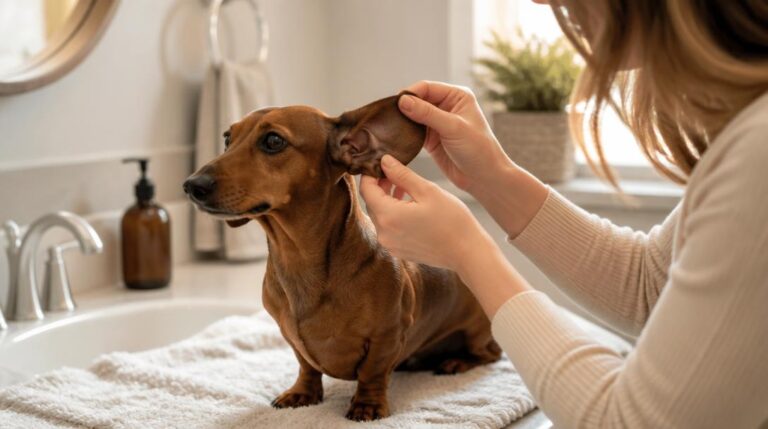
Long-haired dachshunds are prone to ear infections due to their floppy ears and hair growth inside the ear canal. Weekly ear cleaning prevents bacterial and yeast infections.
Cleaning supplies include cotton balls, dog-safe ear cleaning solution, and towels. Never use cotton swabs as they can push debris deeper into the ear canal.
Cleaning process starts with applying ear cleaner to a cotton ball. Gently wipe the visible parts of the inner ear, removing brown wax and debris. Use gentle, outward motions to avoid pushing material further into the ear.
Warning signs of ear problems include strong odor, excessive scratching, head shaking, or dark discharge. Red, swollen ears require immediate veterinary attention.
Maintenance schedule should include weekly cleaning for healthy ears and more frequent cleaning if the dog swims regularly or lives in humid conditions.