I’ll be honest with you: nobody emails me about anal glands until they’re already dealing with a problem. Then suddenly it’s the only thing they want to talk about. If you’ve ever caught your dachshund dragging their rear end across your living room carpet, or noticed a smell near their tail that wasn’t there yesterday, you’ve probably already guessed where this article is headed.
Anal gland issues aren’t glamorous, but they’re one of the most common reasons I hear from dachshund owners about unexplained scooting, licking, or a sudden foul odor. And because dachshunds carry their whole body so close to the ground, a lot of owners notice the signs sooner than owners of taller breeds do — which is actually a good thing, once you know what you’re looking at.
What Are Anal Glands, and Why Do They Cause Trouble?
Every dog has two small anal glands (also called anal sacs) tucked just under the skin on either side of the anus, roughly at the 4 o’clock and 8 o’clock positions. They produce a strong-smelling, oily secretion that’s unique to each dog — it’s part of how dogs identify each other, and it’s normally released in small amounts every time your dachshund has a normal, firm bowel movement. The pressure of passing stool squeezes the glands just enough to express a little fluid.
Problems start when that natural emptying doesn’t happen reliably. The fluid builds up, thickens, and the glands become swollen, uncomfortable, or infected. According to the American Kennel Club, any dog can develop impacted or infected anal glands, but small breeds are disproportionately represented in veterinary visits for the issue — and a dachshund’s compact build, short legs, and low-slung build are often cited by groomers and vets as factors that make manual gland emptying a more routine part of their care than it is for, say, a Labrador.
The Signs Every Dachshund Owner Should Know
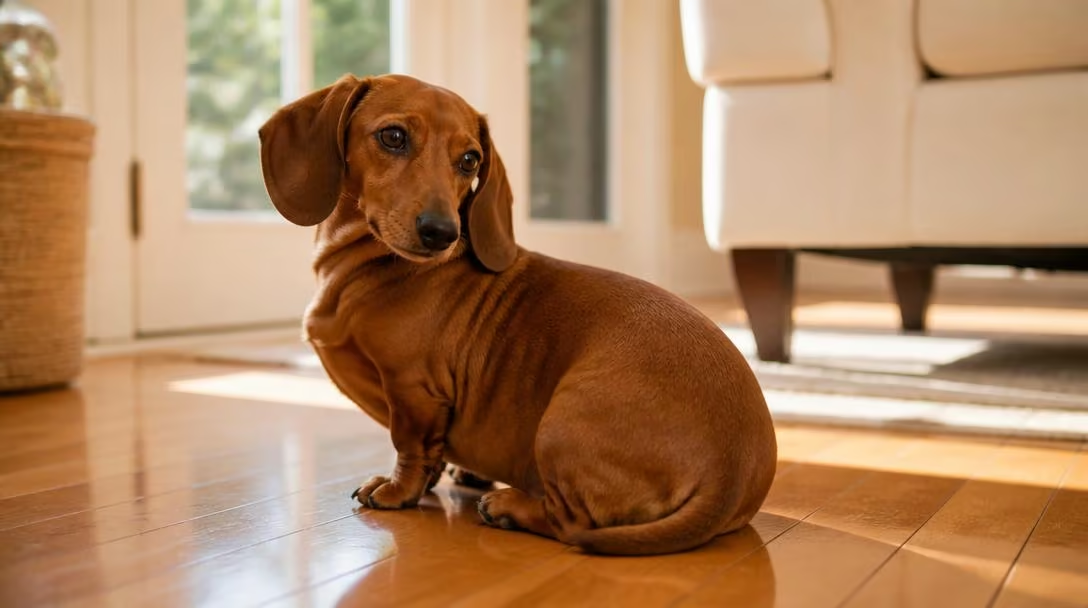
The classic sign is scooting — your dachshund dragging their bottom along the floor or carpet. It looks almost comical the first time you see it, but it’s a direct message: something back there is uncomfortable. Scooting isn’t the only clue, though, and it’s worth knowing the fuller picture so you catch a problem early rather than after it’s become painful.
- Excessive licking or chewing at the base of the tail or under the tail.
- A strong, fishy odor that seems to come from nowhere, especially right after your dog has been lying on furniture or bedding.
- Visible swelling or redness on one or both sides of the anus.
- Scooting or tail-chasing that wasn’t part of your dog’s normal behavior.
- Straining or apparent discomfort when having a bowel movement.
- A small amount of blood or pus near the anus, which can indicate a ruptured or abscessed gland — this one needs a same-day vet visit, not a wait-and-see approach.
Dachshund-specific forums and breed resources, including a detailed breakdown on DachWorld, consistently point to scooting and sudden odor as the two signs owners notice first — often before they even realize anal glands are the cause.
Why Dachshunds in Particular Seem Prone to This
There isn’t strong scientific evidence that dachshunds are genetically more prone to anal gland disease than other small breeds, but several practical factors tend to stack up in their case. Their low body profile means softer or looser stool is less effective at applying the pressure needed to empty the glands naturally. Many dachshunds are also prone to a bit of extra body weight if their portions aren’t carefully managed (something we cover in our dachshund weight management guide), and extra weight around the hindquarters can make the glands sit in a position where natural expression happens less reliably. On top of that, dachshunds are a low-shedding-adjacent, close-to-the-ground breed that tends to get more hands-on grooming attention in general, which simply means owners and groomers notice gland issues sooner — not necessarily that the glands themselves are worse.
What You Can Do at Home
If you’re seeing mild signs — occasional scooting, a faint odor, nothing alarming — there are a few things worth trying before heading straight to the vet or groomer.
Check Stool Consistency First
Firm, well-formed stool is nature’s own way of expressing anal glands with every bowel movement. If your dachshund’s stool has been soft, loose, or inconsistent, that’s often the real root cause. A diet with adequate fiber helps keep stool firm enough to do the job. If you’re not sure what a healthy feeding routine looks like at your dog’s current weight and age, our dachshund feeding chart is a good place to start.
Add Fiber Thoughtfully
A spoonful of plain canned pumpkin, a small amount of psyllium husk, or a vet-recommended fiber supplement can help bulk up stool for dogs with a pattern of recurring gland issues. This isn’t a fix for an actively impacted or infected gland, but it’s a reasonable first step for a dog with mild, recurring scooting and otherwise normal behavior.
Know When NOT to Do It Yourself
You’ll find plenty of videos showing owners expressing their own dog’s anal glands at home. It can be done, but it’s genuinely easy to do incorrectly, cause your dog pain, or push fluid in the wrong direction and create an abscess. If your dachshund’s glands need frequent manual expression, the safer long-term plan is to have your veterinarian or a trained groomer do it, and to ask them to show you the external (not internal) technique if you want to learn it yourself under their guidance.
When It’s Time to Call the Vet
Mild, occasional scooting that resolves with a firmer stool is usually nothing urgent. But certain signs mean it’s time to stop troubleshooting at home and get your dachshund seen:
- Swelling that’s hot to the touch, hard, or clearly painful when touched.
- Any blood, pus, or an open wound near the anus.
- A fever, lethargy, or loss of appetite alongside the other symptoms.
- Scooting or licking that continues for more than a few days despite firmer stool.
- Repeated impactions — if your dachshund needs their glands expressed every few weeks, it’s worth discussing whether a chronic underlying cause (allergies, obesity, or gland structure) needs addressing, and whether surgical removal of the glands is worth considering for dogs with severe, recurring cases.
PetMD notes that untreated impactions can progress to abscesses that rupture through the skin, which is painful for your dog and a more involved (and expensive) problem to treat than catching it early. There’s no prize for waiting it out.
Keeping It From Becoming a Recurring Problem
For most dachshunds, anal gland issues are an occasional nuisance rather than a chronic condition. A few habits go a long way toward keeping it that way: maintaining a healthy weight, feeding a diet that produces firm stool, staying on top of regular grooming and hygiene checks during bath time (our dachshund bathing guide covers what a thorough at-home check should include), and mentioning any pattern of scooting to your vet at routine checkups rather than waiting for it to become urgent.
It’s a small, unglamorous part of dachshund care, but it’s also one of the easiest problems to manage once you know what you’re looking at.
Frequently Asked Questions
Is scooting always an anal gland problem?
Not always, but it’s the most common cause. Worms, skin irritation, and allergies can also cause scooting, so if firmer stool and basic hygiene don’t resolve it within a few days, a vet visit will help rule out other causes.
How often do dachshunds need their anal glands expressed?
It varies widely by dog. Some dachshunds never need manual expression at all because their glands empty naturally with normal bowel movements. Others may need it every few weeks to a couple of months. There’s no universal schedule — it depends on your individual dog.
Can I prevent anal gland problems with diet alone?
Diet is the single biggest lever most owners have, since firm stool is what naturally empties the glands. It won’t guarantee your dog never has an issue, but a consistent, appropriately portioned diet with adequate fiber meaningfully reduces how often problems come up.
Is it safe to express my dachshund’s anal glands myself?
The external method (gently applying pressure from outside, as shown by a vet or groomer) is reasonably low-risk once someone has shown you properly. The internal method carries more risk of injury or pushing fluid into tissue incorrectly and is best left to a professional.