
I get asked about coats more than almost any other product category this time of year, and I get it — once the temperature drops, a dachshund’s short legs and low-to-the-ground build go from “cute” to “genuinely cold” pretty fast. But shopping for dachshund outerwear is trickier than it looks. Most coats and sweaters on the market are cut for a standard dog silhouette: shorter back, longer legs, more clearance off the ground. Put that shape on a dog built the way ours are and you get a coat that rides up, exposes the belly, or binds at the shoulders every time they take a step. Here’s what I’ve learned about shopping for this body type specifically — what actually matters, how to get the fit right, and when a coat isn’t enough on its own.
Why a Dachshund’s Body Makes Coat Shopping Different
Three things work against a dachshund in a generic dog coat. First, the obvious one: the length-to-height ratio. A coat sized by “weight” or “breed size” alone is usually built for a dog with normal leg length, which means on a dachshund it either stops short of the hips (leaving the lower back and belly exposed right where the cold ground radiates up) or it’s long enough to cover the back properly but then drags or bunches because it was never cut for those short legs. Second, dachshunds genuinely run cold. Even the wirehaired and longhaired varieties don’t carry much body fat, and a build that sits inches off the ground loses heat fast through the belly and chest — that’s direct contact with cold pavement, snow, or frosty grass, not just cold air. Third, most dachshunds already wear a harness for daily walks, and a coat that wasn’t designed with that in mind turns every walk into a 10-minute wrestling match of straps, zippers, and a dog who’s decided the whole process is a game.
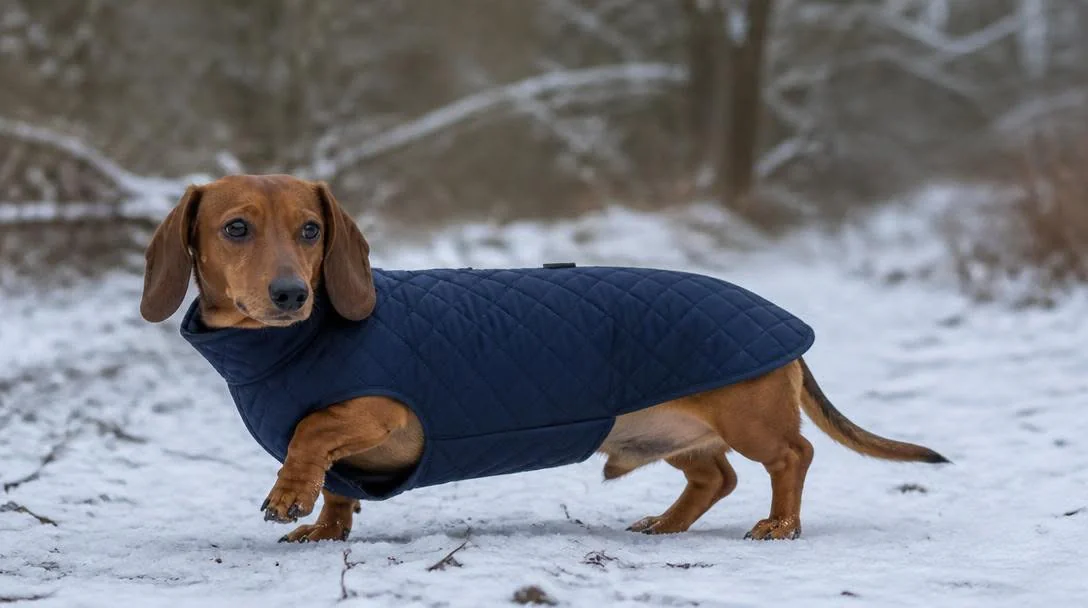
None of this means coat shopping has to be complicated — it just means “cute” can’t be the only filter. A coat that’s actually cut for a long-backed, short-legged dog solves all three problems at once, and that’s really what you’re shopping for, not a specific brand or style.
Coat vs. Sweater: What’s the Difference and Does It Matter
These two terms get used interchangeably, but they’re doing different jobs. A sweater is knit fabric — fleece, wool blends, acrylic knits — and its whole purpose is warmth through insulation. It’s great for indoor chill (a drafty house, a cold tile floor) and for mild outdoor walks where the main goal is just taking the edge off. What it doesn’t do is block wind or moisture, so a sweater that gets wet in snow or rain actually makes a dog colder, not warmer, because wet fabric pulls heat away from the skin.
A coat or jacket is built differently: a water-resistant or waterproof outer shell, often with a layer of insulation (fleece, synthetic fill, or quilted padding) underneath. That combination is what you want for actual winter walks, rain, snow, or any outing where your dog might encounter wet ground. A good rule of thumb: sweater for the house and short mild-weather trips, coat for anything with real wind, wet, or sustained cold. A lot of owners end up owning one of each rather than trying to make a single garment do both jobs.
How to Measure Your Dachshund for a Proper Fit
Sizing by “breed” or generic small/medium/large almost never works for this body type, so measure instead of guessing. You need three numbers: neck circumference (around the base of the neck, where a collar would sit), chest girth (the widest part, typically just behind the front legs), and back length (from the base of the neck to the base of the tail, following the curve of the spine, not a straight line). Back length is the one generic sizing gets wrong most often, and it’s the single most important number for this breed specifically — a coat that’s even an inch short in the back will ride up and expose the lower spine and belly exactly where your dog needs coverage most.
Once you have those three measurements, check them against the specific brand’s size chart rather than assuming “medium” means the same thing everywhere — sizing varies a lot between manufacturers, and a chart built around actual measurements (not vague weight ranges) is a good sign you’re looking at a coat that was designed with proportion in mind.
Materials and Features Worth Looking For
A few features consistently separate a coat that gets used all winter from one that ends up in a drawer by January: fleece lining against the skin (more comfortable than a bare synthetic shell on thin fur), a genuinely waterproof outer layer with sealed seams rather than just treated fabric that wets through, and adjustable closures — ideally wide velcro straps rather than tight elastic or buckles — that make it easy to get the coat on a wriggling dog and fine-tune the fit as needed.
A leg-strap or harness-compatible design is worth paying attention to specifically for this breed. Coats that rely purely on a strap around the belly tend to twist and ride up on a long, low body; ones with a strap between the front legs or an opening built for a harness to pass through stay put much better. Reflective trim or piping matters more than it sounds, too — dachshunds are already hard to spot from a driver’s seat given how low they sit, and winter means more dark walks.
Coverage for a Low-Slung Body
Belly coverage deserves its own callout because it’s the single biggest difference between a coat designed for this breed and one that just happens to fit. A dachshund’s chest and belly sit close enough to the ground that they’re in near-constant contact with cold, wet, or snowy surfaces on a walk — far more than a dog with normal leg clearance. A coat that only covers the back and sides while leaving the underside bare is solving maybe half the problem. Look for designs with extended belly panels or a wrap-style cut that comes further down the sides than a standard dog coat would.
This also connects to something worth keeping in mind generally for this breed: a dachshund’s long spine is already working against unusual proportions, and anything that keeps a dog comfortable and willing to move (rather than hunched up and reluctant to walk because they’re cold) supports normal activity levels through the winter. If you haven’t read it yet, my colleague Rex’s guide to dachshund back problems and spinal health is worth a look alongside this one — it goes into why this breed’s spine needs extra consideration in general, which is part of why staying warm and willing to move matters more here than it might for other dogs.
Do Smooth, Longhaired, and Wirehaired Dachshunds Need Different Outerwear?
Yes, to a degree. Smooth-coated dachshunds have essentially no insulating undercoat, so they tend to need outerwear earliest in the season and benefit most from a warm lining even on days that don’t feel all that cold to you. Wirehaired dachshunds have a double coat with a wiry outer layer and a softer undercoat that provides genuine insulation, so they can often tolerate cooler temperatures bare before a coat becomes necessary, though they still need one once it’s genuinely cold or wet. Longhaired dachshunds fall in between — their coat offers some warmth but not much wind or water resistance, so they benefit from a waterproof shell more than extra insulation in milder cold.

If you’re not sure which category your dog falls into or want the fuller picture on grooming and coat differences, Hank’s breakdown of the three dachshund coat types covers the distinctions in more depth than I can here. The short version for outerwear purposes: don’t assume a fuzzier-looking dog needs less help — wirehaired and longhaired dachshunds still get cold, just on a slightly different timeline than their smooth-coated relatives.
Signs Your Dachshund Is Cold Even With a Coat On
A coat reduces cold exposure, it doesn’t eliminate it, so it’s worth knowing what cold actually looks like in this breed. Shivering is the obvious one, but watch for subtler signs too: lifting one or more paws off the ground repeatedly (cold pavement or snow is uncomfortable on bare paw pads even with a coat on the body), a tucked or hunched posture instead of normal walking gait, reluctance to keep moving or repeated attempts to turn back toward home, and holding the tail low and tight rather than its normal carriage. Any of these means it’s time to head inside, regardless of what the coat is or isn’t doing — a coat buys you more comfortable minutes outside, not unlimited cold tolerance.
How Many Coats Does a Dachshund Actually Need
Most owners end up with two: a lighter fleece sweater for quick bathroom trips and mild days, and a proper insulated, waterproof coat for real winter walks or wet weather. A backup of whichever one gets daily use is genuinely practical, too — a coat still damp from this morning’s walk is a cold one to put on tonight, and rotating two means one is always dry. Wash according to the care label rather than regular laundry; waterproof shells can lose their water resistance if washed or dried incorrectly.
When a Coat Isn’t Enough
There’s a point where outerwear stops being the solution and the right answer is simply less time outside. Extreme cold, high wind chill, or prolonged exposure can lead to frostbite or hypothermia in a small dog regardless of what they’re wearing, and a coat is not a substitute for limiting outdoor time on the worst days. If you haven’t already, it’s worth reading our general guide to dachshund winter safety for the fuller picture on cold-weather hazards beyond just staying warm — things like ice, salt and antifreeze exposure, and frostbite warning signs that a coat alone won’t protect against.
Frequently Asked Questions
At what temperature does a dachshund need a coat?
There’s no single number that applies to every dog, but as a general guideline, most dachshunds start to benefit from a coat once temperatures drop into the 45–50°F (7–10°C) range, and should definitely be wearing one below freezing. Smooth-coated dachshunds typically need one sooner than wirehaired or longhaired dogs. Watch your individual dog’s behavior — shivering or reluctance to walk are better guides than a thermometer alone.
Can a dachshund wear a sweater under a coat?
Yes, and for very cold or wet conditions this layering approach often works better than one heavy garment. A thin fleece sweater underneath and a waterproof shell coat on top gives you adjustable warmth without needing to buy an extremely heavy single coat, and it’s easier to add or remove a layer as conditions change through a walk.
Do dachshunds need a coat indoors?
Usually not, but it depends on the home. A dachshund sleeping on cold tile or hardwood in a drafty older house may appreciate a light sweater, especially overnight or first thing in the morning. If your dog seeks out blankets, heating vents, or burrows under furniture constantly, that’s a sign they’d benefit from extra warmth indoors too, not just on walks.
How do I get my dachshund used to wearing a coat?
Introduce it gradually and make it a positive experience — brief, treat-filled sessions wearing the coat indoors before ever expecting your dog to walk calmly in it outside. Most dachshunds adjust within a few days to a couple of weeks. The “freeze and refuse to move” reaction so many owners see at first is normal and almost always temporary.
The Bottom Line
A coat that’s actually built for a dachshund’s proportions — proper back length, real belly coverage, a harness-friendly design, and a lining or shell matched to your dog’s coat type — makes a bigger difference than any particular brand or color. Measure your dog properly, match the garment to the conditions you’ll actually be walking in, and watch your dog’s behavior rather than a thermometer to know when it’s time to head inside. Get those basics right and the “which coat should I buy” question gets a lot simpler.


