I probably get more “which bed should I buy” messages than questions about any other product category on this site – and once you understand what a dachshund’s body actually needs from a bed, it’s easy to see why the answer isn’t as simple as “whatever’s on sale at the pet store.” A bed that’s perfect for a Labrador can be genuinely wrong for a dog built the way ours are. Too soft and there’s no real spinal support; too high-sided and a dog with short legs and a long back has to twist awkwardly to climb in; too flat and open and you miss out on the instinct that makes a good cave bed such a hit with this breed. So here’s the buying guide I wish existed when I started shopping for my own dachshund – what actually matters, which styles suit this body type, and how to know when it’s time to replace what you already have.
If you haven’t already read my colleague Rex’s post on dachshund back problems and spinal health, it’s worth reading alongside this one – it explains why this breed’s spine is so vulnerable in the first place, and that vulnerability is exactly why bed support matters more here than it does for most dogs.
Why a “Regular” Dog Bed Often Isn’t Right for a Dachshund
Three things about a dachshund’s body and instincts make generic dog beds a poor fit more often than not. First, the obvious one: their long spine and short rib cage mean they benefit from real, even support along the full length of their back, not just a soft cushion under the hips and shoulders. A thin, unsupportive bed doesn’t cause disc disease on its own, but it does nothing to help a spine that’s already working against unusual proportions, and it won’t do your dog any favors on a stiff morning.
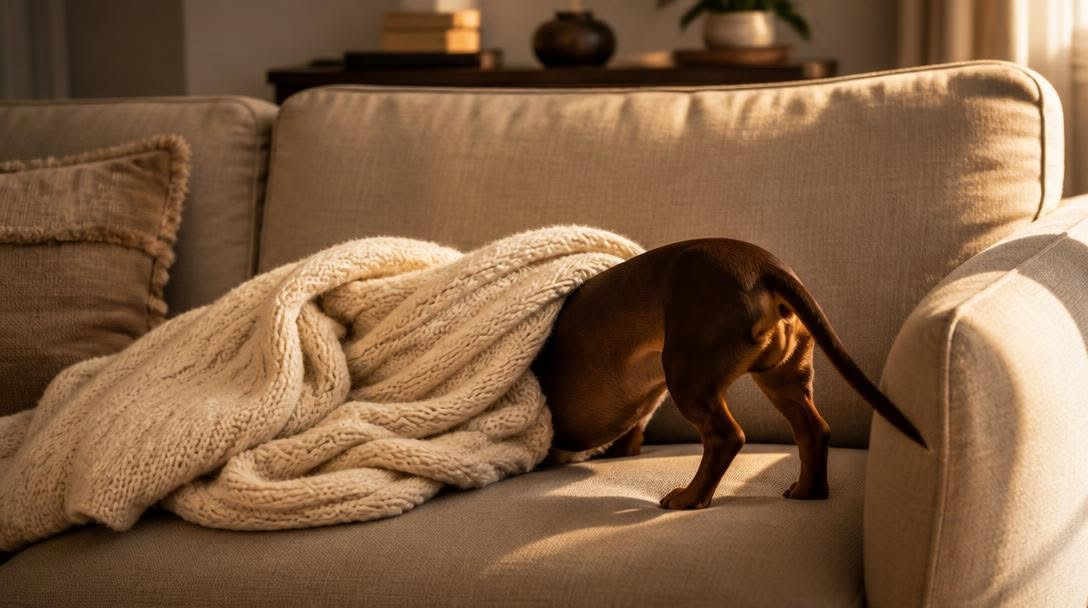
Second, dachshunds are burrowers by breeding, not by quirky personality. They were developed to go headfirst into badger dens, and that instinct doesn’t switch off just because the “den” is now a living room. Given the choice, most dachshunds will tunnel under a blanket, wedge themselves between couch cushions, or dig at a flat bed until it’s rearranged into something more cave-like. A bed that works with that instinct instead of against it gets used every day. One that doesn’t often ends up ignored in favor of your actual bed.
Third, dachshunds run cold. Their short coats (even the wirehaired and long-haired varieties have relatively little body fat and a low-to-the-ground build) mean they lose heat faster than bigger, fluffier breeds, especially on hard or tile floors. A bed that traps a little warmth, rather than one that sits flush and cool against the ground, tends to get chosen over the bare floor every time.
The Bed Styles Worth Considering
Not every style on the market solves the same problem, so it helps to know what each one is actually good for before you buy.
Cave or burrow beds are my top recommendation for most dachshunds, and it’s not close. These have a hooded or semi-enclosed fabric “roof” the dog can tunnel under, which plays directly into the denning instinct described above. They also trap body heat effectively, which matters a lot for a breed that runs cold. Look for one with a base cushion that has real loft to it rather than a hood sewn onto a flat pad – the hood is what gets the dog to use it, but the base is what actually supports their back.
Orthopedic or memory foam beds are the better choice for older dogs, dogs recovering from a back injury, or any dachshund who’s shown signs of joint stiffness. High-density memory foam distributes weight evenly and resists compressing into a hammock shape the way cheaper polyfill beds do within a few months. For a dog managing IVDD risk or diagnosed joint issues, this is worth prioritizing over the burrow-bed appeal, and the two aren’t mutually exclusive – some orthopedic beds now come with a low bolster or hood option built in.
Bolster or donut beds (raised, cushioned rims around a flatter center) give a dog something to rest their head and neck against, which a lot of dachshunds seem to genuinely prefer, likely for the same denning-adjacent security a cave bed provides without fully enclosing them. These work well for dogs who like to see the room while they rest, and for households where full-enclosure beds feel like overkill.

Heated beds are worth considering seasonally, especially if your dachshund sleeps in a room that gets cold overnight or if you’re anywhere with a real winter. A low-wattage, chew-safe heated pad tucked inside a cave or orthopedic bed solves the temperature-sensitivity issue directly, though it’s a nice-to-have rather than a must-have if your home stays consistently warm.
What to Look For When You’re Shopping
Once you’ve picked a style, a few practical details separate a bed that lasts from one you’ll be replacing in three months.
- Low entry height. A dachshund’s short legs mean a bed with high, stiff walls is genuinely harder for them to climb into than it would be for a longer-legged dog of the same size. Look for a low front lip or an open side they can step into rather than hop over.
- Supportive, high-density base. Press your hand into the bed at the store or check the product description for foam density. A base that bottoms out under your palm won’t do much for a resting spine either.
- Removable, machine-washable covers. This isn’t optional for a breed prone to occasional accidents and muddy paws. A zippered cover you can pull off and wash without disturbing the foam insert underneath will save the bed’s actual support structure from wearing out early.
- Chew-resistant seams and fabric. Especially important for puppies still in a teething phase, or any dachshund with a habit of “fluffing” their bed with their teeth before settling in. Reinforced stitching at stress points goes a long way.
- Non-slip bottom. On hardwood or tile, a bed that slides every time your dog circles before lying down is more annoying than it sounds, and can actually discourage them from using it.
Sizing It Right for a Standard or Miniature Dachshund
Dachshunds come in two size varieties, and bed sizing charts don’t always account for the breed’s unusual proportions the way weight-based charts assume. A standard dachshund (roughly 16–32 pounds) generally does well in a “small” or “small/medium” labeled bed, while a miniature dachshund (under about 11 pounds) usually fits a true “small” or even “extra-small.” The detail that matters more than weight, though, is length: measure your dog from nose to base of tail while they’re stretched out, then add several inches, since a dachshund needs room to fully extend along that long back rather than curl into a circle the way a compact-bodied breed would.
Where to Put It (More Than One Bed Is Normal)
Most dachshund households end up with two or three beds rather than one, and that’s not overindulgence – it reflects how this breed actually moves through a day. A cave or bolster bed near wherever the family spends the evening (living room, home office) gets used for supervised lounging. A second, smaller bed inside a crate gives your dog a familiar, den-like spot for overnight sleep or alone time, and a washable mat-style bed near a favorite window perch covers the rest. If your dachshund already free-roams the couch or your bed, a supportive floor bed placed right beside it (rather than across the room) tends to get adopted far more readily than one tucked away somewhere out of sight.
Caring for and Washing a Dachshund’s Bed
Wash the removable cover every one to two weeks under normal use, more often if your dog has any skin sensitivities or if the bed sees a lot of muddy-paw traffic. Most foam inserts should never go in a washing machine or dryer – spot-clean the foam itself with a damp cloth and mild soap, and let it air dry completely before putting the cover back on, since trapped moisture inside foam can lead to odor and mildew over time. If your dog’s bed doesn’t have a removable cover at all, that’s worth factoring into your next purchase; it’s a small feature that makes a real difference in how sanitary the bed stays.
Signs It’s Time to Replace the Bed
A bed that’s lost its support isn’t just a comfort issue for a dachshund – it’s a spine issue. Watch for a base that stays compressed or dented even after your dog gets up (rather than springing back), a hood or bolster that’s gone permanently flat, or a bed your dog has started avoiding in favor of the bare floor or furniture. Most quality orthopedic and cave beds hold up well for one to two years under daily use before the foam needs replacing, though cheaper polyfill options often compress within a matter of months. If your dachshund has an existing back condition, replacing a worn bed promptly matters more than it would for a sturdier breed.
Frequently Asked Questions
Do dachshunds really need an orthopedic bed, or is a regular bed fine?
A healthy young dachshund with no back issues can do fine on a good-quality standard bed, as long as it offers real support and isn’t paper-thin. That said, given how common back problems are in this breed, an orthopedic or high-density option is cheap insurance, and it becomes far more important once a dog is a senior or has any history of back pain or IVDD.
Why does my dachshund refuse to sleep in the bed I bought and dig at my blankets instead?
This is almost always the denning instinct looking for an enclosed, burrow-like space that the bed doesn’t provide. Try a hooded cave-style bed before assuming your dog simply dislikes beds – many dogs who “reject” flat beds take to an enclosed one immediately.
How many beds does one dachshund actually need?
There’s no fixed number, but most owners find two is the practical minimum: one in a shared living space and one inside or near the crate for overnight or alone time. Add more if your home has multiple levels or rooms your dog spends real time in.
Are heated beds safe for dachshunds?
Look specifically for a pet-safe, low-voltage, chew-resistant heated pad designed for dogs, and always check the manufacturer’s supervision guidance. For most households, a well-insulated cave bed alone provides enough warmth without needing a powered element at all.
Getting This One Right Matters
A bed isn’t the flashiest purchase you’ll make for your dachshund, but it’s one your dog interacts with for hours every single day, which makes it worth more thought than a quick scroll through whatever’s cheapest. Match the style to your dog’s habits, prioritize real support over plush appearance, and keep an eye on wear over time, and you’ll end up with a spot your dachshund actually chooses to use – not just one that sits in the corner looking nice. If you’re rounding out the rest of your dachshund’s gear list, my harness buying guide covers the other piece of equipment worth getting right from the start.