
I get some version of this question almost every week: “I thought all dachshunds looked like yours, so why does my neighbor’s have this shaggy little beard?” It always makes me smile, because it’s such a common mix-up. There isn’t just one dachshund coat — there are three, and they’re different enough that if you lined up a smooth, a longhaired, and a wirehaired dachshund side by side without telling anyone they were the same breed, most people wouldn’t guess it.
All three share the same body, the same personality quirks, and the same long-backed build that makes this breed so recognizable. But the coat itself changes more than just looks — it changes grooming time, shedding, weather tolerance, and even a little bit of temperament folklore that’s worth separating fact from myth on. Here’s everything I’d want a new owner (or a curious current one) to know.
What Actually Determines a Dachshund’s Coat Type
Coat type in dachshunds comes down to genetics, plain and simple. The original dachshund, bred centuries ago in Germany for badger hunting, was a smooth-coated dog. Breeders later crossed in other breeds — spaniels for the longhaired coat, and wirehaired pinschers and terriers for the wirehaired coat — to create variations better suited to different hunting terrain and weather. Long fur helped protect against brush and cold; a wiry, dense coat protected against thorns and rough ground.
Today, all three coat types are recognized as the same breed by kennel clubs, just with different coat classifications. A litter can sometimes even produce puppies with different coats than their parents, depending on which genes get passed down, though reputable breeders who focus on one coat type tend to produce fairly predictable litters.
The Smooth Coat Dachshund
This is the coat most people picture when they hear “dachshund” — short, shiny, and close to the body, with almost no undercoat. It’s the original coat type and still the most common one you’ll see at the dog park or in stock photos.
Smooth coats are famously low-maintenance. A quick weekly brush with a rubber curry brush or grooming mitt is usually enough to keep the coat glossy and pick up loose hair before it ends up on your couch. Baths are only needed every month or two unless your dog finds something to roll in. The tradeoff is that smooth coats offer the least protection from cold weather — if you have a smooth dachshund, a coat or sweater for winter walks isn’t optional in most climates, it’s a genuine comfort and safety item given how little insulation this coat provides.
The Longhaired Dachshund
Longhaired dachshunds have soft, slightly wavy fur that’s longest on the ears, chest, belly, and the back of the legs, giving them a somewhat elegant, feathered look. Underneath all that hair is the exact same long-backed body as every other dachshund — the coat just makes it a little easier to forget.
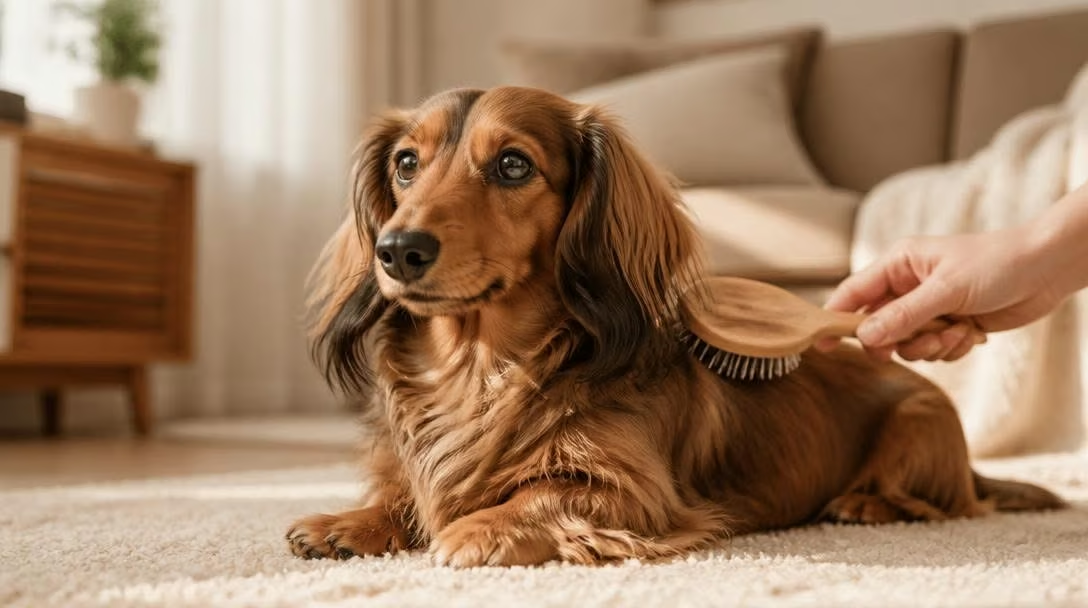
This is the coat type that needs the most regular brushing to stay tangle-free — two to three times a week is a realistic minimum, more during shedding season. The feathering around the ears and legs mats easily if it’s skipped, and once mats set in close to the skin they can be uncomfortable and genuinely difficult to remove without a trim. Longhaired dachshunds also shed more visibly than smooth coats, just in longer strands rather than a fine dusting. Many owners have their longhaired dachshund’s coat trimmed a few times a year, especially around the paws and ears, to keep things manageable. If you’re weighing whether a trim schedule and more frequent brushing is realistic for your routine, our complete long-haired grooming guide walks through the tools and technique in detail.
The Wirehaired Dachshund
Wirehaired dachshunds are the least common of the three coat types, and often the most surprising to people who’ve never met one. The coat is dense, harsh, and wiry to the touch, with distinctive bushy eyebrows and a beard that gives them a scruffy, almost terrier-like expression — which makes sense, since terriers were part of the original cross that created this coat.
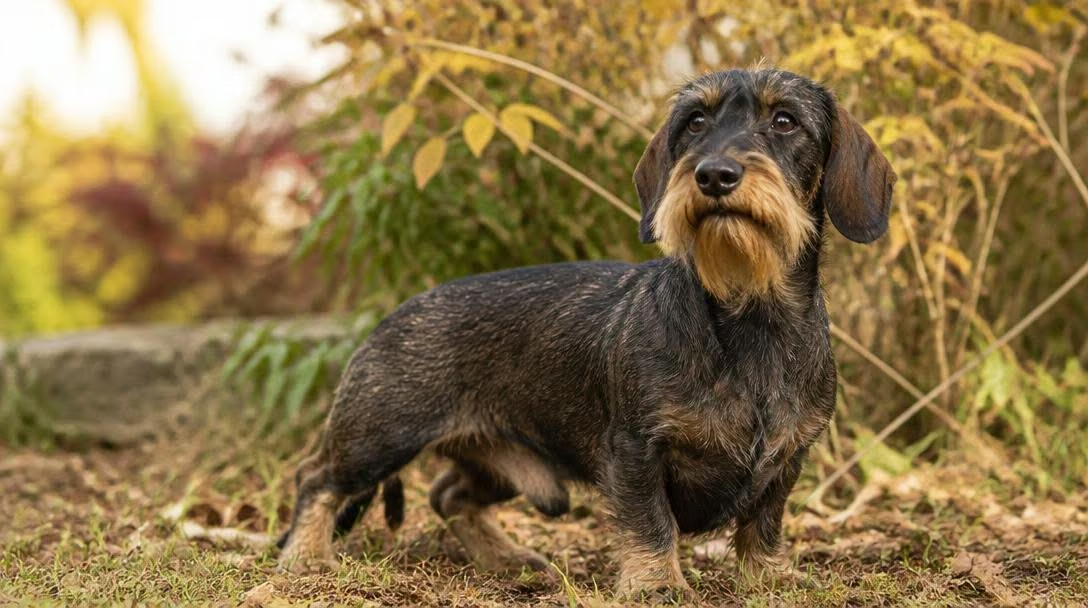
Despite looking rougher, the wire coat is actually quite practical. It sheds relatively little and resists dirt and burrs better than the other two coat types, which made it genuinely useful for the breed’s original hunting work in brush and undergrowth. The catch is that a proper wire coat is traditionally maintained through hand-stripping — pulling out dead hairs by hand or with a stripping tool rather than clipping them — which keeps the coat’s harsh texture and rich color. Clipping a wire coat instead of stripping it will still keep your dog neat, but the texture tends to soften and the color can dull over time. If hand-stripping sounds intimidating, it’s a learnable skill, and our wirehaired grooming guide breaks the whole process down step by step.
Do Coat Types Really Have Different Personalities?
This comes up constantly, and I want to be straightforward about it: there’s a persistent belief in dachshund circles that wirehaired dogs are more mischievous or terrier-like, longhaired dogs are calmer and more laid-back, and smooth dogs fall somewhere in the middle. There’s a grain of truth in the history — the terrier and spaniel ancestry that shaped the wire and long coats likely did influence temperament generations ago, and some owners do notice trends that line up with this.
But I’d caution against putting too much weight on it when choosing a puppy. Individual temperament in dachshunds is shaped far more by genetics from the specific parents, early socialization, and how a puppy is raised than by coat type alone. I’ve met mellow wirehaired dogs and mischievous smooth ones. If personality is a top priority for you, meeting the puppy’s parents and asking the breeder about temperament matters far more than which coat type you pick.
Shedding and Grooming Time, Side by Side
If you’re comparing coat types mainly to figure out how much upkeep you’re signing up for, here’s the practical breakdown:
- Smooth: Sheds year-round in fine hairs, lowest grooming time (weekly brushing), least cold tolerance.
- Longhaired: Moderate-to-heavy shedding in longer strands, highest grooming time (brushing several times a week plus occasional trims), best cold tolerance of the three.
- Wirehaired: Lowest shedding of the three, moderate grooming time (hand-stripping every few months plus light regular brushing), good cold and weather tolerance.
None of these are dealbreakers on their own — plenty of owners happily manage a longhaired dachshund’s grooming needs, and plenty of allergy-conscious households do fine with a smooth coat. It’s really about matching the coat to the time and routine you’re realistically able to commit to.
Which Coat Type Is Right for Your Home?
If low grooming time is your top priority, smooth is the easiest coat to live with day to day, though you’ll want to plan for winter layers. If you love the idea of a more elegant-looking dog and don’t mind a regular brushing routine, longhaired is a rewarding choice. And if you’re drawn to that scruffy, distinctive look and don’t mind learning to hand-strip (or paying a groomer who knows how), a wirehaired dachshund brings a little more personality-through-appearance into the mix, along with genuinely practical, low-shedding upkeep.
Whichever coat you end up with, remember it’s really just packaging on the same wonderful, stubborn, big-personality dog underneath. If you already know coat type is settling into place and you’re now thinking about the color and pattern your dachshund might carry, our guide to dachshund coat colors and patterns covers that side of things in depth.
Frequently Asked Questions
Can two smooth-coated dachshunds have a longhaired or wirehaired puppy?
It’s possible if one or both parents carry a hidden (recessive) gene for a different coat type, though it’s uncommon in litters bred intentionally for one coat. Breeders who specialize in a single coat type generally avoid this by choosing parents whose genetics are well understood.
Which dachshund coat type sheds the least?
Wirehaired dachshunds shed the least of the three coat types. Smooth coats shed a fine, constant amount year-round, and longhaired coats tend to shed the most noticeably, especially during seasonal coat changes.
Do miniature dachshunds come in all three coat types?
Yes. Coat type and size (standard versus miniature) are separate traits, so you’ll find smooth, longhaired, and wirehaired dachshunds in both sizes.
Is one coat type hypoallergenic?
No dachshund coat type is truly hypoallergenic. Wirehaired coats shed the least and may produce slightly less loose hair in the environment, but allergy reactions are usually triggered by dander and saliva proteins rather than hair itself, so no coat type eliminates the risk.
Do wirehaired dachshunds need professional grooming?
Not necessarily, but many owners choose to have hand-stripping done professionally every few months, at least until they’re comfortable doing it themselves. It’s a learnable skill for owners willing to invest the time, and it doesn’t need to happen as often as a haircut — more like a seasonal maintenance task.
The Bottom Line
Smooth, longhaired, and wirehaired dachshunds are the same breed wearing three very different coats, each shaped by a different piece of the breed’s working history. There’s no wrong choice here — just a question of which grooming routine and look fits your life best. Whichever one finds its way onto your couch, you’re getting the same loyal, opinionated, unmistakably dachshund personality underneath.


