
I get some version of this question at least once a week: “My neighbor has this little dog with Dachshund legs and a Poodle face — what even is that?” The honest answer is that it’s probably a Dachshund mix, and these crossbreeds have quietly become some of the most popular small dogs in North America. Between rescues filling up with low-rider mutts of mysterious parentage and breeders deliberately pairing Dachshunds with everything from Chihuahuas to Corgis, there’s a good chance your next dog — or your current one — is part Dachshund without you fully realizing it.
As someone who’s spent his whole career around this breed, I find mixes genuinely fascinating. You never quite know which traits are going to win out: will you get the long back, or the sturdier build? The big dachshund bark, or something quieter? I want to walk you through the Dachshund mixes I see most often, what tends to carry over genetically, and what to actually think about before you bring one home.
Why Dachshund Mixes Have Exploded in Popularity
Part of it is simple math. Dachshunds are one of the most popular breeds in the country, so they show up in a lot of accidental and intentional pairings. Part of it is temperament — Dachshunds are bold, funny, loyal little dogs, and breeders have figured out that crossing that personality with another breed’s strengths (a Poodle’s low-shedding coat, a Corgi’s sturdier legs, a Chihuahua’s tiny size) can produce a dog that checks a lot of boxes for apartment living and first-time owners. And a lot of it is simply what shows up in rescue. Mixed breeds with Dachshund somewhere in the family tree are everywhere in shelters, which is part of why I always encourage people to look at adoption first — we cover that in more detail in our guide to adopting a rescue Dachshund.
What a Dachshund Mix Actually Inherits
This is the part people underestimate. A “Dachshund mix” isn’t a fixed recipe — it’s a genetic coin flip between two parent breeds, and the result can land anywhere on the spectrum. Some traits are more likely to show up than others, though, and it helps to know what you’re probably signing up for.
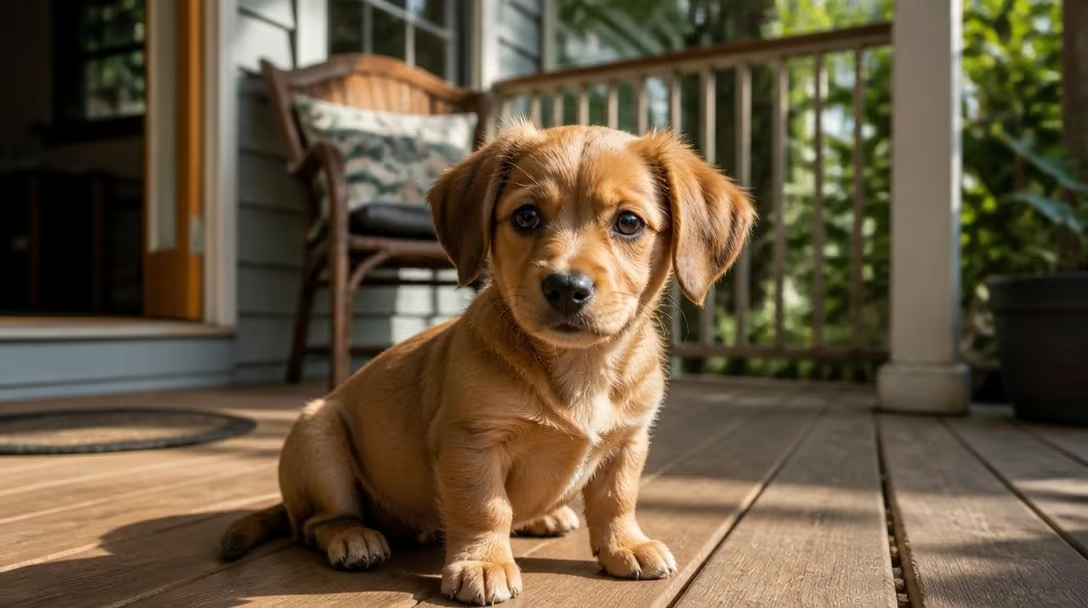
The dachshund side tends to contribute a long torso relative to leg length (though this varies a lot depending on the other parent’s build), a loud, confident bark for such a small dog, strong digging and burrowing instincts left over from their badger-hunting roots — you can read more about that heritage in our complete guide to Dachshunds — and a stubborn, independent streak that makes early training worthwhile. The other parent breed usually shapes coat type, overall size, energy level, and how vocal or reserved the dog ends up being. The honest truth is that puppies from the same litter can look and act quite different from one another, so if you meet a mix as an adult, what you see really is what you get.
8 Popular Dachshund Mixes to Know
1. Chiweenie (Dachshund x Chihuahua)
One of the most common Dachshund mixes you’ll find in shelters and on adoption sites. Chiweenies are tiny, usually under 12 pounds, with the Chihuahua’s alert, sometimes feisty personality layered over the Dachshund’s stubborn confidence. They tend to bond very closely with one person and can be vocal watchdogs.
2. Doxle (Dachshund x Beagle)
Beagles bring a stronger nose and a friendlier, more easygoing temperament to the mix. Doxles are scent-driven, food-motivated, and generally good with other dogs, but that Beagle nose means recall training takes real patience — they’ll follow an interesting smell before they follow a command.
3. Dameranian (Dachshund x Pomeranian)
This pairing usually produces a small, fluffy-coated dog with a big personality. Dameranians can inherit the Pomeranian’s thick double coat, which means more brushing than a typical smooth Dachshund, plus a tendency toward being a bit vocal and very attached to their family.
4. Doxiepoo (Dachshund x Poodle)
A popular choice for people managing allergies, since Poodle genes can produce a lower-shedding, curlier coat. Doxiepoos tend to be intelligent and food-motivated, which actually makes them a bit easier to train than a purebred Dachshund — the Poodle side’s eagerness to please balances out the Dachshund’s independent streak.
5. Dorgi (Dachshund x Corgi)
Famously the mix the late Queen Elizabeth II kept, Dorgis combine two short-legged, long-bodied breeds into a sturdier, often slightly larger dog than a purebred Dachshund. They’re typically energetic, herding-instinct-driven, and surprisingly athletic for their proportions.
6. Schnoxie (Dachshund x Miniature Schnauzer)
Schnoxies often inherit the Schnauzer’s wiry coat and bushy eyebrows over a Dachshund-shaped body. They tend to be alert, loyal watchdogs with a moderate energy level, and the wiry coat typically sheds less than a smooth Dachshund’s.
7. Dachshund x Shih Tzu (Dach-Tzu)
A smaller, often longer-coated mix with a generally calmer, more laid-back temperament than many of the other crosses here. Dach-Tzus can be prone to the same back sensitivity as purebred Dachshunds, so care around jumping and stairs still matters.
8. Daug (Dachshund x Pug)
This mix pairs the Dachshund’s long body with the Pug’s compact, muscular build and flatter face. Daugs are affectionate and social, but potential owners should ask about airway health in the litter’s Pug parent, since brachycephalic traits can carry over.
Health Considerations in Dachshund Mixes
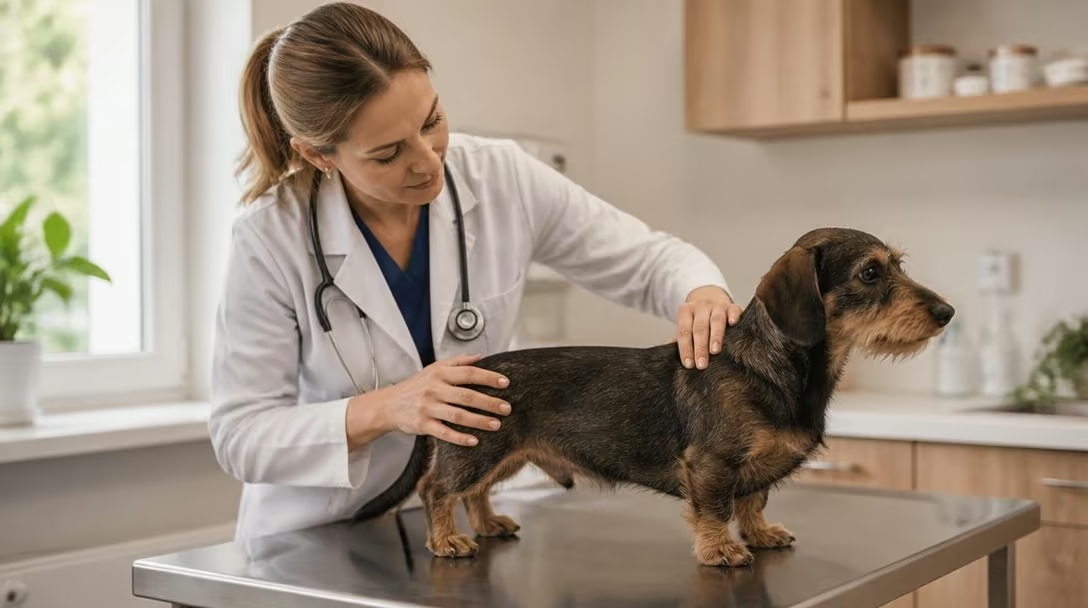
The single biggest health concern with purebred Dachshunds is intervertebral disc disease, or IVDD — a spinal condition linked to their unusually long backs and short legs. Mixing in a breed with a more standard body shape can sometimes reduce that risk, but it’s never a guarantee. If a puppy inherits a long torso and short legs from the Dachshund side, the same back vulnerability can come right along with it, regardless of what the other parent contributes.
Beyond IVDD, pay attention to what the other breed in the mix is prone to. A Dachshund-Pug cross can inherit breathing concerns from the Pug side. A Dachshund-Poodle or Dachshund-Schnauzer cross may need more regular grooming to prevent matting. And any mix with a Dachshund parent should be raised with the same back-protective habits we recommend for purebreds — supported pickups, ramps or stairs instead of jumping off furniture, and a healthy weight to avoid extra strain on the spine.
Where to Find a Reputable Dachshund Mix
If you decide a Dachshund mix is right for you, I’d start by checking local rescues and breed-specific Dachshund rescue groups before searching for a breeder. Mixed-breed dogs with Dachshund ancestry are common in shelters, and adopting one means you’re usually meeting an adult dog whose size, coat, and temperament are already settled — no genetic guesswork required. Our guide on adopting a rescue Dachshund walks through what to ask and what to expect from the process.
If you do go the breeder route for an intentional “designer” cross, ask to see health clearances for both parent breeds, meet the parents if at all possible, and be wary of any breeder who can’t answer basic questions about either side of the pairing. A reputable breeder of mixed-breed litters should be just as transparent as one breeding purebred Dachshunds.
Is a Dachshund Mix Right for You?
A few honest questions to ask yourself before committing to any Dachshund mix:
- Can you commit to the grooming routine the non-Dachshund parent’s coat type will require — brushing a Poodle or Pomeranian coat is a different job than wiping down a smooth Dachshund?
- Are you prepared to protect the dog’s back if it inherits the classic long-torso, short-leg Dachshund build, even in a mix?
- Does your household have the patience for a potentially stubborn, independent streak, which shows up in most Dachshund crosses to some degree?
- Are you comfortable with some uncertainty about adult size and temperament, especially if you’re adopting a young mixed-breed puppy rather than an adult?
If you answered yes to all four, a Dachshund mix is very likely to be a wonderful fit — you get a lot of that classic Dachshund personality with a bit more variety in size, coat, and health profile than you’d get from a purebred.
Frequently Asked Questions
Are Dachshund mixes less prone to back problems than purebred Dachshunds?
Sometimes, but not reliably. If a mix inherits the Dachshund’s long back and short legs, the same IVDD risk generally comes with it. A mix with a more moderate body shape may carry somewhat less risk, but there’s no way to guarantee it from appearance alone.
How big do Dachshund mixes get?
It depends entirely on the other parent breed and which genes dominate. A Chiweenie might stay under 12 pounds, while a Dorgi or Daug can land closer to 20 to 25 pounds. Littermates can even vary noticeably from each other.
Do Dachshund mixes shed a lot?
It varies by coat type inherited. Mixes with a Poodle, Schnauzer, or similarly low-shedding parent tend to shed less than a smooth-coated purebred Dachshund, while mixes with a Pomeranian or Beagle parent may shed more, especially seasonally.
Are Dachshund mixes good with kids and other pets?
Many are, especially when socialized early, but temperament depends heavily on both parent breeds and individual upbringing. Always ask a breeder or rescue about a specific dog’s history around children and other animals rather than assuming based on breed alone.
The Bottom Line
Dachshund mixes bring a lot of that unmistakable sausage-dog charm — the confidence, the curiosity, the surprisingly big personality in a small body — while often softening some of the breed’s more demanding traits. Whichever mix catches your eye, the fundamentals stay the same: protect that back, start training early, and get to know the individual dog in front of you rather than assuming you know exactly what you’re getting from the name of the cross. Do that, and you’ll end up with a companion that’s every bit as devoted as a purebred Dachshund, with a little extra variety thrown in.


