Dachshund owners obsess over backs — mine included. I’ve written about plenty of other health topics that come with age, but there’s one body part that quietly causes more long-term damage than almost anything else I see in this breed, and it rarely gets talked about: teeth.
I’m Rex, and healthcare is my corner of this site. Dental disease is one of the most common health problems I see mentioned in dachshund owner groups, and it’s also one of the most preventable. A dog can be eating fine, acting happy, and still be dealing with a mouth full of infection that’s slowly working its way toward the bloodstream. So let’s talk about why dachshunds are particularly prone to this, what to watch for, and what an actual home routine looks like — not just “brush their teeth,” which is advice everyone gives and almost nobody explains.
Why Dachshunds Are Prone to Dental Problems
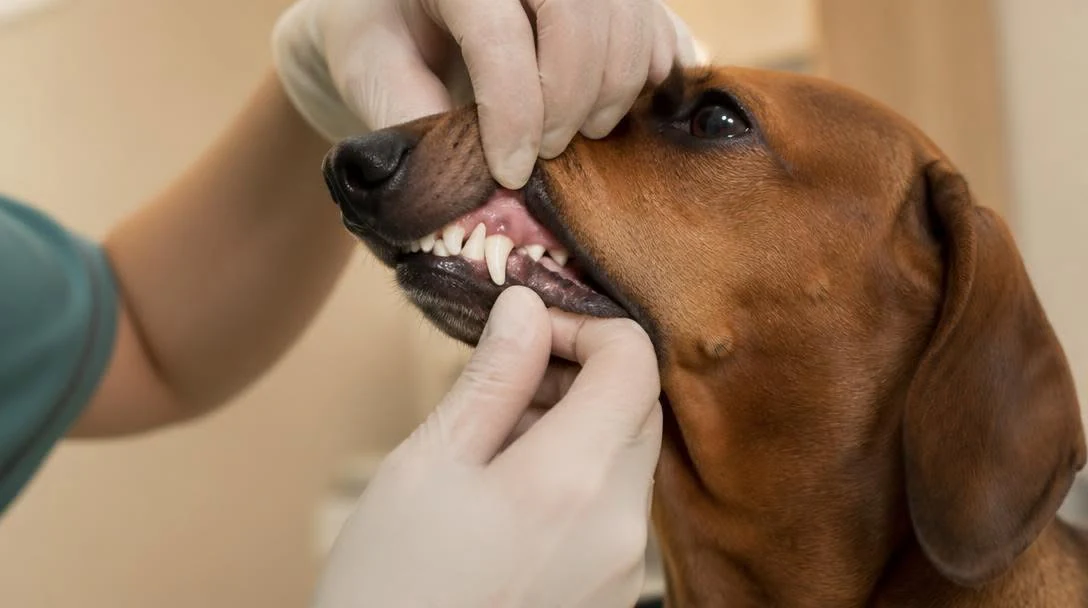
Small and toy breeds as a group are disproportionately affected by periodontal disease, and dachshunds are no exception. The reason comes down to simple geometry: a dachshund has a full set of 42 adult teeth packed into a jaw that’s considerably smaller than a medium or large breed’s. That crowding leaves less space between teeth for saliva to naturally rinse away food debris and plaque, which means tartar builds up faster and periodontal disease sets in earlier than it would in a bigger dog with the same home-care routine.
Retained baby teeth make this worse. Small breeds are more likely than large breeds to keep some deciduous (baby) teeth even after the adult tooth has already come in next to it — two teeth crowded into one socket’s worth of space. I cover this in more detail in my puppy teething guide, but the short version is: if your dachshund still has a visible baby tooth sitting alongside an adult one past about seven or eight months old, that’s worth a vet visit, because it’s a setup for plaque traps and crowding that lasts a lifetime if it isn’t extracted.
On top of the crowding, dachshunds just live a long time relative to their size — many make it well into their teens — which gives plaque, tartar, and gum recession more years to do damage compared to a breed with a shorter average lifespan. By some veterinary estimates, the large majority of small-breed dogs over the age of three already have some degree of periodontal disease. That statistic alone is why I treat dental care as a standing item on this site’s health list, not an afterthought.
Signs of Dental Disease to Watch For
Dogs are good at hiding mouth pain — a dachshund with a cracked or abscessed tooth will often keep eating normally, because the instinct to eat is strong and dogs don’t reason their way out of pain the way people do. That’s exactly why it helps to know the early, subtle signs rather than waiting for the obvious ones:
- Bad breath that’s more than “dog breath” — a sharp, persistent odor is usually bacterial, not normal
- A brownish-yellow crust along the gumline — that’s tartar, and once it’s visibly built up, brushing alone won’t remove it
- Red, puffy, or bleeding gums, especially noticeable if you ever get a look while giving a treat
- Pawing at the mouth or face-rubbing on furniture or the floor
- Dropping food, chewing on one side, or favoring soft food over kibble they used to eat fine
- Visible loose, broken, or discolored teeth
- Excessive drooling, sometimes blood-tinged
Any one of these on its own is worth a closer look. More than one together is worth a vet appointment sooner rather than later — dental infections don’t resolve on their own, and the bacteria involved can spread beyond the mouth to the heart, kidneys, and liver if left untreated long enough.
How to Brush Your Dachshund’s Teeth at Home
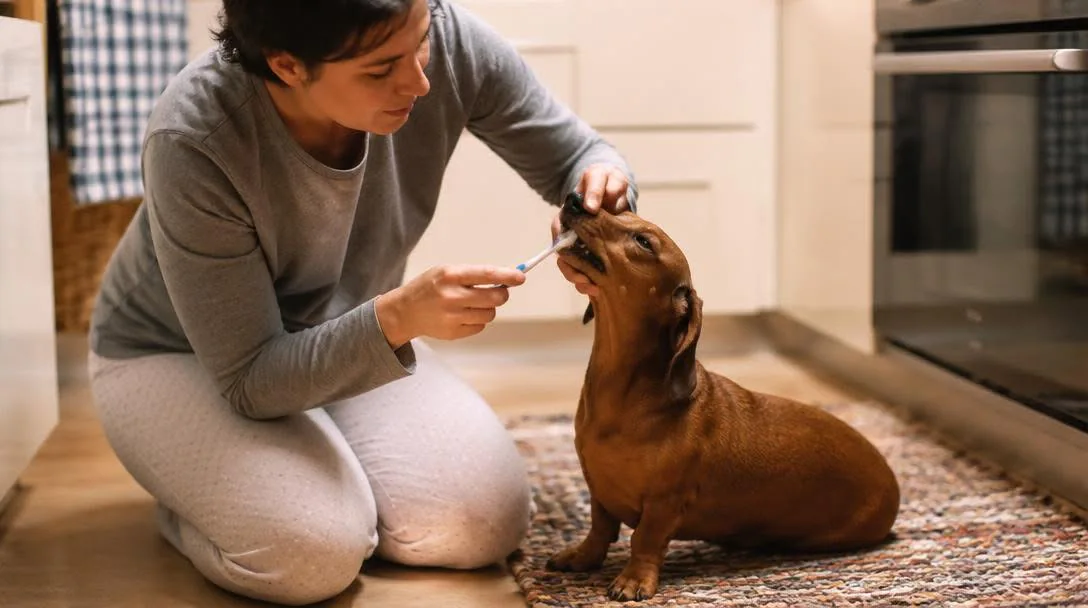
Brushing is the single most effective thing you can do, and it’s also the thing most owners quietly give up on within a few weeks because nobody tells them how to make it a non-event instead of a wrestling match. Here’s the version that actually sticks:
- Start with your finger, not a brush. For the first several days, just rub a little dog-safe enzymatic toothpaste along the gumline with a clean finger or a soft fingertip brush, for a few seconds at a time, paired with praise or a treat right after. The goal is building a positive association before the tool matters at all.
- Use toothpaste made for dogs, never human toothpaste. Human toothpaste often contains xylitol or fluoride at levels that are unsafe for dogs to swallow, and dogs can’t rinse and spit. Poultry- or peanut-flavored enzymatic pastes are widely available and dachshunds generally take to them quickly.
- Introduce a soft-bristled dog toothbrush or finger brush once your dog is comfortable with the paste. Angle the bristles at about 45 degrees toward the gumline, since that’s where plaque accumulates fastest.
- Focus on the outside surfaces of the teeth. The tongue naturally cleans the inside surfaces fairly well on its own, so the outside — cheek-side — is where brushing time matters most, especially the back molars and upper canines where tartar tends to build up first.
- Keep sessions short — 30 to 60 seconds total is plenty once you’re actually brushing, done a few teeth at a time if needed rather than all at once.
- Aim for daily, but settle for consistent. Veterinary dentists generally agree that brushing every day is ideal, but three to four times a week done consistently beats a daily habit that falls apart after two weeks. Pick a frequency you’ll actually keep up.
A dachshund’s narrow jaw and close-set teeth mean it’s worth going slowly and watching their body language — some dogs tolerate a full mouth exam better than others, and forcing it tends to backfire. If your dog won’t tolerate a brush at all even after a patient introduction, that’s a conversation to have with your vet rather than a routine to abandon entirely, since there are other tools that help in the meantime.
Dental Chews, Diets, and Water Additives: What Actually Works
The pet aisle is full of dental products, and the honest answer is that they range from genuinely helpful to mostly marketing. A few things worth knowing:
- Look for the VOHC seal. The Veterinary Oral Health Council evaluates dental chews, diets, and water additives against actual plaque- and tartar-reduction standards, and maintains a public list of accepted products. If a product doesn’t carry that seal, its dental claims haven’t been independently verified.
- Dental chews work mechanically, not magically. The abrasive texture scrapes plaque off as your dog chews, which means a chew that gets swallowed in two bites isn’t doing much — supervise chewing and pick a size and firmness appropriate for your dog.
- Be cautious with very hard chews like real bones, antlers, or hard nylon products — they can fracture teeth, and a fractured tooth usually means an extraction. Softer, VOHC-accepted dental chews are generally the safer long-term choice.
- Water additives and dental diets help at the margins. They’re a reasonable supplement to brushing, not a replacement for it — think of them as filling in the gaps on the days brushing doesn’t happen.
None of these products reverse tartar that’s already built up or treat gum disease that’s already present — that’s what professional cleanings are for.
Professional Cleanings: What to Expect and When They’re Necessary
Even with a diligent home routine, most dachshunds will need a professional dental cleaning at some point, and many benefit from one every one to two years once tartar starts accumulating below the gumline where a toothbrush can’t reach. A proper veterinary dental cleaning includes scaling above and below the gumline, polishing, and dental X-rays to check root health below the surface — something that simply isn’t possible while a dog is awake and moving.
This is also where anesthesia comes up, and it’s a fair thing to be nervous about, especially for a senior dachshund. Modern veterinary anesthesia protocols are considerably safer than they were even a decade ago, with pre-anesthetic bloodwork and individualized monitoring standard at most practices. That said, age and existing health conditions do factor into the conversation your vet will have with you about timing and precautions — I go into senior-specific health considerations, including how vets weigh procedures like this, in my senior dachshund care guide. The takeaway I’d leave you with: untreated dental disease carries its own real risks, including to the heart and kidneys, so “wait and see” isn’t actually the lower-risk choice it can feel like. Talk specifics through with your vet rather than ruling anesthesia out on instinct.
You may also see “anesthesia-free” dental cleaning offered, usually at grooming salons rather than veterinary clinics. Be cautious here — without anesthesia, there’s no way to clean below the gumline, take X-rays, or safely assess for problems, and the American Veterinary Dental College specifically advises against it for exactly those reasons. It can look like a cleaning while leaving the actual disease process untouched.
Dental Care at Different Life Stages
A puppy’s dental needs are mostly about monitoring the transition from baby to adult teeth (again, see my teething guide for that timeline) and starting the brushing habit early, while it’s still novel rather than something to undo a bad association with. An adult dachshund in the one-to-seven range is where consistent brushing pays off the most — this is the window where a good routine can prevent the disease from ever taking hold. A senior dachshund needs the same routine, just with closer attention to any of the warning signs above and more regular vet checks, since age brings both a longer history of accumulated wear and, often, less tolerance for skipped professional cleanings.
Frequently Asked Questions
How often should I brush my dachshund’s teeth?
Daily is ideal, but three to four times a week done consistently is genuinely effective. Consistency matters more than perfection.
Can I use coconut oil or baking soda instead of dog toothpaste?
It’s best to stick with a VOHC-accepted enzymatic dog toothpaste. Baking soda has an unsafe pH for regular use in a dog’s mouth, and homemade alternatives haven’t been tested for safety or effectiveness the way commercial dog toothpastes have.
My dachshund hates having their teeth brushed. What else can I do?
Start smaller — just lifting the lip and touching the gums for a few seconds with praise, building up gradually over days or weeks. In the meantime, VOHC-accepted dental chews and water additives can help bridge the gap, and your vet can advise on cleaning frequency if brushing just isn’t realistic for your dog.
How much does a professional dental cleaning cost?
It varies a lot by region, by whether X-rays and extractions are needed, and by your dog’s pre-anesthetic bloodwork results, so it’s worth asking your vet for an estimate specific to your dog rather than relying on a general number.
Is bad breath normal in dachshunds, or always a sign of a problem?
Some mild odor after eating is normal. A strong, persistent, or worsening smell usually points to bacterial buildup and is worth mentioning at your next vet visit, even if nothing else seems wrong.
The Bottom Line
Dental disease is one of the few health issues in this breed where the gap between “ignored” and “managed” is almost entirely about habit, not luck or genetics. A few minutes a few times a week, the right chews, and regular professional cleanings go a long way toward keeping your dachshund comfortable, eating well, and avoiding the kind of hidden infection that causes problems well beyond the mouth. It’s not the most exciting part of dog ownership, but it’s one of the most worthwhile.