
I’ve sat with a lot of worried owners in the days right after their dachshund’s back surgery, and the question is almost always the same: “Is this actually going to work? What do the next two months look like?” IVDD (intervertebral disc disease) surgery can be one of the scariest things a dachshund owner goes through, but recovery is also one of the most predictable, rule-driven processes in veterinary medicine. If you follow the plan, most dachshunds recover remarkably well. If you improvise, even a technically successful surgery can be undone in a single bad weekend. Here’s what the recovery actually looks like, stage by stage, and what I want you watching for at each one.
What Happens in the First 24–48 Hours
Your dachshund will likely come home still groggy from anesthesia, possibly wearing a shaved patch and incision along the back, and almost certainly on a short list of medications: pain control, an anti-inflammatory, sometimes a muscle relaxant, and occasionally a bladder-support medication if the surgeon noted any loss of bladder control before surgery. Expect some wobbliness in the back legs even in dogs who walked in for surgery able to walk out — that’s normal post-anesthesia and post-surgical inflammation, not necessarily a sign the surgery didn’t work.
This is also when bladder function gets the closest attention. Many dachshunds lose some bladder control from spinal cord compression before surgery ever happens, and your vet may teach you how to manually express your dog’s bladder two to three times a day if they can’t fully empty it on their own yet. Don’t skip this — a bladder that doesn’t empty is both uncomfortable and a genuine infection risk, and it’s one of the most common reasons for a return trip to the vet in week one.
The Strict Crate Rest Period: Why Six to Eight Weeks Matters
This is the part owners struggle with most, and it’s also the single biggest predictor of a good outcome. Strict crate rest typically runs six to eight weeks, and “strict” means exactly what it sounds like: no stairs, no jumping on or off furniture, no running, no off-leash time, and no walking around loose in the house “just for a minute.” Bathroom breaks happen on a short leash, carried to and from the spot, with no detours.
The reason this matters so much is mechanical, not just cautious. A dachshund’s long back puts unusual leverage on the spine, and the disc material that caused the original problem is still settling and the surgical site is still healing during this window. A single hard landing from a couch jump in week three can reinjure the same disc space or a neighboring one — and a second surgery is a much harder recovery than the first. I’ve seen owners do everything right for five weeks and then lose it all to one unsupervised moment, so this is the section I’d ask you to actually print out and tape to the crate.
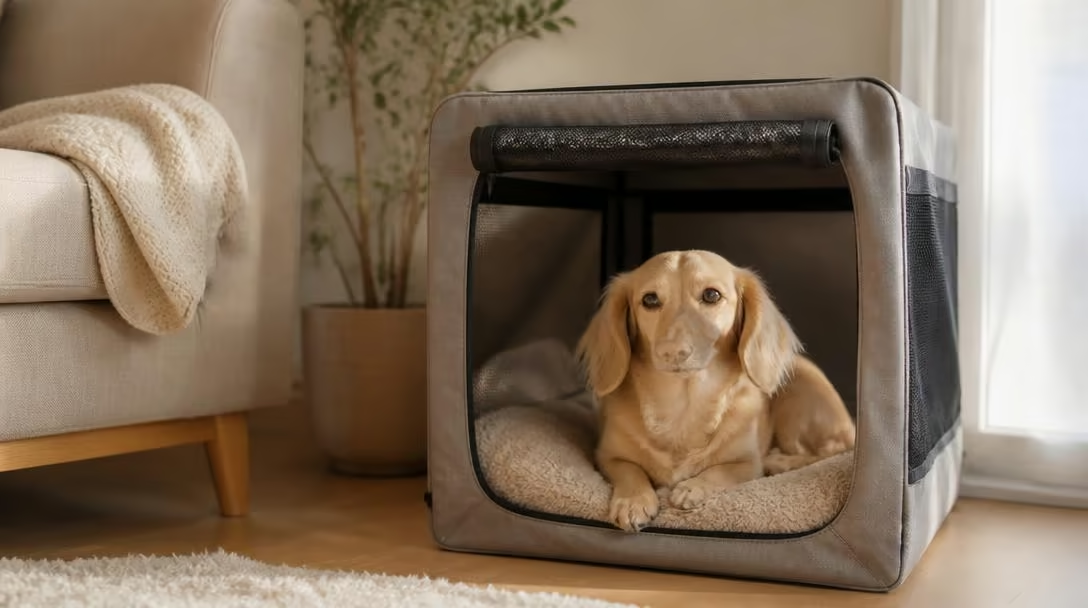
Make the crate itself comfortable enough that your dog isn’t fighting you on it: a supportive, washable bed, water within reach if the crate is large enough, and a towel over part of the crate if your dog settles better with reduced visual stimulation. A lot of dachshunds adjust to confinement faster than their owners expect, once the first few restless days pass.
Week by Week: What Recovery Actually Looks Like
Every case is different depending on how severe the disc herniation was and whether your dog could still walk before surgery, but a fairly typical timeline looks something like this:
- Days 1–3: Grogginess, incision soreness, possible continued bladder support, very limited movement even within the crate.
- Days 4–10: Incision healing (staples or sutures usually come out around day 10–14), pain medication tapering under your vet’s guidance, first small signs of improved leg strength or coordination in dogs who had weakness before surgery.
- Weeks 2–4: This is often when owners see the most encouraging progress — more purposeful leg movement, better balance when standing, bladder control returning in dogs who’d lost it. Crate rest stays strict even as things look better; this is the stage where confidence outpaces healing most often.
- Weeks 5–8: Your vet will likely reassess with a recheck exam (and sometimes a repeat scan) before giving the green light to begin short, controlled leash walks and gradually lifting crate restrictions.
- Weeks 8–12+: A supervised return to normal activity, guided by your vet or a rehab specialist, with stairs, furniture, and off-leash time reintroduced slowly rather than all at once.
Dogs who were still walking at the time of surgery (sometimes called lower-grade cases) tend to have faster, more complete recoveries than dogs who’d lost deep pain sensation beforehand — but even more severe cases often make meaningful, sometimes full, recoveries with time and consistent rehab.
Signs Your Dachshund Is Healing Well
Day to day, these are the good signs I want owners watching for: steadier footing each week rather than each day, more voluntary tail wagging and weight-bearing on all four legs, a return of normal bladder and bowel habits, a calmer, more settled temperament as pain resolves, and an incision that stays dry, closed, and non-swollen as it heals. Small plateaus are normal — recovery isn’t always a straight upward line — but the overall trend over a couple of weeks should be forward.
Red Flags That Need an Immediate Call to Your Vet
Some things shouldn’t wait for the next scheduled recheck. Call your vet right away if you notice any sudden loss of leg function after a period of improvement, new or worsening weakness, a complete inability to urinate for more than 12 hours, discharge, odor, or opening at the incision site, a fever, sudden severe pain or crying out, or any dragging of the back feet with the top of the paw scraping the ground. A sudden step backward after real progress is the single most important reason to call rather than wait and see — it can signal a new disc event or swelling at the surgical site, and catching it early matters.
Physical Therapy and Rehab Once Restrictions Lift
Once your vet clears your dog to start reintroducing movement, structured rehabilitation makes a real difference in how complete and how fast the recovery is. This might include underwater treadmill sessions (gentle on the joints while rebuilding muscle), passive range-of-motion exercises you can do at home, balance work on a wobble cushion, and short, frequent leash walks rather than one long outing. If your regular vet doesn’t offer rehab services, ask for a referral to a certified canine rehabilitation therapist — many areas have one, and for a breed this prone to spinal issues, it’s worth the drive.
Setting Up a Recovery-Friendly Home
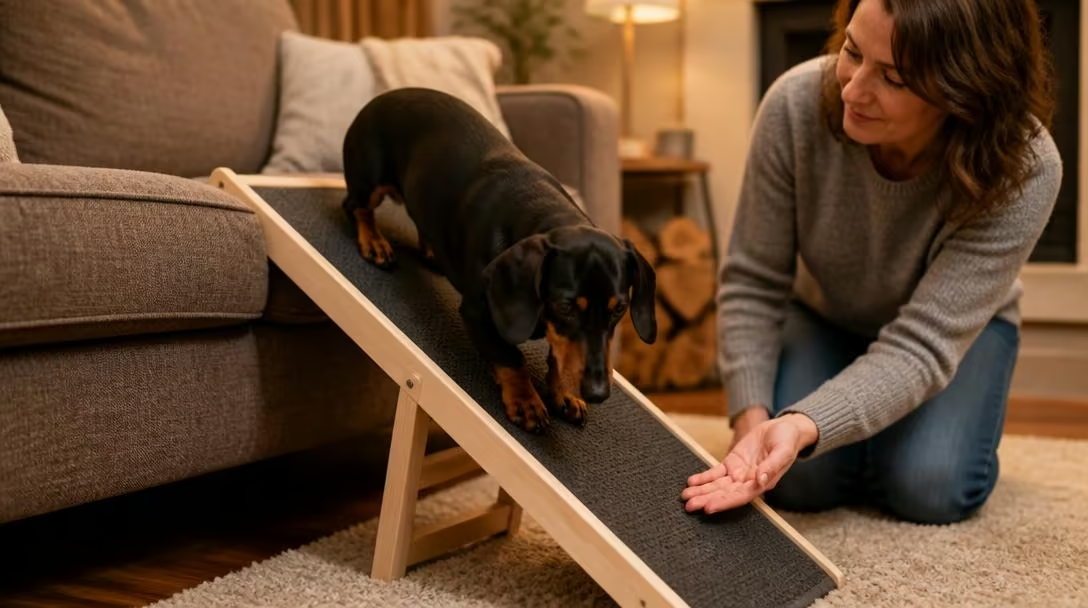
The environment your dog recovers in matters almost as much as the medical plan. Block access to stairs with a baby gate rather than trusting verbal commands. Put down non-slip rugs or yoga-mat runners on hardwood or tile so your dog isn’t sliding while rebuilding strength. Keep the crate in a central, calm part of the house so your dog isn’t isolated for two months, and once walks resume, a ramp instead of stairs for getting in and out of the car or onto furniture protects the repair for the long haul — our guide to the best ramps and stairs for dachshunds covers what actually holds up to daily use versus what looks sturdy in a product photo and isn’t.
Preventing a Second Episode
Dachshunds who’ve had one IVDD episode are at real risk for another, in either the same disc space or a different one along the spine, which is why the recovery period isn’t really the finish line — it’s the start of a lifelong management plan. Keeping your dog at a lean weight, using a harness instead of a collar, blocking unsupervised jumping on and off furniture permanently (not just during recovery), and building core and hind-end strength through controlled exercise all measurably lower the odds of a repeat injury. We go deeper on all of this in our guide to preventing IVDD and protecting your dachshund’s spine, which is worth reading alongside this one once the acute recovery period is behind you.
Frequently Asked Questions
How long until my dachshund can walk normally after IVDD surgery?
Most dogs show meaningful improvement within two to four weeks and reach their final level of recovery by around three months, though timelines vary widely based on how severe the injury was before surgery and how strictly crate rest was followed.
Will my dachshund ever walk again if it couldn’t move its legs before surgery?
Many dogs who’ve lost the ability to walk still recover significant or full function, especially if surgery happens promptly and deep pain sensation was still present. Dogs who’d lost deep pain sensation have a lower but still real chance of walking again, and a rehab specialist can make a meaningful difference either way.
Can I shorten the crate rest period if my dog seems fine?
No. Looking fine and being structurally healed are two different things, and the surgical site and surrounding disc material are still stabilizing well past the point your dog starts acting normal. Shortening crate rest is the single most common cause of reinjury.
Is a wheelchair/cart necessary after IVDD surgery?
Not usually during the standard recovery window, but a cart can be a helpful bridge for dogs with slower or incomplete neurological recovery, letting them move and stay engaged while rehab continues to build strength.
The Bottom Line
IVDD surgery recovery asks a lot of patience from both of you, but it’s one of the most well-understood recovery processes in canine medicine, and the rules exist because they work. Follow your surgeon’s specific timeline over any general guide (including this one), keep that crate boring and non-negotiable for the full stretch, and call your vet the moment something looks like it’s moving backward instead of forward. Most dachshunds who go through this come out the other side walking, wagging, and back to being exactly as stubborn as they were before.


